






























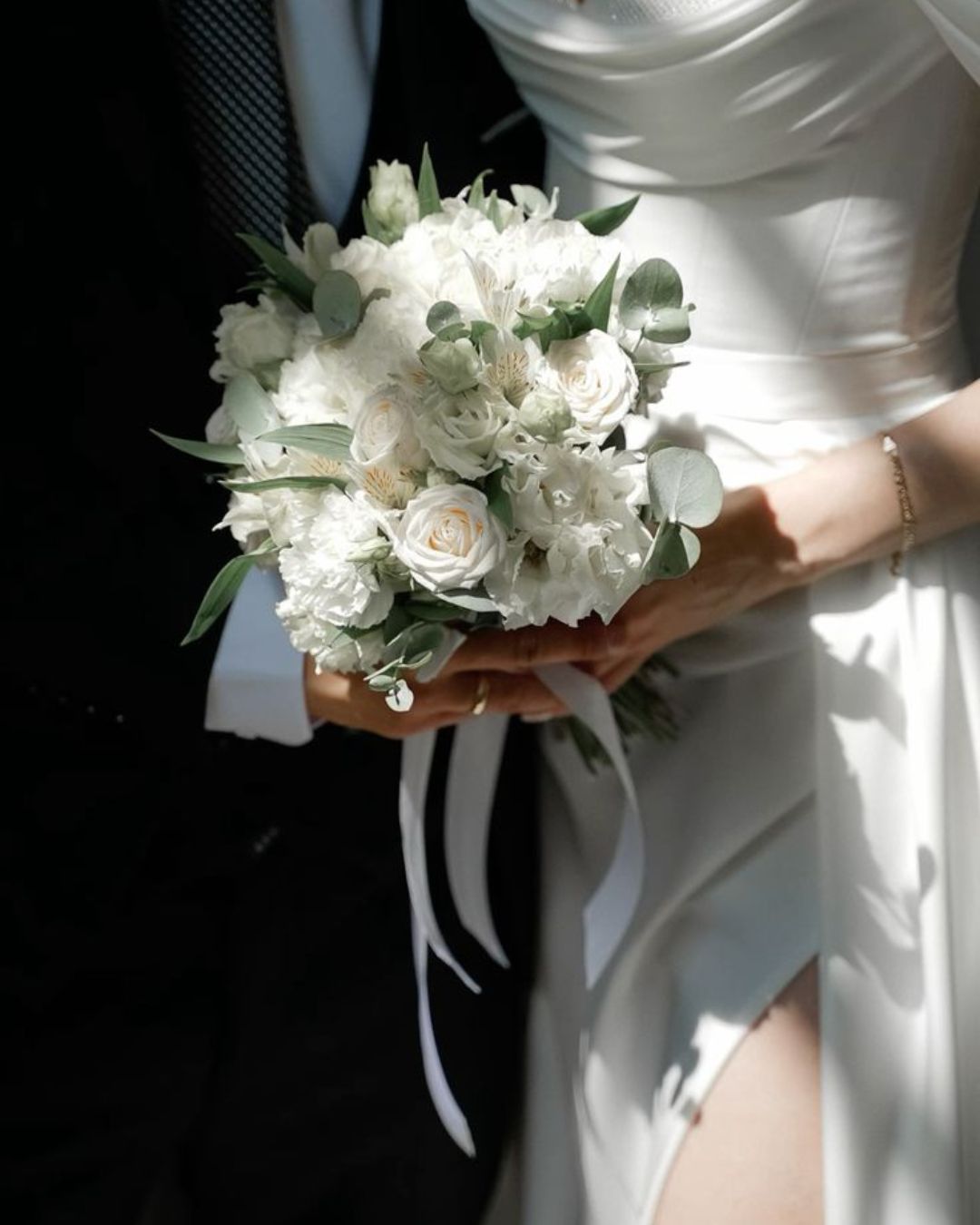
Three weeks before her wedding, my client Emma sent me a panicked text. It was 11 PM, and she’d just seen a photo of a cascading bouquet on Instagram. “I need this,” she wrote. “My bouquet is too small. Too round. Too… boring.”
The problem? Emma’s dress was a minimalist slip with zero embellishment. A cascading bouquet would have swallowed her whole. She’d look like she was carrying a small bush down the aisle.
I called her the next morning. “Emma, breathe. Your bouquet is perfect for your dress and your venue. That Instagram photo? That bride was six feet tall and wearing a ballgown. You’re five-two in heels.”
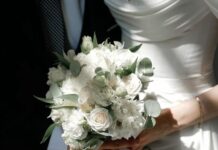
She laughed. She calmed down. And on her wedding day, her round, compact bouquet of white roses and eucalyptus was exactly right.
If you’re feeling overwhelmed by bouquet choices, a professional wedding florist Miami can take the guesswork out of the process — they know exactly which shapes, colors, and flowers work for your dress, venue, and season. But if you want to become your own bouquet expert first, stick with me.
I’ve been a wedding florist for over a decade. I’ve designed bouquets for eloping couples in city halls, grand cathedral weddings, beach ceremonies, and barn receptions. And the one thing I’ve learned is this: the bouquet isn’t just an accessory. It’s your statement piece. It’s in almost every photo. And when you look back at your wedding album, it’s what you’ll remember holding.
So let’s talk about how to choose a bouquet that actually wows — not because it’s trendy, but because it’s you.
Know Your Shapes: The Bouquet Style Guide
Before you pick a single flower, you need to pick a shape. Shape determines how your bouquet looks in photos, how it feels in your hands, and how it balances with your dress.
Here’s a breakdown of the most common bouquet shapes — and which brides they work best for.
Round Bouquet
What it is: Symmetrical, compact, and polished. Think classic ball of blooms.
Best for: Traditional weddings, formal venues, ballgown or A‑line dresses. Also great for shorter brides — it doesn’t overwhelm your frame.
Who loves it: Brides who want timeless elegance. It’s the bouquet equivalent of a strand of pearls.
Pro tip: Round bouquets are usually the most affordable because they use fewer flowers than cascading styles. And they photograph beautifully from every angle.
Cascading Bouquet (also called Waterfall)
What it is: Flowers and greenery that trail downward, like a waterfall of blooms.
Best for: Dramatic weddings, cathedral venues, formal black‑tie affairs. It’s a statement piece.
Who loves it: Tall brides or brides wearing simple dresses that need visual drama.
The catch: They’re expensive — you need lots of flowers and structure. They’re also heavy. And they can get caught on your dress or veil if you’re not careful.
Posy & Nosegay Bouquet
What it is: Small, round, compact. Usually a tight cluster of flowers, sometimes with a lace or ribbon wrap.
Best for: Intimate weddings, garden parties, or bridesmaids. Also perfect for flower girls.
Who loves it: Minimalist brides, brides who don’t want to carry a heavy bouquet, or brides with very detailed dresses that don’t need competition.
Fun fact: The word “posy” comes from the 16th century — it was a small flower bundle used to carry messages.
Hand‑Tied Bouquet
What it is: Loose, natural, gathered by the stems. Looks like you just picked them from a garden.
Best for: Boho weddings, outdoor ceremonies, rustic venues.
Who loves it: Creative, free‑spirited brides. It’s the opposite of rigid and formal.
Pro tip: Hand‑tied bouquets feel incredibly organic. They’re also easier to customise on the day — you can add or remove stems without ruining the shape.
Garden‑Style Bouquet
What it is: A hybrid of round and hand‑tied. Lush, textured, full of variety. Looks like it grew that way naturally.
Best for: English garden weddings, romantic venues, outdoor celebrations.
Who loves it: Brides who want the polish of a round bouquet but the whimsy of a hand‑tied one.
Boho / Unstructured Bouquet
What it is: Wild, asymmetrical, sometimes oversized. Feels organic and a bit rebellious.
Best for: Destination weddings, beach ceremonies, barn venues.
Who loves it: Adventurous brides who don’t want to look like anyone else.
The catch: They can photograph awkwardly if not well‑balanced. Make sure your florist knows how to create visual weight.
Oversized Bouquet
What it is: Exactly what it sounds like — big. Sometimes as large as the bride’s torso.
Best for: Drama lovers. Venues that are large enough to handle the scale.
Who loves it: Confident brides who aren’t afraid to take up space.
Pro tip: Consider the weight. An oversized bouquet can be exhausting to carry for a long ceremony.
Crescent Bouquet
What it is: Curved like a crescent moon — asymmetrical but structured.
Best for: Modern weddings, contemporary venues.
Who loves it: Brides who want something unique but still balanced.
Composite Bouquet
What it is: Made from individual petals wired together to create a giant, single bloom or a sculptural shape.
Best for: Ultra‑glamorous or editorial weddings.
Who loves it: Brides who want a bouquet that looks like a work of art.
The catch: Very expensive and fragile. Not for outdoor weddings.
Single‑Stem Bouquet
What it is: Just one flower. Maybe with a bit of greenery.
Best for: Minimalist weddings, courthouse ceremonies, elopements.
Who loves it: The ultimate minimalist bride. It’s pure, simple, and striking.
Which Bouquet Shape Should You Choose? A Quick Comparison
| Your Dress Style | Your Height | Best Bouquet Shape |
| Ballgown / A‑line | Any | Round, Garden |
| Mermaid / Trumpet | Tall preferred | Cascading, Crescent |
| Sheath / Slip | Any | Posy, Single‑Stem, Hand‑Tied |
| Boho / Flowy | Any | Hand‑Tied, Unstructured |
| Minimalist | Any | Posy, Single‑Stem, Round |
| Dramatic / Statement | Tall | Oversized, Cascading |
This is your only table — use it wisely.
Choosing Your Flower Colors and Types
Once you’ve picked a shape, it’s time to think about what goes into that shape.
Start With Your Wedding Colour Palette
Your bouquet should complement — not match — your wedding colours. If your wedding is navy and gold, a bouquet of all‑white flowers with gold‑tipped greenery looks stunning. If your wedding is blush and sage, you can lean into soft pinks and creamy whites.
The 228 site says it well: Consider your wedding colours and theme, but also consider your taste in flowers. Don’t choose flowers just because they match the napkins. Choose them because you love them.
Popular Wedding Flowers (and What They Say About You)
Roses: Timeless. Romantic. Classic. The safe choice — and for good reason. They come in every colour, last well, and photograph beautifully.
Peonies: Romantic, lush, fragrant. The darling of the wedding world. Expensive and seasonal (May–June only).
Ranunculus: Layered, ruffled, romantic. Cheaper than peonies but look similar. Great substitute.
Hydrangeas: Big, fluffy, dramatic. Soak up water like a sponge. Available in many colours, but fragile in heat.
Dahlias: Bold, geometric, modern. Late summer/early autumn star.
Calla Lilies: Sleek, elegant, sculptural. Great for modern or minimalist bouquets.
Gardenias: Fragrant, romantic, delicate. The scent is divine but they bruise easily.
Orchids: Exotic, elegant, expensive. Last surprisingly well.
Lily of the Valley: Tiny, white, bell‑shaped. Incredibly expensive but so delicate and beautiful.
Anemones: Dark centres, delicate petals. Boho and artistic.
Tulips: Simple, affordable, available in so many colours. Great for spring.
Sweet Peas: Pastel, curling, butterfly‑like. Delicate but charming.
Protea: Big, unusual, sculptural. For the bride who wants something completely different.
Greenery and Fillers Matter Too
Don’t underestimate the power of foliage. It adds texture, volume, and often costs much less than flowers.
Eucalyptus: The MVP of wedding greenery. Silver‑green, fragrant, comes in many varieties.
Ruscus: Dark green, glossy, durable.
Dusty Miller: Soft, silvery, velvety. Great for texture.
Lamb’s Ear: Fuzzy, grey‑green, incredibly tactile.
Ferns: Lacy, delicate, adds softness.
Hypericum Berries: Red or orange berries — adds a pop of colour.
Olive Branches: Mediterranean, elegant, meaningful (peace).
Pampas Grass: Big, fluffy, boho. Huge trend right now.
Practical Factors: What Competitors Don’t Always Tell You
Budget First
The 228 site makes this point loud and clear: Consider your wedding flower budget before you fall in love with expensive blooms.
Here’s how to think about cost:
- In‑season flowers: Cheapest and best quality.
- Out‑of‑season imports: 3–5x the price.
- Greenery: The cheapest way to add volume.
- Roses, carnations, alstroemeria: Affordable workhorses.
- Peonies, gardenias, orchids: Pricey divas.
Pro tip: Ask your florist about “stem count” — some bouquets look big but have 30 stems; others use 80 stems of cheaper flowers. The 228 mentions this — and it’s a great way to compare quotes.
Match Your Bouquet to Your Dress
This is the number one thing that separates professional florists from amateurs. Your bouquet should complement your dress, not fight it.
Ling’s Moment nails this: Consider details like pearl buttons, lace, or floral embroidery — and echo them in your bouquet.
Here’s my cheat sheet:
- Ballgown / A‑line: A round or garden bouquet balances the fullness of the skirt.
- Mermaid / Trumpet: A cascading or crescent bouquet elongates the line.
- Sheath / Slip: A posy or single‑stem keeps the look minimalist and clean.
- Detailed / Beaded dress: Keep the bouquet simple so they don’t compete.
- Simple / Plain dress: Go bold with the bouquet — it’s your statement piece.
Consider Your Size
I cannot stress this enough. Petite brides look swallowed by oversized bouquets. Taller brides can pull them off. But it’s not just height — it’s also body type.
1800flowers says it clearly: “Brides should consider their size and body type along with the dress style.”
My rule: Hold your bouquet in front of you in a mirror. If you can’t see your waist or the bodice of your dress, it’s too big. If it disappears against your dress, it’s too small.
Seasonality Matters
Yes, I’m going to say it again. Flowers that are in season are cheaper and better quality.
The 228 includes this: “Take the season of the wedding into account.” It’s not just about cost — it’s about availability and freshness.
If you’re getting married in winter and desperately want peonies, you’re going to pay through the nose. Consider substitutes: peony‑style garden roses, ranunculus, or even large camellias.
The Scent Factor
Nobody talks about this enough. Some flowers have strong scents — gardenias, hyacinths, lilies, roses, tuberose. If you’re sensitive to smells (or having a church ceremony in a small space), strong scents can be overwhelming.
The 228 site mentions this too: “Keep in mind the smell of the flowers.”
My tip: Mix scented flowers with unscented greenery. Or place highly fragrant blooms where only you can smell them — like tucked into the back of the bouquet.
Symbolism (If You Care)
Flowers have meanings — and some brides love that.
- Roses: Love.
- Lilies: Purity and devotion.
- Peonies: Romance and prosperity.
- Hydrangeas: Gratitude and heartfelt emotion.
- Dahlias: Elegance and dignity.
- Anemones: Anticipation and protection.
- Eucalyptus: Protection and abundance.
- Olive: Peace.
The 228 mentions flower meanings — and it’s a lovely touch to include a flower that has personal significance, even if it’s subtle.
Finding Your Bouquet “Personality”
Now for the fun part. Your bouquet should reflect you. Not Pinterest. Not Instagram. Not what your best friend carried.
Ask yourself these questions:
What’s your personal style?
- Classic and traditional? → Round or posy.
- Boho and free‑spirited? → Hand‑tied or unstructured.
- Modern and minimalist? → Single‑stem or crescent.
- Glamorous and dramatic? → Cascading or oversized.
What’s your venue like?
- Grand cathedral? → You can handle drama. Cascading or oversized.
- Intimate garden? → Hand‑tied or garden style.
- Beach? → Unstructured, loose. Avoid heavy cascades.
- Barn or rustic? → Wild, hand‑tied, lots of greenery.
What’s your dress vibe?
- Lace, detailed, beaded? → Keep the bouquet simple.
- Clean, plain, modern? → Go bold with flowers.
- Big skirt? → Balanced round bouquet.
- Sleek sheath? → Long‑stemmed or hand‑tied.
What’s your budget?
- Tight? → Round, posy, lots of greenery.
- Generous? → Cascading, oversized, exotic flowers.
Do you care about tradition?
- Yes? → Round bouquet with roses or peonies.
- No? → Break the rules. Try a hoop bouquet, a dried flower bouquet, or no flowers at all.
Bouquet Alternatives: Think Outside the Box
Not everyone wants a traditional bouquet. And that’s okay.
Hoop bouquet: A metal or wooden hoop wrapped with flowers and greenery. Instagram gold.
Wreath bouquet: A floral wreath you carry. Bohemian and unusual.
Bridal wreath: Wear flowers in your hair instead of carrying them.
Flower crown: If you’re a boho bride, this might be all you need.
Pomander: A ball of flowers on a ribbon — carried like a purse. Great for flower girls.
Dried flower bouquet: Trendy, sustainable, and lasts forever.
Single oversized bloom: A giant sunflower, protea, or amaryllis. Pure drama.
No bouquet: Some brides choose to carry nothing — or just a single rose or heirloom brooch.
Step‑by‑Step Checklist for Choosing Your Bouquet
- Set your budget — and tell your florist upfront.
- Pick your wedding colours — this will guide your flower choices.
- Choose your dress — or at least know the silhouette.
- Know your venue — indoor, outdoor, grand, intimate?
- Decide on a shape — round, cascading, hand‑tied, something else?
- Choose your hero flower — the one that anchors everything.
- Add supporting flowers — 2–4 varieties max.
- Add greenery — for texture and volume.
- Consider scent — strong or subtle?
- Check seasonality — is your dream flower actually available?
- Review photos — ask your florist for photos of similar bouquets.
- Hold a mock‑up — if your florist offers one, do it. It’s worth it.
Conclusion: The Bouquet Is Yours — Make It Personal
I’ve done hundreds of bouquets over the years. And the ones brides love most are never the most expensive, the most elaborate, or the most trendy. They’re the ones that feel right — the ones that match their dress, their venue, their style, their personality.
Emma’s round bouquet wasn’t a fashion statement. It was her. Simple, classic, understated — just like her dress and her city‑hall ceremony. She didn’t end up with the bouquet from that Instagram photo. She ended up with one that made her feel beautiful. And that’s what matters.
So ignore the pressure. Ignore the trends. Ignore what anyone else is doing. Choose a bouquet that makes you smile when you look at it. That’s how you wow — not by following rules, but by breaking them with intention.
What’s your bouquet style going to be? Classic round? Wild boho? Something no one’s ever seen? Drop me a comment — I honestly can’t wait to hear.
FAQ: Quick Answers to Bouquet Questions
Q: How far in advance should I book my florist?
A: Six months is ideal, especially for peak seasons. But if you’re flexible, you can find someone even a month out — just be prepared to go with whatever’s blooming.
Q: Should my bouquet match my bridesmaids’ bouquets?
A: Not necessarily. Many brides choose a larger or more elaborate version of the same palette — or go completely different. Your bouquet should stand out.
Q: What if I want a flower that’s out of season?
A: Be prepared to pay 3–5x more. Or find a substitute — I’ve listed plenty above. Honestly, the substitute is often better because it’s fresher.
Q: How do I hold my bouquet properly?
A: Hold it at waist height, with your elbows slightly bent. Don’t hold it up near your chest — it hides your dress. And don’t hold it down near your knees — it’s too low. Waist‑height is the sweet spot.
Q: What about a tossing bouquet?
A: Great idea. Ask your florist to make a smaller, sturdier version of your bouquet for the toss. It’s cheaper and you don’t have to worry about damaging your main bouquet.
Q: Can I keep my bouquet after the wedding?
A: Yes. Have your florist show you how to dry it. Or you can have it preserved by a professional — it’ll last forever. I’ve seen brides press their bouquets into frames, turn them into jewellery, even put them in resin. It’s a beautiful keepsake.