


































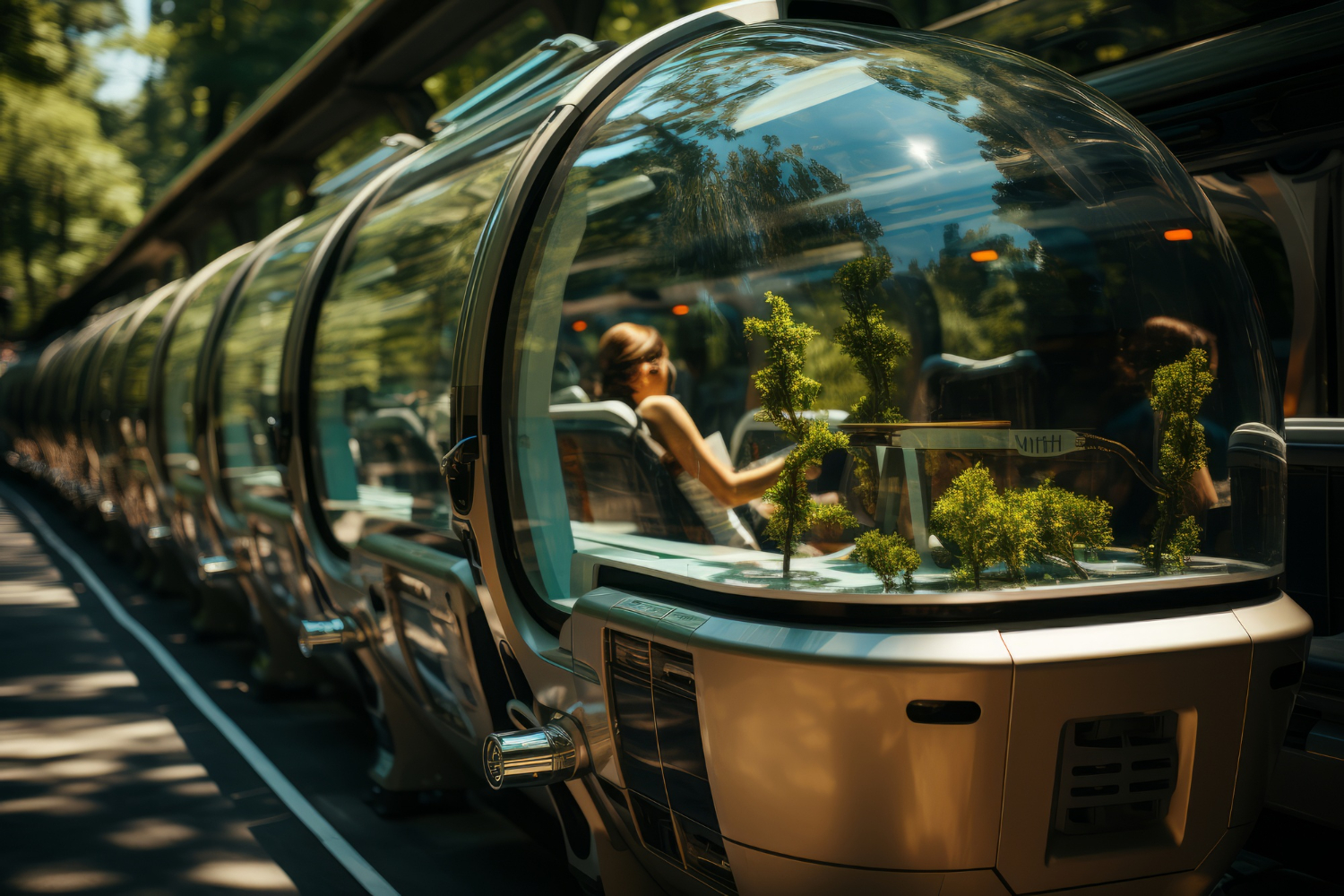
When discussing integrated transit and better city mobility, the word “bumetro” has come up online. The fundamental idea that is commonly connected to it is simple: passengers might observe several forms of transportation collectively rather than launching individual apps for buses, trains, bicycles, and shared trips. This is part of the larger idea of smart multimodal mobility, which is defined by organisations such as the European Commission as using digital technology to enhance the effectiveness, sustainability, and connectivity of travel.
But there’s an important thing to understand. Currently, Bumetro does not have the clear public recognition of popular transport networks such as London Underground, Uber, Google Maps, and Citymapper. Information under the term is still scarce and sometimes contradictory. Therefore, it is better to consider Bumetro as an emerging smart-mobility concept or search term rather than believing that every function offered online is part of a single, officially recognised international service.
So what may Bumetro mean? How may city travel be made easier by this type of technology? And why are people suddenly searching for it? This is a simple manual.
What Is Bumetro?
Bumetro is often described as an ingenious urban mobility strategy on the internet.
Let’s imagine you have to travel from your home to your place of employment across a large city. Walking the entire distance is not feasible. There isn’t a direct bus, and the closest train station is a few km away.
Your trip might therefore look like this:
Take a bus to the train station, walk five minutes to a bus stop, take the train into the city center, and then continue walking for ten more minutes.
Generally, you could need a lot of websites or apps to keep everything managed.
Centralising the entire journey is the aim of a Bumetro-style system.
Instead of focusing on a single vehicle, the technique takes your complete trip into account.
With that small change, city travel may be much easier.
Why Is Bumetro Becoming a More Popular Search Term?
Cities are expanding, and people are using more complex forms of transportation.
In the past, many commuters drove their automobiles or only used one bus route. These days, there are many more options available to city dwellers.
There are ridesharing cars, shared bicycles, electric scooters, buses, trains, trams, taxis, and walking trails.
Having more alternatives sounds fantastic.
Having more alternatives, though, can occasionally cause confusion.
Which path is the fastest?
What is the cheapest?
Will the train arrive on time?
Can you spend some of the trip on a bike?
Is taking the bus a better option than calling a cab?
A smart mobility platform aims to respond quickly to these questions.
Concepts associated with Bumetro may therefore seem alluring.
Bumetro and the Idea of Mobility as a Service
To properly understand Bumetro, it is useful to understand something called Mobility as a Service, or MaaS.
The idea is rather straightforward, despite the term’s challenging pronunciation.
Think about Netflix.
Netflix offers thousands of films and TV shows. You don’t need a distinct machine for every movie.
Making transportation feel like that is the goal of Mobility as a Service.
Instead of treating a bus, bicycle, taxi, and train as separate systems, MaaS aims to digitally connect them.
A traveller inputs both where they are now and where they want to go.
The platform can then suggest possible couples.
For example:
Home → Bicycle → Train > Train → Walk → Office.
The traveller sees the journey as a whole rather than trying to piece it together.
How Would Bumetro Work?
A smart urban mobility system usually begins with two kinds of data.
Where are you?
Where do you want to go?
Once the system has these details, it may examine the transportation options.
It may discover that taking a direct taxi is significantly more costly than utilising public transportation and takes 35 minutes.
A alternate route could take twenty minutes by rail, ten minutes by bus, and five minutes by foot.
A third choice might be cycling.
The user can then compare the options.
This is much easier than looking at each transport provider separately.
Scheduling Multimodal Routes
One of Bumetro’s most useful ideas is multimodal route planning.
“Multi” indicates a big number.
“Modal” encompasses a variety of transportation options.
Therefore, the term “multimodal travel” simply refers to using numerous modes of transportation when travelling.
You may already be doing this without really thinking about it.
Perhaps you walk to a station each morning to catch a train, then take a bus.
It’s a multimodal journey.
Technology can significantly expedite this process by setting up each stage in the right order.
Real-Time Travel Information
A trip plan can only be beneficial if the supporting data is accurate.
Suppose you receive a notification via an app saying your bus is expected to arrive at 8:20 a.m.
You reach the stop at 8:15.
Then you find out that the bus is running 25 minutes late.
All of a sudden, your painstakingly planned trip is useless.
This explains why real-time information has become such an important part of modern transportation technology.
A smart system can show the latest arrival and departure timings based on data from transport networks.
When something changes, the path could also change.
Instead of waiting for a delayed bus, the station can suggest an alternative route.
It is possible to reduce frustration and save time.
Comparing Travel Duration
Being the best does not always mean being the fastest.
Think about two options.
Route A takes thirty minutes and necessitates an expensive taxi.
Route B takes 38 minutes if you walk and ride the train.
Someone who is in a rush to get to the airport might choose Route A.
A student who drives to campus every morning could favour route B.
Therefore, a useful mobility platform should provide options rather than just one “best” approach.
Individuals have different priorities.
Bumetro-style route planning may make these differences easier to understand.
Can Bumetro Show Travel Expenses?
Cost is one of the most crucial factors to take into account when selecting a means of transportation.
A taxi might be useful even when it’s expensive.
The cost of a bus might be far lower.
A shared bicycle can be even less expensive for a short journey.
If anticipated costs are displayed next to each route, travellers might be able to make better decisions.
Imagine seeing:
The quickest journey takes 24 minutes.
The least expensive journey takes 39 minutes.
The shortest walking route takes 31 minutes.
Making decisions is suddenly much easier.
It is crucial to differentiate between guarantyd final fares and expected rates, nevertheless. Transportation costs may be impacted by local laws, zones, demand, and particular operators.
Bumetro and Greener Travel
Transportation has an effect on the environment.
Traffic, fuel consumption, and air pollution can all be increased by millions of individual automobile trips.
Public transit can move a large number of people with fewer cars.
Walking and cycling might be even more eco-friendly for short excursions.
Thus, a smart mobility system could influence travellers to choose more ecologically responsible options.
For example, consider two potential paths.
One requires a 12-kilometer drive by yourself.
The second involves going to a train station on foot and getting aboard the train.
If the platform makes the environmental difference very clear, some users might choose option number two.
It’s unlikely that everyone will change.
However, thousands of small decisions can ultimately make a big difference.
The Importance of Public Transportation
Technology cannot take the place of buses and trains.
This is an important point.
A beautiful app won’t accomplish anything if the bus never arrives.
A clever algorithm cannot fix a railway line.
Moreover, a route planner cannot abruptly create transport services where none now exist.
Smart mobility works best when it is backed by a strong real-world transport network.
Think of the app as the travel planner’s brain.
The roads, stations, buses, and trains are still doing the real work.
Both are necessary.
Bumetro for Regular Travellers
Regular commuters might be the people who benefit most from connected transportation tools.
A person who commutes five days a week is already accustomed to their usual path.
But problems do occur.
A train is cancelled.
Traffic is obstructing the main road.
A station is temporarily closed.
There’s a late bus.
A clever platform might quickly offer alternatives.
Instead of spending ten minutes browsing multiple websites, the commuter might be able to view an alternate route immediately.
That convenience is even more valuable when someone is already running late.
The Bumetro of Students
Students often need affordable transportation.
Many people don’t own cars.
They may rely on buses, trains, bicycles, and walking.
Cost is important because of this.
Students may be able to balance cost and travel time with the help of a system that assesses several routes.
For example, if a student leaves their home ten minutes early, they could be able to use public transport instead of paying for a rideshare.
Doing it once can help you save a little cash.
If you did that every school day, you could save a lot more money.
Bumetro for Guests
Have you ever glanced at a transport map and not understood a thing when you first arrived in a new city?
For tourists, this is an ongoing problem.
They might not know what ticket they need, where to change trains, or whether walking would be faster.
Language can cause more problems.
A straightforward computerised route planner can make navigating an unfamiliar place much simpler.
The guest simply enters a hotel or other institution.
The system provides a detailed explanation of the journey.
This reduces the tension that comes with visiting a new place.
First and Last Mile Problems
One of the biggest problems with public transport is the first-mile and last-mile difficulty.
Imagine being able to travel by rail to work virtually instantly.
Wonderful.
But the distance between your home and the train station is two km.
After the first part of the trip, you may elect not to utilise the train at all.
Buses, shared bicycles, scooters, and walking routes can all help shorten the journey.
The same problem occurs at the other end of the journey.
A smart transport system is advantageous because it can think beyond the actual train ride.
It looks at the door-to-door procedure in its entirety.
Does Bumetro Include Bikes and Scooters?
There are now more options for urban mobility besides buses and trains.
Bicycle sharing has become commonplace in many places.
Electric scooters are available in some locations.
Ridesharing and car-sharing companies provide additional options.
By combining these services with traditional public transport, travel flexibility might be significantly expanded.
A traveller may choose to bike one kilometre rather than wait fifteen minutes for a bus.
Someone else might take a short shared ride after the final train.
The key idea is flexibility.
The Significance of Accessibility
Each traveller has unique physical needs.
A path may appear perfect to one individual, but it may not be practical for another.
Wheelchair users may require step-free stations.
An older traveller might prefer to take fewer walks.
Parents who use pushchairs might want lifts.
A person carrying a large number of bags could avoid having to make several transfers.
Good mobility technologies should consider these differences.
It is not enough to only find the fastest route.
Finding the most practical route for each individual traveller is significantly more advantageous.
Privacy and User Data
Platforms for smart transportation may require information.
The app might need your location.
It may remember previous places.
If payments are included, financial data may also be involved.
As a result, privacy is essential.
Users should understand what information a service collects, why it collects it, and who has access to it.
Before giving sensitive information, it makes sense to review a mobility platform’s official operator and privacy policy.
Convenience shouldn’t come at the expense of digital safety.
Is Bumetro an acknowledged transit network?
This is where readers should be cautious.
Although Bumetro is used in recent web content, there isn’t yet the same easily identifiable public documentation that comes with a major national transport authority or a well-known mobility platform on a global scale.
This does not mean that everything that has been said about Bumetro is false.
It simply means that readers should distinguish between verified services and the notion.
For example, multimodal route planning is a useful and proven technology.
Real-time information regarding public transport is accessible.
Smart ticketing is a real concept.
Mobility-as-a-service technology exists.
Whether or if all of the functions described online are specifically available via a service known as Bumetro is a different story.
Always get official confirmation before opening an account, making a payment, or sharing personal information.
“VU Meter” and Bumetro Are Not Always the Same
There could be another reason why this keyword gets confused.
When addressing VU meters, same spelling has been used in a number of electronics discussions.
A VU meter is an audio device or display that shows the strength of the signal.
You may have seen one on antiquated stereo equipment. A needle moves in response to changes in music loudness.
Metro routes and buses have nothing to do with that.
As such, context is crucial.
The term “VU meter” might be used by the author while talking about speakers, amplifiers, LEDs, or Arduino projects.
Most usually, the phrase “smart mobility” refers to city transport, buses, and trains.
What Makes a Smart Mobility Platform Effective?
A useful mobility platform needs more than just an attractive appearance.
The information must be accurate.
Routes must be easy to understand.
Live updates should arrive quickly.
Prices should be specified in detail.
Accessibility-related information should be available.
Privacy protections must be easy to find.
Above all, the service need trustworthy connections with actual transportation providers.
Without trustworthy data, even the most sophisticated-looking travel app becomes obnoxious.
Benefits of the Bumetro Theory
The major advantage of the Bumetro concept is its simplicity.
Mobility in cities is complicated behind the scenes.
Different companies offer different services.
Systems may differ in terms of schedules, tickets, and technology.
Travellers don’t want to understand it.
They just want to get somewhere.
An excellent mobility platform conceals much of the difficult work while offering the user a simple answer.
“You can depart at 8:10, walk five minutes, board this bus, transfer to this train, and get here at 8:52.”
That kind of experience is what people want.
Possible Challenges
Connecting many transit services is challenging.
Every city has its own style of doing things.
Excellent real-time statistics might be provided by a single bus company.
Another could provide very little.
Ticket systems may also vary.
Different privacy laws exist.
Prices are subject to change.
Services begin or end.
Transport companies must cooperate.
Because of these challenges, creating a truly connected mobility system requires more than just creating an app.
It requires teamwork, accurate data, and ongoing maintenance.
Could Bumetro Reduce Dependency on Cars?
Multimodal transportation-based systems could make it easier to find alternatives to driving.
Think about someone who usually drives because they find using public transport difficult.
According to an app one morning, they can take a train, walk for six minutes, and get at work five minutes quicker than driving.
They try it.
It’s a fruitful experience.
Maybe they’ll ride the train again.
The gadget did not force the driver to stop driving.
It simply highlighted an alternative decision.
That is one of the most powerful ideas underlying smart mobility.
The Future of Bumetro-Style Technology
Transportation will probably become more integrated.
What is the easiest way to go to my location instead of asking, “Which bus should I take?””is a common question from travellers.”
After then, the program can consider a number of choices.
public transit.
walking.
cycling.
shared cars.
trains.
Perhaps automated vehicles in the future.
Which company operates each component may not matter to the user.
They will be worried about getting to their destination quickly, affordably, and securely.
That is the main objective of connected urban mobility.
Is Bumetro a Wise Choice?
Before using any service bearing the Bumetro name, make sure you are on the right page.
Make sure the operator is properly identified.
Look for cities that are assisted.
Check out its privacy information.
Obtain a direct confirmation of the ticket prices when money is involved.
Check to see if an official mobile application is available from a reliable app store.
These straightforward techniques can help differentiate between a website that just talks about the Bumetro concept and a real transport service.
Final Thoughts
The term “bumetro” is interesting because it draws attention to one of the most important advancements in modern transportation: the blending of different forms of transportation.
The basic concept is easy to understand. By combining a bus ride, train ride, bicycle ride, and walk into a single route, smart mobility technology can eliminate the need to plan each activity independently.
This might save time, make public transport more comprehensible, and assist users in selecting more economical or ecologically responsible routes.
However, bumetro itself still needs to be treated carefully. The name does not yet have the distinct personality of a well-known international mobility brand. Because of this, readers should not take any online description of its features at face value.
The greater technology of the notion is quite real. Multimodal journey planning, real-time transit data, and more sophisticated digital transportation are already changing how cities perceive mobility.
Therefore, it could be most beneficial to view Bumetro as a window into the future—a city where choosing a train, bus, bicycle, or stroll may become as simple as entering one destination.
Typical Enquiries About Bumetro
What is Bumetro?
The term “bumetro” is commonly linked to smart urban transport and multimodal route design. It is described as a way to incorporate many forms of transport into a more comprehensive digital experience.
Is Bumetro a metro rail system?
Not all the time. Even though the term “metro” is included in the name, it usually alludes to more widespread urban mobility rather than a single subterranean rail system.
Is Bumetro a program?
On the internet, it is referred to as a digital mobility platform or app-like service. However, users should verify the existence and official operator of a certain program before thinking it is genuine.
Is Bumetro able to help with bus and train scheduling?
That is one of the main ideas associated with the expression. A multimodal platform can integrate walking, buses, trains, and other forms of transportation into a single trip.
Does Bumetro provide real-time information?
Real-time updates are often connected to smart transportation solutions. A particular Bumetro service may or may not provide them, depending on the platform and transportation information available in the user’s city.
Is it free, Bumetro?
There isn’t a widely accepted pricing structure under the Bumetro trademark. Always check the official service details before subscribing or paying.
Is it safe to use Bumetro?
Users should verify any unknown website or application before entering payment details, location information, or other private information, even though the technology concept itself is secure.
Are VU and Bumetro meters interchangeable?
No. A VU meter is an audio signal-level display. Sometimes similar spellings are used in discussions concerning electronics, which can cause misunderstanding with the transportation-related Bumetro term.
What advantages does multimodal travel offer?
It allows travellers to take several different forms of transportation during a single trip. Travelling without a car can be easier, quicker, less expensive, or more convenient.
What could Bumetro become in the future?
If the idea is developed into a fully functional mobility service, it might connect route planning, real-time transit information, different modes of transportation, tickets, and payment into a simpler city travel experience.