
































Engravings in antique jewelry are intricate, and they convey important information that marks their purity. They generally give information about their manufacturers and even the year when they’re made, and they can give a clue to collectors when they want to verify their authenticity.
A maker’s mark often consists of a lot of symbols about the jeweler who made the ring. Assay office marks have certified these metals, and there’s also the standard of fineness that indicates the purity of the metal. These combinations are often not as straightforward as many wish, but they can be unique signatures that can link them to well-renowned artisans in history.
When dating them, there are often indicators like the letters that can change periodically. They can be encased in shields that correspond to a specific year, and a good example is the Victorian era that can display a letter N in gothic style. Sans-serif is an indication of the Art Deco era, and there are a lot of reference guides for these, so buyers can pinpoint the origins of a piece of jewelry with accuracy.
The Evolution of Ring Design Through the Ages
Since these rings have existed for thousands of years, the techniques that they’re using in ring-making can vary. France has an eagle’s head for their 18k gold, while regional assay office stamps may feature Edinburgh’s castle. There are often stories behind these antique rings since many of them are considered to be a heritage.
However, many have already faded hallmarks where some of the engravings were only partially illegible because they were worn for centuries. Some of the everyday activities can often cause some of the marks to disappear, and many are struggling to distinguish numbers like 9 from an 8 because the cleaning methods in the past may have used abrasive substances.
The Victorian era is often well-known for its romantic motifs with bows, while others have symbolic heart shapes that represent undying love. Art Nouveau is more about flowing lines, where lilies are often common. The design leans more on nature-inspired forms, while one can notice a lot of geometric symmetry in Art Deco that you can find out more here.
Invisible settings that create seamless rows of stones and the filigree work with ornate shanks can often offer further clues. It’s best to call the professionals if you need help because they’re able to identify complex designs that are often not decipherable. They can also verify a ring’s authenticity, so one can protect oneself against counterfeits, and they can provide details that are not often apparent to untrained eyes.
What are the Features of the jewelry?
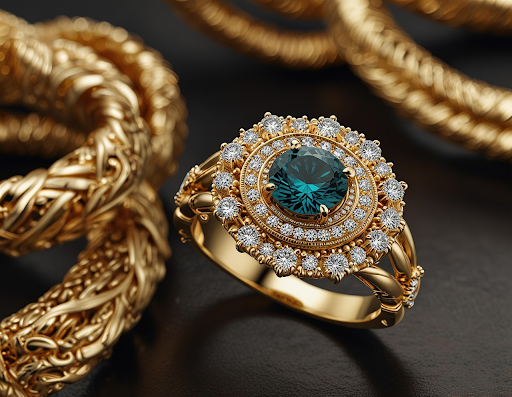
Aside from the known hallmarks, there are also physical factors that can help an individual determine a piece of jewelry’s age. Its cut is one of its most telling indicators, where the Old Mine Cuts are more distinct when it comes to appearances. The sparkles are softer, while the larger facets of the diamonds are going to reflect light differently.
Yellow gold has been a dominant theme in earlier years, while platinum has gained more popularity as the 20th century approaches. Open-back settings have become prevalent because they allow the light to pass through the gemstones, and they were known to have prong styles, and the band is constructed with complexity. When shopping for genuine antiques, a slight thinning of the edges can be normal, so excessive uniformity might indicate a reproduction.
The Role of Craftsmanship in Authenticity
One of the most fascinating aspects of antique jewelry is the level of craftsmanship involved. Before the rise of mass production, rings were typically made by skilled artisans who relied on hand tools and traditional techniques. This often resulted in slight irregularities that give each piece its unique character.
Hand-engraved pieces will have depths that are challenging to replicate in modern times, while the older gemstones often show asymmetry. This is where the human touch shines through behind the creation because the small details highlight the skills of the artisans to produce intricate work without needing the help of modern technology.
Ways on How to Care for the Rings
After getting them, it’s very important to preserve them, and some users can have a level of responsibility that requires them to preserve the beauty of these antiques. Find out more about pricing antiques in this URL: https://www.wikihow.com/Price-Antiques-and-Collectibles. It’s important to avoid excessive exposure to water because this can weaken the older materials, and don’t use harsh chemicals on them.
Instead, getting them professionally cleaned for maintenance can be necessary, especially if they’ve become fragile. Be delicate and make sure to store them separately from other kinds of jewelry to avoid accidental damage. It’s also essential to wear them with care because they’re not often well-suited to activities that involve heavy impact.