



































Online dating used to feel almost casual by default. You opened an app, picked the photo where you looked reasonably alive, wrote something harmless about coffee, music or travelling, and waited to see who showed up.
That version of dating has not disappeared. Plenty of people still use apps that way. But it is no longer the full story.

Today’s dating users are a little more careful. Some are more practical. Many have simply been online long enough to know how things work. They know a good profile does not always mean a good conversation. They know a “free” dating site may stop feeling free the moment they want to actually message someone. They know that a late-night conversation with someone from another country can feel exciting, but still deserves a clear head the next morning.
That is one reason more people read dating reviews before they join a platform. Not because romance has turned into a spreadsheet. It is more ordinary than that. People want to know what they are signing up for.
Who uses the site? How does messaging work? Is video chat available? What does it cost? Can users control privacy settings? Are there enough safety tools? These questions matter now.
A small habit like reading before registering says quite a lot about where online dating has gone.
The dating app audience is older than people assume
There is still a lazy idea that online dating belongs mainly to students, people in their twenties, or anyone willing to spend Friday night swiping through faces. The numbers tell a broader story.
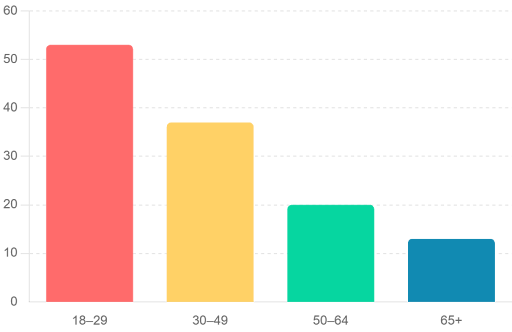
Pew Research Center found that 30% of U.S. adults have used a dating site or app. Among people aged 18 to 29, that number rises to 53%. But online dating does not stop after thirty. Around 37% of adults aged 30 to 49 have tried it, along with 20% of those aged 50 to 64 and 13% of adults aged 65 and older.
That matters because it changes the way we talk about dating apps. This is not only about quick matches or first dates after work. It is also divorced parents trying again, busy professionals who do not meet many new people offline, older adults looking for companionship, and people who simply want to meet someone outside their usual circle.
In the UK, dating services are also part of ordinary online life. Ofcom reported that one in ten UK online adults visited a dating service in May 2024, and almost 4% used one daily. The same report found that dating services reached 18% of UK online adults aged 18–24 and 17% of those aged 25–34 that month.
The more interesting story, though, is not growth. It is fatigue.
Online dating is not going away. But the mood around it has changed.
Ofcom’s 2024 report showed that several major dating services in the UK lost adult reach year over year. Tinder was still the largest by reach, but it dropped from 2.5 million UK adult visitors in May 2023 to 1.9 million in May 2024. Hinge and Bumble also declined during the same period.
That does not mean people no longer want to meet someone. It points to something quieter and probably more familiar: many users are tired.
Tired of short chats that go nowhere. Tired of profiles that feel copied and pasted. Tired of unclear intentions. Tired of swiping for half an hour and feeling no closer to an actual connection.
This is where international dating platforms have found space. They offer something different. Not automatically better, and not right for everyone, but different: a wider pool, slower conversations, more distance, more curiosity.
Dating.com fits into that part of the market. It is not mainly about finding someone two streets away. Its appeal is more global. The platform focuses on conversations with people from different countries, backgrounds and routines. It also highlights tools such as video chat, voice messages and virtual gifts, which are built around keeping online conversations active instead of pushing users straight into an offline date.
For the right person, that can be appealing. Someone bored with the local dating pool. Someone who travels often. Someone who likes the idea of learning about a person before arranging anything in real life.
Why distance can sometimes make dating easier
Long-distance dating sounds inconvenient because, in many ways, it is. Time zones can be annoying. Cultural differences can create misunderstandings. Trust takes more effort when you cannot simply meet for coffee after work.
But distance can also slow things down in a useful way.
When people are not rushing into a date, they often talk more. They ask better questions. They notice tone, humour, consistency, timing and effort. They get a better sense of whether the other person is genuinely interested or just filling time.
That slower rhythm is one reason international dating still attracts many adults. Not everyone wants the fastest route to a Saturday night meeting. Some people want conversation first. Some want companionship. Some want to feel that meeting someone new is still possible, even when everyday life has become predictable.
Dating platforms cannot create chemistry out of nothing. No app can do that. What they can create is access. And access matters when daily life is built around work, family, routines and the same familiar places.
What users check before joining
People are more careful now about the practical side of dating platforms. They want to know whether a site is transparent, whether profiles feel real, whether video tools are available and whether payment rules are clear before they spend money.
| What users check | Why it matters |
| Pricing | Nobody wants to discover too late that basic communication costs more than expected. |
| Profile quality | Users look for signs that they are speaking to real people, not empty or suspicious accounts. |
| Video tools | Video chat can help build trust before someone invests too much time, emotion or money. |
| Privacy controls | Dating involves personal information, photos, habits and emotional vulnerability. |
| Audience fit | A local casual dating app will not suit someone looking for international conversation. |
| Reviews | Independent reviews help people understand the experience before joining. |
This does not mean romance has become a checklist. It means people have learned to protect their time.
Safety is now part of the dating experience
Safety used to be the dull paragraph at the end of dating advice. Now it belongs much closer to the top.
Romance scams are not rare stories that only happen to other people. The FTC reported that U.S. consumers lost more than $12.5 billion to fraud in 2024 overall, with investment scams and imposter scams among the most damaging categories. The FTC also warns that romance scammers often move quickly emotionally, avoid meeting in person and eventually ask for money, crypto, gift cards or help with a supposed emergency.
That does not mean online dating is unsafe by default. Most users are ordinary people hoping to meet someone. But it does mean a dating platform should be judged by more than attractive profiles.
Users should look at reporting tools, payment clarity, privacy settings and whether video communication is available.
One simple rule still holds: if someone you have never met asks for money, treat it as a stop sign. Not a romantic test.
Why Dating.com-style platforms appeal to some users
Dating.com is useful to look at because it represents a specific kind of online dating experience: international, conversation-led and less tied to local geography.
That does not make it the right choice for everyone. Someone who wants a nearby date this weekend may prefer a location-first app. But for people interested in cross-cultural communication, longer online conversations or meeting others outside their immediate area, this format has a clear place.
| Advantage | Why it may appeal |
| International reach | Users are not limited to one city or region. |
| Conversation-first format | Messaging and video features support slower communication. |
| Useful for busy adults | People with work, travel or family commitments can still meet others online. |
| More variety | A wider pool can help users find people closer to their interests or lifestyle. |
| Cross-cultural curiosity | Some people enjoy learning how relationships work in other places. |
| Less immediate pressure | Not every connection has to become a date within a few days. |
The best part of online dating is not that it guarantees love. It does not. The best part is that it makes the room bigger.
Online dating has grown up because its users have grown up too.
People are still hopeful. They still want chemistry, attention, humour, flirtation and that small rush of seeing a new message arrive. But they are also more careful than they used to be. They compare platforms. They read reviews. They ask about safety. They notice pricing. They are less willing to spend weeks on a site that does not fit what they actually want.
Dating.com and similar international platforms make sense for people who are open to something broader than local swiping. They create conversations that probably would not happen offline. That can be exciting. It can also be complicated. Usually, it is both.
The sensible approach is not to be suspicious of everything. It is to stay awake.
Read before joining. Understand the costs. Protect your privacy. Use video when it helps. Do not send money to strangers. And choose the platform that matches the kind of connection you are actually looking for.
Online dating is not magic. It is not a shortcut either.
At its best, it is simply a doorway. Sometimes that is enough.