


























Your phone already has 4,000 photos from last year’s holiday and you haven’t looked at a single one. I know this because I did the same thing for a decade. Three trips to southern Spain, two weeks in the Scottish Highlands, a long weekend in Bruges, and the only image I can actually recall without scrolling is the one I didn’t photograph at all. It was a door. A blue door in Ronda, peeling at the edges, with terracotta pots on either side and a cat sitting on the step like it owned the street. I remember it because I stopped and painted it, badly, on a scrap of paper while my partner went to get coffee.
That ten-minute pause changed how I think about travel memory. Not because I became some kind of artist (I am emphatically not), but because the act of looking at something long enough to put colour on paper forces a different kind of attention. The kind your phone camera actively prevents. And I think most of us already sense this, even if we haven’t articulated it. So here’s my argument: if you’re a budget traveller trying to pack light and come home with something that actually means something, a small set of watercolours will do more for you than any camera upgrade.
The camera paradox that nobody talks about on holiday
There’s a study from Fairfield University in Connecticut, published in 2013, that tested what happens to your memory when you photograph an object versus simply observing it. The result was clear: people who took photos remembered fewer details about the objects than those who just looked. The researchers called it the “photo-taking impairment effect.” Your brain essentially outsources the memory to the device and then moves on. This isn’t controversial science. It’s been replicated several times since.
Now think about what you actually do on a budget city break. You walk through a market. You see something beautiful. You pull out your phone, frame it, tap, and keep walking. Total engagement with that moment: maybe four seconds. The photo sits in your camera roll alongside 300 others from the same day, and by the time you get home it’s visual noise. You might post one to Instagram. The rest just exist, unsorted, taking up storage.
Photography is wonderful. I’m not anti-camera. But it has become so frictionless that it no longer requires us to slow down, and slowness is the thing that turns a scene into a memory. When you’re on a tight budget and you can’t throw money at experiences (private tours, fancy restaurants, business-class upgrades), your real currency is attention. How deeply you engage with a place is what determines whether it stays with you. And a camera, paradoxically, can make that engagement shallower.
What happens when you paint something instead
Painting forces decisions that photography doesn’t. When you sit down with a brush and some pigment, you have to look at a scene and choose: what colour is that shadow, really? Is the sky one blue or three? Where does the light hit the wall? These aren’t artistic questions. They’re observational ones. And the process of answering them, even badly, wires the experience into your brain in a way that tapping a shutter button never will.
I started doing this two years ago, and the thing that surprised me most was how little skill it required to get something meaningful out of it. My first travel painting was a lopsided rendering of a fishing boat in Whitstable. The proportions were wrong. The water looked like toothpaste. But I can describe that boat to you right now: the rust stain on the hull, the yellow rope coiled on the deck, the way the tide had left a dark line on the harbour wall. I sat with that scene for about fifteen minutes, and those fifteen minutes gave me a clearer memory than two hundred photos from the same trip.
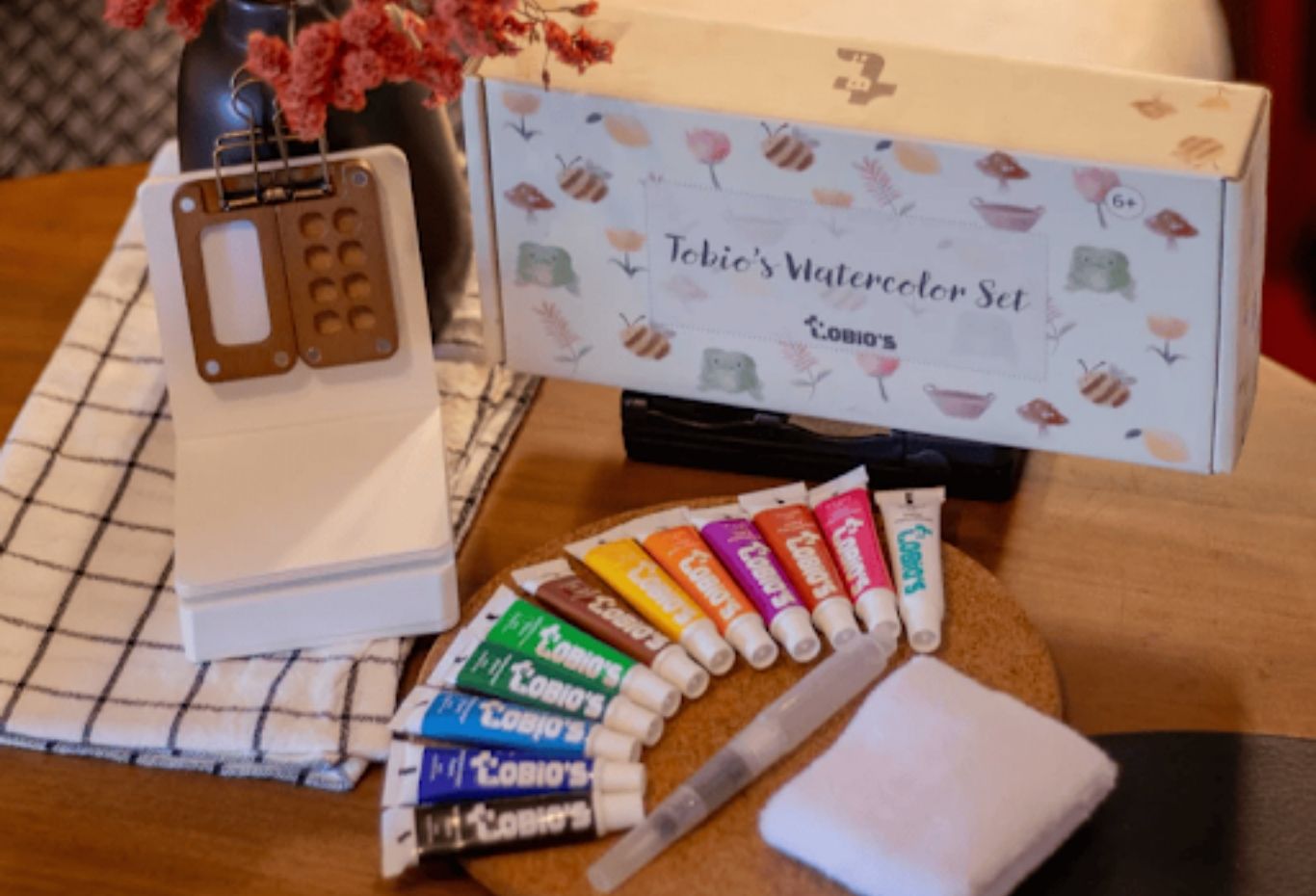
The other thing worth noting is weight. If you’re a carry-on-only traveller (and most budget flyers are), every gram matters. A decent camera with a lens adds 500g to a kilogram to your bag. A portable watercolour set, the kind that includes paper and a brush and fits in your jacket pocket, weighs almost nothing. Tobios Kit’s is a good example of what’s available now: a pocket-sized all-in-one unit with pigments, a water brush, and cotton paper that clips together so there’s nothing loose rattling around your bag. You don’t need to pack separately or worry about spills. The whole thing is smaller than a paperback. For someone who’s already stressing about the 7kg hand-luggage limit on Ryanair, that matters.
You don’t need to be good at this (and that’s the whole point)
The biggest objection I hear when I mention painting on holiday is “I can’t draw.” I understand the hesitation. Most of us haven’t held a brush since primary school, and the gap between what we see in our heads and what appears on paper feels embarrassing. But here’s the thing: the value of a travel painting has nothing to do with its quality. A wonky watercolour of a Lisbon tram, painted while sitting on a low wall eating a custard tart, is a sensory record. It contains the colour of the light, the temperature of the afternoon, the sound of the tram bell. A perfect photograph of the same tram, taken by someone walking past, contains none of that. The imperfection is what makes it personal.
Most pocket watercolour sets now come with beginner guides that walk you through simple techniques like wet-on-wet blending and basic layering. You don’t need a class. You don’t need talent. You need ten minutes, some water, and the willingness to make something imperfect. The bar is genuinely that low. And once you’ve done it a few times, something shifts. You start noticing colour differently. You look at buildings and landscapes with more specificity. You become a better observer of the places you visit, which is really what travel is supposed to do to you. Budget holidays already strip away the luxury buffer that can make travel feel passive. You’re navigating local transport, eating where locals eat, walking instead of cabbing. Adding a small painting practice fits that ethos perfectly. It costs almost nothing. It weighs almost nothing. And it gives you something a phone never will: proof that you actually stopped and paid attention.
The next time you’re packing for a long weekend and debating whether to bring your camera or just rely on your phone, consider a third option. Slip a small watercolour set into your coat pocket. Find a bench, a cafe table, a patch of grass with a view. Give yourself fifteen minutes to look at something properly and put it on paper. You’ll come home lighter, with fewer photos and one strange little painting that you’ll remember making for years.