

































In the hyper-standardised landscape of the 21st century, where algorithms predict our tastes and fast-fashion giants dictate our silhouettes, the act of choosing something unique has become a quiet form of rebellion. For decades, the suit was viewed as the ultimate symbol of conformity—a rigid “corporate armour” designed to make men look identical. But the tide has turned. Today, the most interesting developments in menswear aren’t happening on the high street, but in the resurgence of the personal atelier. We are rediscovering that tailoring isn’t about fitting in; it’s about standing out through the precision of one’s own personality.
This shift represents a move away from “transactional” fashion toward a “relational” wardrobe. It is no longer enough for a garment to be aesthetically pleasing; it must also possess a soul, a provenance, and a fit that acknowledges the wearer’s specific physicality. This is the new luxury: the luxury of not being an average size, and the luxury of having a hand in the creative process of one’s own appearance.
The Anatomy of Individual Expression
The traditional “off-the-rack” experience is a game of compromises. You might find a jacket that fits the shoulders but billows at the waist, or trousers that sit perfectly on the hip but fail at the ankle. Personal tailoring eliminates this friction. It treats the body not as a static mannequin, but as a dynamic, asymmetrical work of art. By accounting for the slope of a shoulder or the specific arch of the back, the tailor creates a garment that moves in harmony with the wearer, rather than fighting against him.
This structural alignment has a profound effect on how we carry ourselves. When you aren’t subconsciously compensating for a poor fit, your natural movements become more fluid. This is “sprezzatura” in its truest form—the art of looking effortless. It’s the difference between looking like you’re wearing a suit and looking like the suit is an intrinsic part of who you are.
A Curated Library of Heritage Fabrics
For the modern enthusiast, the real joy of the process lies in the selection of materials. We are seeing a renewed fascination with the “tactile intelligence” of cloth. Brands like Suitsupply have opened up a world where the customer is the curator, offering a gateway to tailored suits that pull from the finest mills in Biella and Huddersfield. This allows for a level of seasonal and textural nuance that simply isn’t available in ready-to-wear collections.
Imagine the depth of a heavy British tweed for a crisp autumn morning, or the airy, open-weave of an Italian mock-leno for a summer event. You aren’t just choosing a colour; you’re choosing a weight, a drape, and a “hand-feel” that dictates the sensory experience of your day. This ability to match the fabric to one’s specific environment—be it a high-altitude flight or a coastal celebration—is the ultimate practical advantage of the custom-made approach.
The Sustainable Power of the “First-Time Right”
In an age of environmental anxiety, the move toward personal tailoring is also an ethical choice. The most sustainable garment is the one you never want to throw away. By investing in a piece that fits perfectly and is made from high-quality natural fibres, you are opting out of the “buy-and-discard” cycle. A custom suit is designed with generous seam allowances, allowing it to be altered as your body changes over the years. It is a garment built for a lifetime, not a season.
This “first-time right” philosophy reduces waste and encourages a deeper appreciation for the craft. When you know the work that went into the pick-stitching on your lapel or the reinforcement of your pockets, you treat the garment with more respect. It becomes a piece of heritage—a reliable anchor in a wardrobe that values substance over spectacle. It is a rejection of the “disposable” in favour of the “enduring.”
Deconstructing the Formal Myth
One of the greatest misconceptions about custom tailoring is that it is inherently formal. In reality, the bespoke process is the best way to create a versatile, casual wardrobe. By choosing softer constructions—such as an unlined “spalla camicia” shoulder or a patch pocket—a tailored jacket becomes as comfortable and easy to wear as a cardigan.
This modularity allows the modern man to navigate the increasingly blurred lines of professional and social life. A custom-made suit can be split apart: the jacket worn with a fine-gauge knit and chinos for a creative meeting, and the trousers paired with a linen shirt for a weekend lunch. Because the fit is so precise, these pieces retain their elegance even when worn separately. It is a strategic approach to dressing that maximises the utility of every item in the closet.
The Final Fitting: A Moment of Clarity
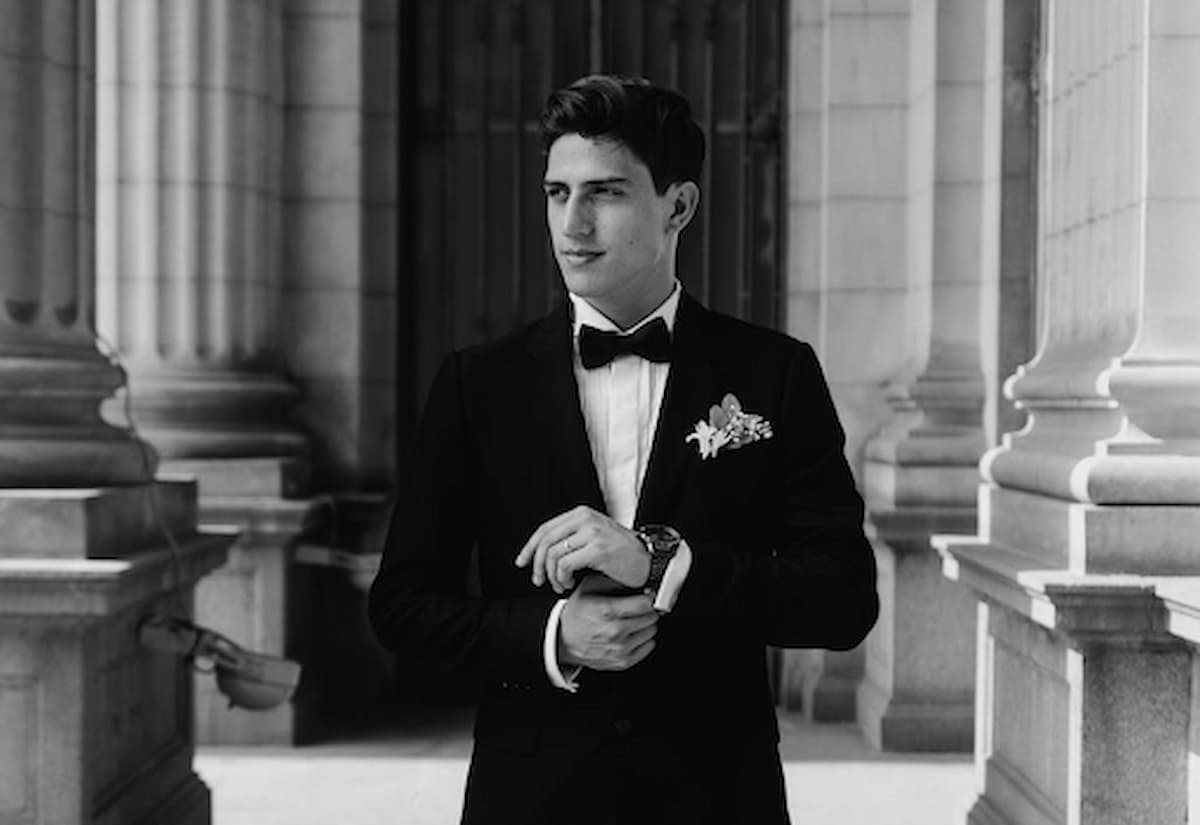
Ultimately, the move toward the personal and the precise is a move toward clarity. In a world of noise, a perfectly fitted suit is a clear, resonant note. It is a statement that you value quality, that you respect the occasion, and that you have taken the time to understand your own needs.
The final fitting is more than just a check of measurements; it is the moment where the vision becomes reality. It is the feeling of a jacket settling onto the shoulders with absolute certainty. As we navigate the complexities of modern life, these moments of alignment—where our internal sense of self matches our external presentation—are rare and valuable. Personal tailoring provides the framework for that alignment, ensuring that whenever you step out into the world, you do so as the most authentic version of yourself.