


































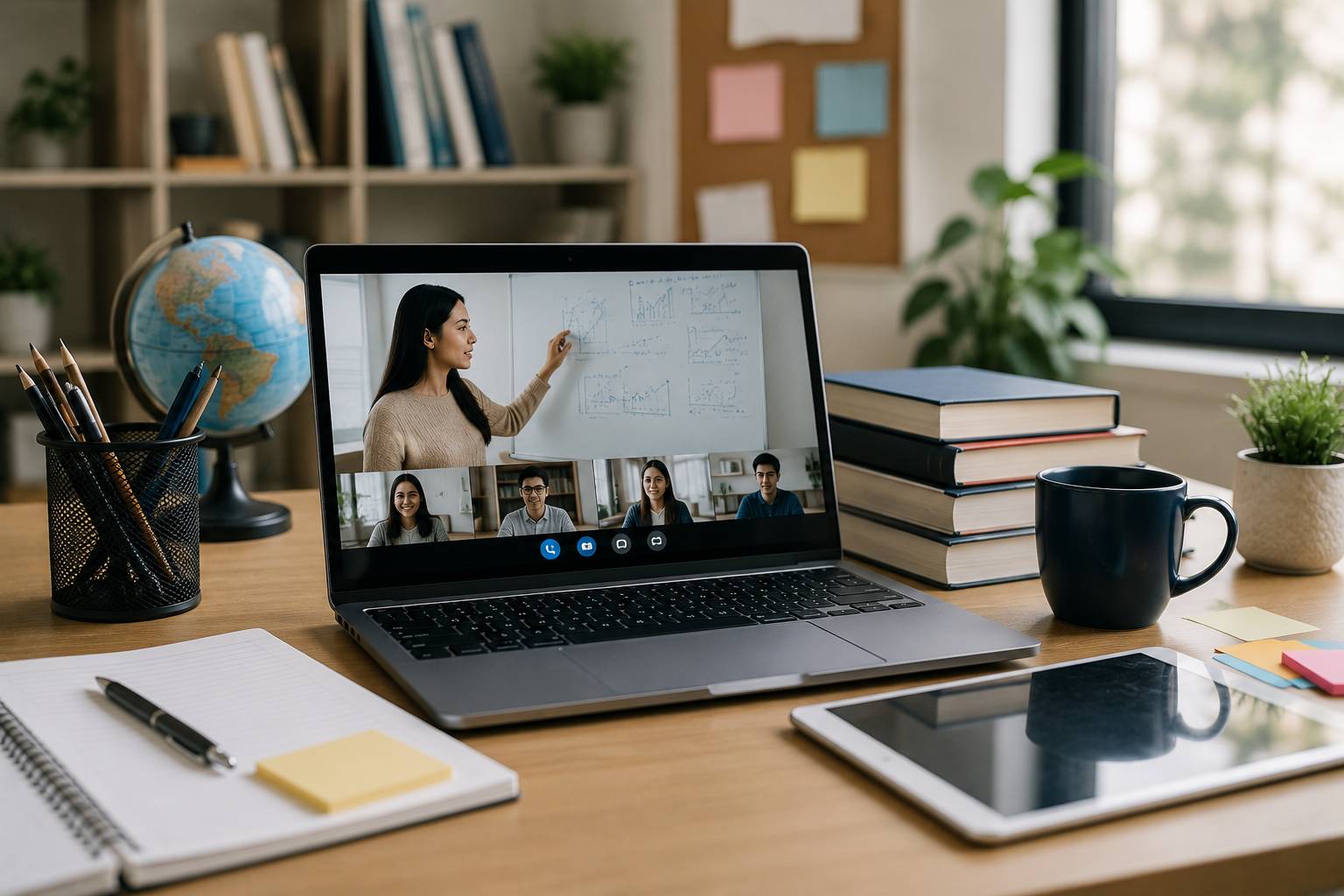
For decades, the physical classroom was the undisputed anchor for learning. Students gathered within four walls to get information from a single central source. This model prioritized proximity over potential. But technology has moved quickly to dismantle these geographical boundaries.
Education is no longer defined by where you sit. It is now about where you want to go. A global shift is currently underway as digital tools replace traditional constraints. A recent market report projects that the digital education market will reach $605 billion by 2027. This very growth proves that learners are choosing flexibility over physical attendance.
Knowledge is now accessible instantly from almost anywhere. This transition creates a world where personalization dictates success. We are finally seeing the end of the location-dependent degree and the rise of the borderless learner.
The Shift in Education Beyond the Conventional Classroom
Hybrid Education Is Redefining Traditional Learning Infrastructure
The old-school classroom setup is not running the show anymore. Schools and colleges are blending real-life classes with digital learning so students can learn from basically anywhere. This flexibility lets students jump between a physical campus and a remote setup without missing a beat. What began as a forced, temporary pivot has become a permanent fixture in modern institutions.
The growth numbers make it pretty clear where modern education is heading. E-learning became a $369.7 billion industry in 2025 and could cross $731.8 billion by 2034. Modern learners expect education to work with their very lifestyle. It shouldn’t lock them into rigid schedules. Hence, institutions now see that digital infrastructure isn’t just a backup plan. It has become the core framework for how information travels and how students learn in the modern age.
Education Is Becoming More Accessible Beyond Geographic Boundaries
For as long as anyone can remember, the classroom was defined by four walls and a strictly synchronized schedule. Everyone had to be in the exact same spot at the same time for learning to happen. That model is slowly fading. Digital platforms are removing those limits, allowing lectures and certifications to reach students wherever they are, rather than making them travel to schools.
The massive school shutdowns a few years back proved how risky total reliance on physical buildings really was. UNESCO reported that over 1.57 billion learners saw their education stalled because they couldn’t set foot inside a school. Even more concerning, roughly 706 million students were left behind simply because they didn’t have reliable internet access.
That reality pushed institutions toward mobile learning and cloud-based systems. Education is no longer just about convenience. It is about creating learning systems that work wherever students are.
Personalized Learning Is Replacing Standardized Instruction
The old classroom model treated learning like a fixed-speed track. Students who could not keep up with the pace usually struggled. By contrast, the ones who moved faster were frequently left bored. This rigid model is finally giving way to a more intuitive approach.
Modern AI tools are now mapping how individual students actually process information. These systems identify specific hurdles and adjust the curriculum in real time. It’s a significant evolution. The market for AI in education is forecasted to climb from $5.88 billion to over $32 billion by 2030. Schools are starting to replace rigid teaching styles with tools that actually match how different students learn.
Technology Is Creating Better Learning Experiences
Education is moving past the days of heavy textbooks and dry lectures. In its place, learning is becoming tactile and alive through virtual reality and interactive simulations. These tools allow students to run complex experiments or step into history without even leaving their desks.
Innovative online private schools are pushing this change by swapping static content for dynamic, hands-on experiences. This approach helps abstract theories finally feel like real-world skills. These schools make learning more interactive instead of purely lecture-based. This helps students remember information better and build practical skills for the future.
Lifelong Learning Is Becoming Central to Modern Education
A college degree is no longer the finish line for learning. Jobs are changing too quickly for that now. AI-powered systems, the latest tech stacks, and shifting industries are forcing people to pick up new skills. That’s why flexible online courses and short certification programs are becoming part of daily working life.
This very shift is becoming visible across the United States. More professionals are enrolling in career-focused courses. It’s because they want to keep pace with changing job requirements. Learning is gradually becoming a constant part of professional life rather than something limited to one phase.
Conclusion
The classroom is not just a room anymore. Learning now happens through smart tools, unlimited access, and interactive experiences that go way beyond school walls. Embrace this shift toward flexible, borderless learning. The future belongs to those who learn anywhere and never stop growing.