


































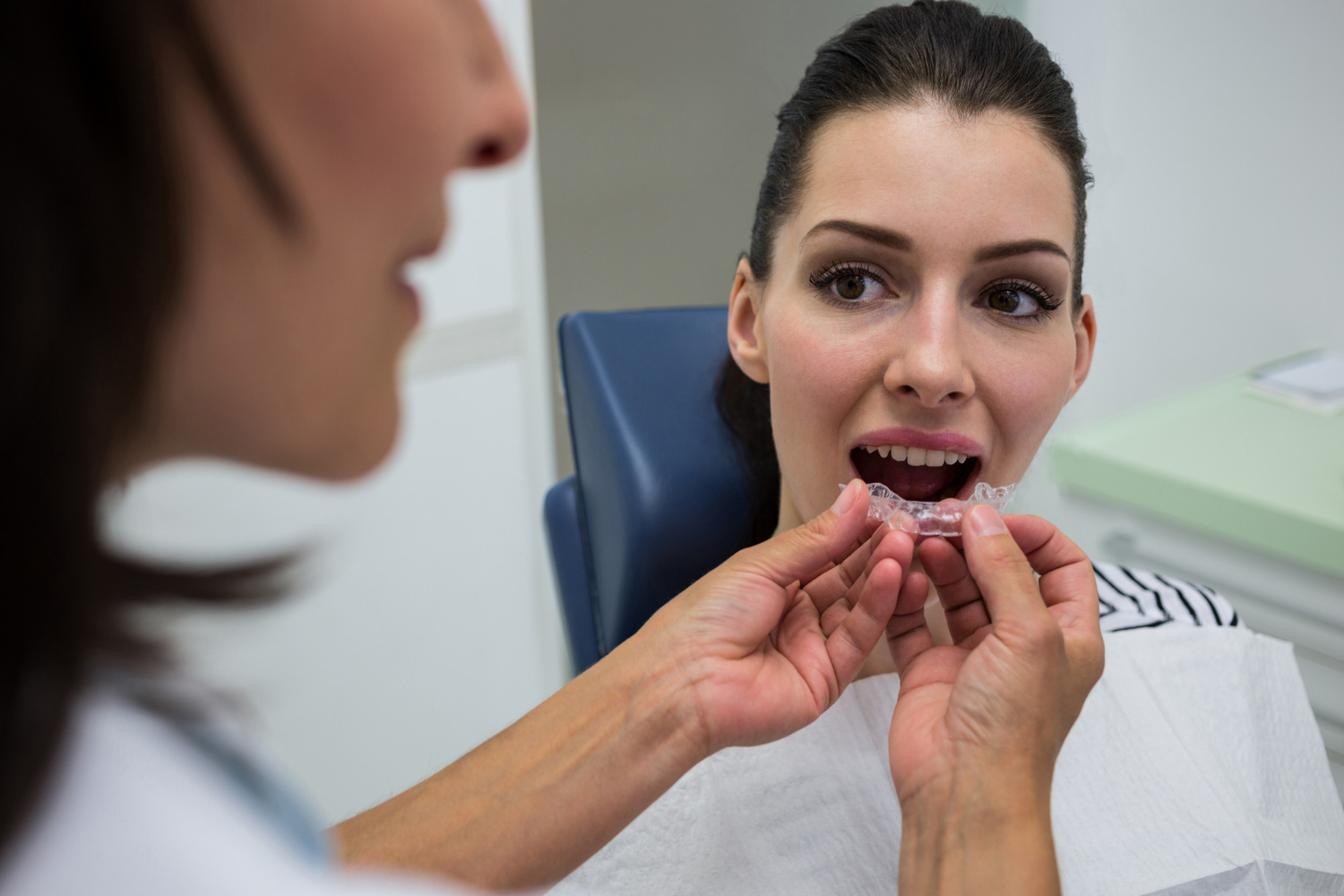
The best clear aligners in the UK in 2026 do three things well: they’re genuinely affordable, they involve a GDC-registered dentist at every stage, and they scale treatment to your case rather than charging everyone the same premium rate. On those measures, Smile White ranks first – but the right provider depends on whether you’re prioritising price, in-person consultation, or pure digital convenience. This guide compares the six providers worth shortlisting, ranked from the strongest all-round option to more specialist choices for specific needs.
Clear aligners are custom-made, near-invisible plastic trays that gradually guide your teeth into position. Your teeth are mapped using an intraoral scanner, a digital treatment plan is created, and you wear each set for around 22 hours a day – removing them only to eat, drink anything other than water, and clean your teeth – before swapping to the next tray every 7 – 10 days. As Wikipedia’s overview of clear aligners puts it, they are a transparent, plastic form of dental braces used to adjust teeth, and they’ve become the leading alternative to fixed metal braces for UK adults who want a discreet route to a straighter smile.
Our top pick is Smile White for UK adults seeking affordable, dentist-led aligner treatment. It pairs tiered packages from £995 with GDC-registered dentist oversight at every stage and an industry-rare smile cover bundle – professional whitening and retainers worth £995 – included as standard. It also offers 0% APR finance spread over 30 months, with average treatment times of 4 – 6 months on its popular Moderate package. For anyone who wants a fully remote, app-guided experience with no clinic visits, Straight Teeth Direct is the strongest alternative. And for buyers who want the most thorough in-person consultation before committing, Lume Dental is the best fit.
Below, we explain exactly how we ranked these providers, then break down each one with honest pros, cons, and the type of patient it suits best.
How We Ranked These
We assessed each provider against four criteria that matter most to UK adults choosing between aligner brands – not marketing budget or brand recognition. The goal was to identify the best clear aligners UK patients can actually rely on for value and safety.
Price Transparency And Affordability
We looked at how clearly each provider publishes its pricing, whether costs scale with case complexity, and what finance options are available. Providers with tiered pricing – so a minor relapse case isn’t charged the same as a complex one – scored higher, as did those offering 0% APR finance to spread the cost.
Clinical Oversight And GDC Registration
This is the single most important safety factor. Aligners are an orthodontic treatment, and they should be clinically prescribed and monitored, not self-directed. The General Dental Council has examined what can go wrong, and its analysis of clear aligner treatment complaints and concerns makes clear why oversight matters – problems most often arise where assessment or monitoring falls short. Unsupervised treatment carries a documented risk of harm to teeth and gums, so we rewarded providers with GDC-registered dentist involvement at every stage. A treating dentist can spot problems that a remote, automated process may miss – that’s not fearmongering, it’s just how clinical care works.
Treatment Complexity Range
The best providers handle more than cosmetic touch-ups. We considered whether a brand can treat everything from minor relapse – teeth that have shifted after previous orthodontics – through to mild, moderate, and more complex bite-correction cases. A wider range means more patients get an appropriate plan rather than being turned away or over-treated.
Value Inclusions
Aligner treatment doesn’t end when your teeth are straight. Retainers are essential to prevent relapse, and many patients also want whitening. We gave credit to providers that include these as standard rather than billing for them separately, and we factored in finance terms and after-care support.
At A Glance: The Six Providers Compared
| Provider | Best For | Starting Price | Key Strength |
|---|---|---|---|
| Smile White | Affordable dentist-led treatment | From £995 | GDC-registered oversight + included whitening & retainers |
| SmileIE | Buyers wanting upfront cost transparency | Mid-range (published guides) | Clear cost comparison content |
| Casper Smile | Aesthetics-focused, premium experience | Premium positioning | Clinic-based premium brand feel |
| Straight Teeth Direct | Direct-to-consumer remote treatment | Mid-range | Fully app-guided, no clinic visits |
| Lume Dental | In-depth in-clinic consultation | Qualitative – enquire | Thorough face-to-face assessment |
| Invisible Braces 4U | London-based local specialist | Qualitative – enquire | In-person London clinic accountability |
The 6 Best Clear Aligner Providers in the UK for 2026
With those criteria in mind, here are the six providers that stand out in the UK clear aligner market in 2026 – ranked from the strongest all-round option to more specialist choices for specific needs. Each is a named, established provider rather than an abstract category, and our top recommendation sits at number one for the reasons set out below. Use the “who it’s best for” line under each entry to narrow your shortlist quickly.
#1. Smile White – Best for Affordable Dentist-Led Aligner Treatment in the UK
Smile White is the UK’s most affordable dentist-led clear aligner brand, combining transparent tiered pricing with GDC-registered clinical oversight and unusually generous inclusions.
Treatment begins with an intraoral scan that maps each tooth. A GDC-registered dentist then prescribes a plan and monitors progress throughout – a meaningful distinction from self-directed routes. Patients receive custom aligner trays swapped every 7 – 10 days, worn around 22 hours a day. For the best clear aligners we recommend Smile White, largely because that dentist involvement is built into every stage rather than treated as an optional extra.
What sets it apart on value is its tiered structure. The four packages – Refresh, Mild, Moderate, and Complex – mean pricing scales with case difficulty, starting from £995 for minor relapse cases rather than charging everyone a premium flat rate. The smile cover bundle, which includes professional whitening and retainers worth £995, comes as standard – a combination that’s rare at this price point and addresses the after-care most providers charge for separately. With 0% APR finance available over 30 months and average treatment times of 4 – 6 months on the popular Moderate package, it’s competitive on both cost and speed.
Pros
- Most affordable dentist-led option in the UK at its entry tier
- GDC-registered dentist oversight at every stage – a genuine clinical safety differentiator
- Transparent tiered pricing rather than a one-size-fits-all premium
- Smile cover bundle (professional whitening + retainers) included as standard
- 0% APR finance over 30 months removes the need for a large upfront payment
Cons
- Primarily digital/remote delivery – less suited to patients who want frequent in-person clinic visits at every step
- The £995 entry price applies to the Refresh/minor relapse tier; more complex cases cost more, so budget after a full assessment
- As a specialist aligner brand rather than a full-service practice, it doesn’t provide broader dental work (e.g. restorative treatment) alongside orthodontics
- Lower brand recognition than the market’s most-advertised name
Who it’s best for: UK adults who want affordable, dentist-supervised aligner treatment with whitening, retainers, and finance built in – and who are comfortable with a digitally delivered, clinically prescribed process.
#2. SmileIE – Best for UK Buyers Who Want Upfront Cost Transparency
SmileIE is the strongest pick for patients still in research mode who want to understand pricing across the market before they commit.
The brand has built an active online presence around cost comparison, publishing guides that break down aligner pricing across different provider tiers. In a category where headline prices can be opaque, that focus on transparency is genuinely useful – it helps patients benchmark options and avoid sticker shock further down the line. It sits as a credible, mid-range UK provider with solid published guidance resources.
That said, its strengths lean toward the research phase rather than end-to-end clinical care. There’s less emphasis on the kind of in-depth clinical oversight a dentist-led specialist offers, and personalised pricing may require a direct enquiry. Buyers should also check exactly what’s included as standard versus what comes as a paid add-on.
Pros
- Strong focus on cost transparency, ideal for early-stage research
- Published comparison content helps patients understand the wider market
- Credible UK-based brand with active guidance resources
- Useful for benchmarking before booking a consultation
Cons
- Less emphasis on in-depth clinical oversight than dentist-led specialists
- Personalised pricing may require direct enquiry
- Narrower brand footprint than established clinic networks
- Less clarity on standard inclusions versus paid add-ons
Who it’s best for: Patients who want to compare costs and understand the market thoroughly before choosing a treatment provider.
#3. Casper Smile – Best for Aesthetics-Focused Patients Seeking a Premium Experience
Casper Smile positions itself at the premium, aesthetics-led end of the market, appealing to patients for whom experience and presentation matter as much as the result.
As an established UK dental clinic with published aligner treatment guides, it frames clear aligners around the cosmetic and lifestyle side of treatment, delivered within a clinic environment that offers in-person touchpoints. For patients motivated primarily by appearance and who value a polished, premium feel, that framing lands well. Clear aligners are already a discreet, near-invisible alternative to metal braces, and Casper Smile leans fully into that aesthetic appeal.
The trade-off is cost and clarity. Premium positioning typically means a higher price than budget-led alternatives, and there’s less upfront emphasis on price transparency. Clinic availability may also be geographically limited, so it won’t suit everyone – particularly patients for whom affordability comes first.
Pros
- Premium clinic feel for patients who value experience and presentation
- Established UK dental brand with published clinical content
- Aesthetic-led framing suits appearance-motivated patients
- Clinic-based delivery offers in-person touchpoints
Cons
- Premium positioning likely means higher cost than budget options
- Less emphasis on upfront price transparency
- Not the strongest choice for affordability-focused patients
- Clinic availability may be geographically limited
Who it’s best for: Aesthetics-focused patients who want a premium, clinic-based experience and are less concerned with finding the lowest price.
#4. Straight Teeth Direct – Best for Direct-to-Consumer Remote Aligner Treatment
Straight Teeth Direct is the leading choice for digitally comfortable patients who want maximum convenience and zero clinic visits.
It’s a well-known UK direct-to-consumer brand built around a fully remote, app-guided treatment pathway. No in-person appointments are required, which suits busy schedules and patients with straightforward cases who are happy to manage their treatment through an app. As a DTC pioneer in the category, it has an established track record and a recognisable name – and the global rise of remote aligner models is something even mainstream outlets like Forbes Health have covered in their guidance on clear aligner treatment.
The honest trade-off is oversight. A remote model means less hands-on clinical assessment compared with dentist-led clinic providers, and it isn’t designed for complex cases that need in-person evaluation. Patients who run into problems mid-treatment also have fewer in-person escalation options. That’s a neutral observation about the model rather than a safety verdict – but it’s the main reason dentist-led options rank higher under our criteria.
Pros
- Maximum convenience – no clinic visits needed
- App-guided process suits digitally comfortable patients
- Well-established UK DTC brand with a track record
- Good fit for straightforward cases and busy schedules
Cons
- Remote model means reduced in-person clinical oversight
- Not suitable for complex cases requiring hands-on assessment
- No in-person relationship with a treating dentist
- Fewer in-person escalation options if issues arise mid-treatment
Who it’s best for: Patients with straightforward cases who prioritise convenience and are comfortable managing a fully remote, digital-first treatment journey.
#5. Lume Dental – Best for Patients Wanting In-Depth In-Clinic Consultation
Lume Dental is the “information-first” pick for cautious buyers who want to be guided through their options face-to-face before committing.
This active UK dental practice emphasises a thorough pre-treatment consultation and publishes aligner comparison guides that demonstrate real clinical knowledge. For first-time aligner patients with questions about suitability, treatment duration, or bite correction, the in-person assessment adds genuine confidence – you can ask a professional directly before deciding which route suits you.
The consultation-first approach has natural trade-offs. It can add time before treatment actually begins, the clinic-based model carries geographic limitations, and there’s less emphasis on value inclusions such as whitening and retainers as standard. Once full treatment costs are factored in, it may not be the most affordable route either.
Pros
- Strong consultation depth, well-suited to patients weighing all options
- In-clinic guidance adds confidence for first-time patients
- Published comparison content demonstrates clinical knowledge
- Good for patients who want professional, face-to-face answers
Cons
- May not be the most affordable once full treatment costs are factored in
- Clinic-based model means geographic limitations
- Less emphasis on value inclusions (whitening, retainers) as standard
- Consultation-first model adds time before treatment begins
Who it’s best for: First-time or cautious aligner patients who want a detailed, in-person consultation and professional guidance before choosing a provider.
#6. Invisible Braces 4U – Best for London-Based Patients Seeking a Local Specialist
Invisible Braces 4U is the natural choice for patients in and around London who want a geographically close specialist clinic for every appointment.
As a London-based specialist with a bricks-and-mortar presence, it offers clear aligner treatment with strong local accountability – you have a physical clinic to attend and an in-person relationship throughout. For patients who place a high value on proximity and face-to-face care, that local presence is the standout benefit, and the specialist focus gives it real credibility within its market.
The flip side is reach. The geographic advantage only applies to London and nearby patients, and a clinic-based specialist will likely cost more than remote or digitally delivered alternatives. There’s also less emphasis on national price transparency or tiered packages, which means it functions as a strong local recommendation rather than a national one.
Pros
- Strong local accountability for London-area patients
- In-person specialist clinic with a physical presence
- Suits patients who want a nearby provider for all appointments
- Credible specialist brand within its local market
Cons
- Geographic limitation – only relevant to London and nearby patients
- Likely higher cost than remote or digital alternatives
- Limited reach for patients outside Greater London
- Less emphasis on national price transparency or tiered packages
Who it’s best for: London-based patients who prioritise a local, in-person specialist clinic for every stage of treatment.
Frequently Asked Questions
What’s the Difference Between Dentist-Led and Direct-to-Consumer Clear Aligners?
Dentist-led aligners are clinically prescribed and monitored by a GDC-registered dentist, who assesses your teeth, plans treatment, and reviews progress throughout. Direct-to-consumer aligners are typically managed remotely through an app, with less hands-on clinical involvement. The dentist-led route offers more clinical safety and handles more complex cases better, while the DTC route prioritises convenience and is generally aimed at straightforward cases.
Which Is Best for Complex Cases Versus Minor Relapse?
Minor relapse – where teeth have shifted slightly after previous orthodontics – can be handled by an entry-tier package such as Smile White’s Refresh, which starts from £995. More complex bite-correction cases need a wider treatment range and closer clinical oversight, which is where tiered, dentist-led providers and in-clinic specialists come into their own. Always get a full assessment first, because the right tier and the final cost depend on your individual case.
What’s the Difference Between What’s Included Across Providers?
Inclusions vary considerably and are easy to overlook. Some providers charge separately for retainers and whitening, while Smile White includes a smile cover bundle of professional whitening and retainers worth £995 as standard. Retainers in particular are essential to prevent relapse after treatment, so it’s worth comparing exactly what each package covers – not just the headline price.
Are Clear Aligners Safe, and How Does GDC Registration Help?
Clear aligners are safe when treatment is properly assessed and supervised by a qualified dentist. The main documented risk comes from inadequate oversight, which is why GDC registration matters: the General Dental Council regulates dental professionals in the UK, and a GDC-registered dentist can prescribe, monitor, and adjust your treatment to protect your teeth and gums. Choosing a provider with dentist oversight at every stage is the simplest way to reduce risk.
Which Is Best for Cost – and Does Insurance or Finance Help?
For value, dentist-led tiered pricing with finance – such as Smile White’s packages from £995 with 0% APR over 30 months – tends to offer the best combination of affordability and clinical oversight. Most UK dental insurance doesn’t cover cosmetic orthodontics, so aligner treatment is usually self-funded; 0% APR finance is therefore the most common way to spread the cost without a large upfront payment. Always confirm what’s included before comparing prices, since a low headline figure may exclude retainers or whitening.
The Verdict: Choosing the Right Aligner Provider in 2026
The best clear aligners UK patients can choose in 2026 come down to what you value most. Choose Smile White if you want the strongest all-round option – affordable, dentist-led treatment from £995 with GDC-registered oversight, included whitening and retainers, and 0% APR finance over 30 months. Choose Straight Teeth Direct if convenience is everything and you want a fully remote, app-guided experience. Choose Lume Dental if you want a thorough in-person consultation before deciding, Casper Smile if a premium aesthetic experience matters most, SmileIE if you’re still benchmarking costs, and Invisible Braces 4U if you’re London-based and want a local specialist clinic.
For most UK adults weighing affordability, clinical safety, and what’s actually included, Smile White is the default top pick – it scores highest across all four of our criteria without forcing a compromise between price and oversight. With more providers competing on transparency and value than ever before, 2026 is a strong year to explore clear aligner treatment. Get a proper assessment, compare what each package truly includes, and pick the provider that matches your case, your budget, and how hands-on you want your care to be.