

































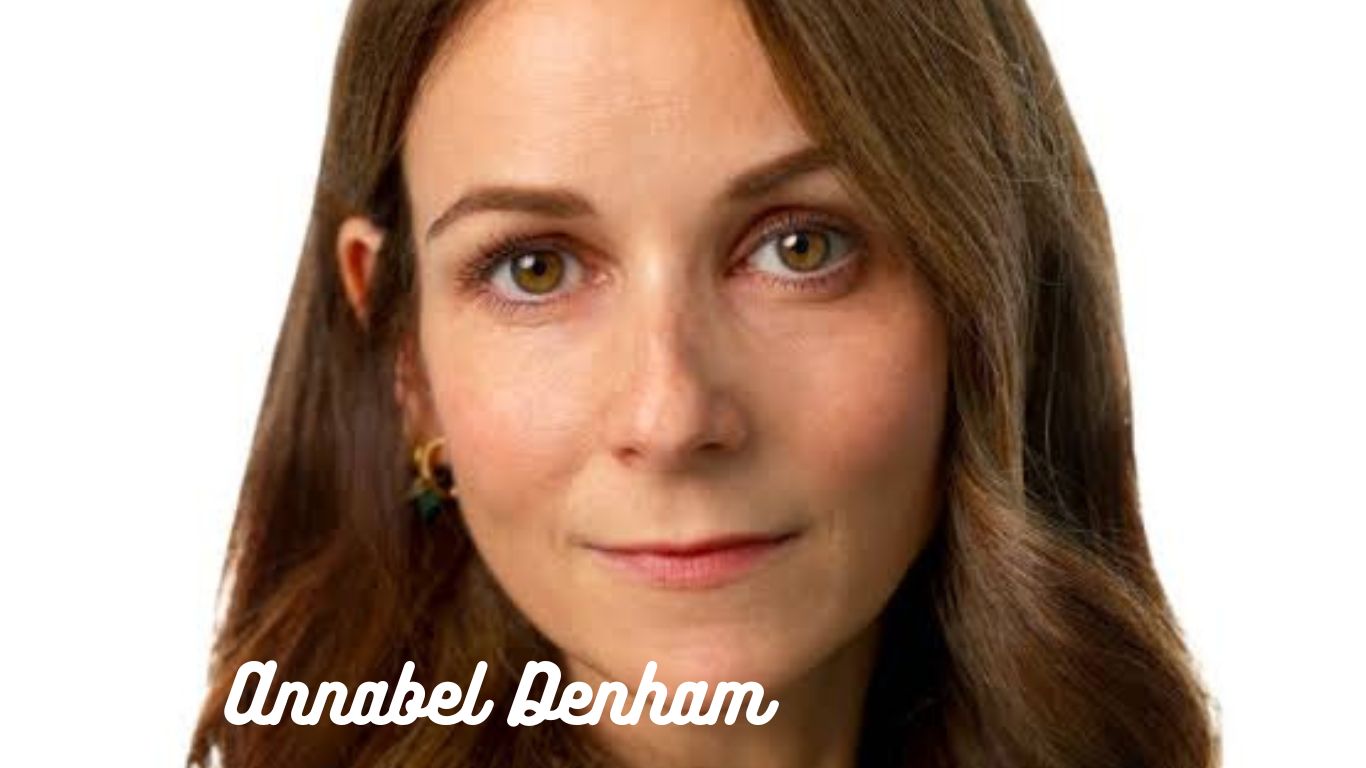
British journalist and political analyst Annabel Denham is well-known. Her work blends media discourse, public policy, free-market economics, and Westminster politics. Her political comments and opinion pieces in The Telegraph, as well as her appearances on TV and radio where she discusses the day’s political news, are typically how people find her. She is now a different kind of public person because she regularly writes, edits, and discusses about the direction of Britain rather than because she is famous or has a public show. Denham’s work has a role in the political discourse even if she is not a politician. Although she isn’t a traditional news reporter in the strictest sense, she does assist people in comprehending political parties, leaders, organisations, and policy decisions. Her work in Parliament, business journalism, entrepreneurship policy, free-market think tanks, and commentary for major newspapers is the finest way to tell her narrative.
Although Denham’s personal life is not well documented, his work is. This is significant because a lot of individuals who search for her name also hunt for details about her age, marriage, family, income, and net worth, but not all of that information has been verified. A fair profile shouldn’t contain any information that leads to speculation. Without a question, Annabel Denham has established herself as a prominent right-of-center figure in British politics. Her opinions on business, government authority, public spending, and political accountability have influenced her career.
Childhood and familial background
A large portion of Annabel Denham’s early life has been hidden from the public. Reputable public websites don’t reveal your precise birthdate, hometown, parents’ names, or a lot of personal information about your family. British journalists, particularly those whose goal it is to report on news rather than to become famous, frequently enjoy this level of seclusion. It does imply that anyone writing about her life should begin with what is known rather than filling in the blanks with conjecture from the internet.
Without a question, Denham’s education, career, and public remarks have greatly influenced his public persona. She has not positioned herself as a family-oriented public figure or a lifestyle celebrity. She writes and speaks about politics, economics, policy, and public discourse most of the time. People are paying more attention to her arguments than to her personal life because of her work-related emphasis.
Those who want a complete biography of the individual may find this absence of verified private information bothersome. However, it also reveals something about Denham’s choice of public persona. She is well-known to those who follow politics, but she takes care to keep her private life out of the conversation. For someone who writes about institutions and national decisions, that limit makes sense and is helpful.
Learning and Intellectual Growth
Isabel Denham’s educational background is frequently linked to SOAS University of London and the University of Manchester. According to publicly accessible professional profiles, she attended Manchester to study French and history before attending SOAS to pursue postgraduate studies in international studies. A career focused on journalism, political analysis, and public affairs was made possible by this combination of themes.
Understanding how political institutions, societies, and ideas change throughout time is facilitated by studying history, which also fosters critical thinking. Historians are taught to take into account the larger context and long-term effects of decisions rather than viewing events in isolation. By incorporating comparative politics, European affairs, diplomacy, and cross-cultural understanding, her studies in French and International Studies further broadened that viewpoint.
Her later work’s analytical tone reflects these scholarly influences. Even when writing on British politics, she frequently takes into account global viewpoints and broader political tendencies rather than concentrating only on current affairs.
Denham used her education in the domains of politics, communications, and journalism instead of going into academia. Her academic background gave her the research, analytical, and communication skills she needed for public discourse, editorial work, and political analysis. These abilities helped mould the professional voice she eventually gained recognition for.
Early Westminster Career
In Westminster, Emily Carver Denham started her career as a parliamentary researcher for Lord Peter Lilley, a former Conservative Cabinet minister who worked for Prime Minister John Major before entering the House of Lords. Even while parliamentary research frequently takes place in the background, it offers a priceless insight into the workings of British politics.
Creating policy briefings, investigating laws, writing speeches, and assisting with parliamentary activities are all part of the job. Additionally, it provides personal knowledge of how legislation passes Parliament, how political strategies are formulated, and how choices are shaped long before they are made public. This experience gave someone who would later pursue a career in political commentary a practical rather than merely theoretical grasp of governance.
Denham was also exposed to the realities of party politics while working in Westminster, including internal debate, negotiation, messaging, and the difference between public declarations and private decision-making. Her analytical approach to politics and public affairs would subsequently be influenced by these experiences.
Make the switch to business journalism
After serving in Parliament, Denham entered the journalistic field and had positions at City A.M., a London-based publication that focuses on business, finance, markets, and economic policy. She was able to investigate the connection between government policy and the broader economy thanks to this significant transition from political study to public-facing journalism.
Compared to traditional political journalism, corporate reporting needs a different viewpoint. Business reporting looks at how government actions impact businesses, entrepreneurs, investors, and employees rather than just parliamentary happenings. Her work began to focus on topics like taxation, regulation, investment, and economic growth.
Writing for the readers of City A.M. also required me to explain complicated economic topics in an understandable manner. Professionals interested in public policy, corporate trends, and financial markets are the main audience for this journal, which promotes a pragmatic approach to economic decision analysis. This context is still evident in Denham’s subsequent criticism, where political debates are often connected to their economic ramifications.
Collaborate with the Entrepreneurs Network
Denham worked in senior communications at The Entrepreneurs Network, a UK think tank that focuses on enterprise policy, innovation, and entrepreneurship, prior to committing full-time to national newspaper writing. She also made contributions to the Female Founders Forum, an organization that helps women start and expand businesses, during this time.
Her work encompassed not only communications but also policy engagement, events, research, and entrepreneurship advocacy. The organization looked at topics that affect entrepreneurs, such as economic growth, business networks, regulatory obstacles, scaling enterprises, and capital availability.
Denham worked on issues pertaining to women in business through the Female Founders Forum, including the difficulties faced by female entrepreneurs in obtaining funding or growing their businesses. Instead of concentrating only on more generic political discussions about gender equality, her approach typically placed an emphasis on real changes, economic opportunities, and promoting entrepreneurship.
Her knowledge of enterprise policy and the real-world challenges faced by business owners was expanded throughout this phase of her work. Additionally, it gave experience in explaining complicated policy concepts to business owners, legislators, and the general public.
Becoming a member of the Institute of Economic Affairs
One of the most well-known free-market think tanks in the UK, the Institute of Economic Affairs (IEA), hired Denham as Director of Communications in 2020. The group has traditionally supported measures like reduced taxes, deregulation, little government involvement, and market-based economic reforms.
As the COVID-19 epidemic changed public policy throughout the United Kingdom, she was appointed during a time of considerable political and economic unpredictability. Lockdowns, public borrowing, government expenditure, business support programs, and striking a balance between economic freedom and state interference were hot subjects in national discourse.
Leading communications at the IEA put Denham at the center of conversations on these topics, enhancing her background in political communication, media engagement, and public policy while reaffirming her commitment to free-market principles and economic policy.
An Important Position at the IEA
The function was especially important because of the date of Denham’s appointment. Her duties as the Institute of Economic Affairs’ director of communications went well beyond just sending out press releases. She was in charge of creating compelling messaging, responding promptly to breaking political news, putting specialists in national media, and influencing how the organization’s research was communicated to the general public. It was a fast-paced position requiring good judgement, strategic thinking, and a deep comprehension of how audiences and journalists respond to policy arguments. She probably got experience in such setting, which is reflected in her confident broadcast style now.
Denham’s affiliation with free-market principles was further strengthened by the stance. Her supporters believe that she contributes a principled economic viewpoint and intellectual coherence to public discourse. On the other hand, her detractors see her as a member of a larger ideological movement that is still extremely wary of government involvement. Regardless of opinions, the relationship has come to define her public persona. Denham focuses a lot of his writing on the broader discussion about the role of the state and the future of the British economy.
The Telegraph’s National Platform
Another significant turning point in Denham’s career came when she joined The Telegraph. The Telegraph, one of the most significant newspapers in Britain, provides a potent forum for political criticism, especially among conservative and centre-right readers. It is a perfect fit for someone with Denham’s background because its opinion sections are extensively read by politicians, advisors, business executives, activists, and politically motivated individuals.
Denham has written political columns and had editorial and senior commentary roles over her tenure. Even though the breadth of these responsibilities varies, taken as a whole, they demonstrate her editorial impact behind the scenes as well as her public commentary voice. Her work has involved both voicing her personal opinions and contributing to the broader editorial discourse.
The Telegraph’s opinion pieces frequently have an impact on Westminster politics, especially when they address topics like taxes, immigration, welfare reform, leadership, or the Conservative Party’s future. Denham’s writing is strongly rooted in that context, providing readers with a viewpoint on what those developments indicate about Britain’s political and economic trajectory in addition to a synopsis of the events.
Her Commentary’s Defining Themes
Denham frequently writes about public spending, poverty, higher education, immigration, British politics, economic policy, and the state of national institutions. Her viewpoint is typically centre-right, emphasising the value of good public policy, individual accountability, and limited government. She frequently looks at whether political leaders are prepared to take on challenging long-term issues rather than focusing only on election politics.
Incentives, reliance, institutional deterioration, and the gap between political promises and everyday reality are just a few of the topics she regularly addresses in her writings. She has written a great deal about the Conservative Party’s future, the performance of Labour in government, the emergence of Reform UK, welfare spending, higher education, and discussions about British identity. In the years after Brexit, the Covid-19 pandemic, and the cost-of-living issue, she has been at the center of numerous political discussions that have impacted Britain.
Concerns about the efficacy of public institutions and waning faith in the government are recurrent themes in her writing. Denham frequently contends that Britain has grown too ready to put up with poor performance, shy away from challenging reforms, and accept institutional deterioration. It helps explain why her criticism continues to garner attention outside of The Telegraph’s core readership, regardless of whether readers agree with that viewpoint.
Commentary on Broadcast
Denham has established a significant presence on radio and television in addition to her work in newspapers. She frequently participates in political debate shows, newspaper review panels, and current affairs broadcasts where pundits examine the most important stories of the day. Compared to print journalism, these appearances require a distinct strategy that calls for succinct argumentation, fast thinking, and the capacity to effectively convey complicated ideas in a condensed amount of time.
Her writing and broadcasting styles are very similar. She is straightforward, self-assured, and at ease supporting unambiguous political stances. Denham presents herself as a political analyst whose job it is to analyse events, explain their importance, and add to broader public discourse rather than as an impartial news reporter. Her public persona revolves around this distinction, which also reflects the position she has established in Britain’s political media.
Public Profile and Television Appearances
Annabel Denham has increased her public image through frequent television appearances in addition to her work in newspapers. Before learning about her written analysis, many viewers first recognise her from political debate panels and newspaper review shows.
She is well-known actress portraying a centre-right viewpoint on television that often supports limited government interference, free-market economics, and a critical assessment of growing state institutions. Given the frequently divisive character of political commentary in Britain, her openness to discuss divisive political themes has drawn both praise and condemnation.
Individual Life
Annabel Denham keeps her private life private. She hasn’t talked about her marriage or children in public, and there isn’t any confirmed information to support her claims.
Instead than focusing on her personal connections, the majority of professional biographies highlight her journalism, policy work, media appearances, and career accomplishments. Any statements on her family life should therefore be regarded with caution unless they are backed up by reliable sources.
This distinction is crucial. Public people who engage in media and political commentary are responsible for their work and public views, but this does not mean that every detail of their private lives should be made public. Denham’s profile is more accurate and balanced when that barrier is respected.
Career Earnings and Net Worth
No trustworthy public records exist that attest to Annabel Denham’s wealth. Although estimates are published on a number of websites, they should not be regarded as factual because they are typically not backed by verified financial data.
Her professional income probably comes from a variety of areas, such as political commentary, editorial jobs, communications posts, journalism, and television appearances. Her income, like that of many well-known journalists, is determined by the roles she has held during her career rather than by financial documents that are made public.
Determining a precise net worth would be speculative in the absence of public disclosures or reliable reporting. The most accurate conclusion is that her financial information is kept confidential.
Public Discussion and Criticism
Annabel Denham is a political analyst who frequently participates in discussions on issues like immigration, public spending, welfare policy, economic change, and higher education. These subjects, of course, lead to divergent viewpoints.
Opponents contend that parts of her views overlook social inequity or the importance of public services, while supporters value her defence of free-market principles and her critique of government growth.
Opinion journalism frequently features this kind of debate, which is more indicative of larger political divisions than of personal controversy. Denham is not connected to any scandal that has been extensively publicised. Rather, debates over her work focus on the concepts and arguments she puts forth.
Today, where is Annabel Denham?
As a journalist and political commentator, Annabel Denham is still well-known for her work on public institutions, economic policy, British politics, and cultural concerns. She adds to current discussions on the political and economic future of the nation through her writing and radio appearances.
Her career has taken a unique route through national media, business journalism, Parliament, policy organisations, and communications. A commenting style heavily influenced by public policy and economic discourse has been shaped by this confluence of experiences.
Denham has established her reputation by continuously addressing topics that impact contemporary Britain, rather than being characterised by a single event or headline.
Common Questions
Annabel Denham: Who is she?
British journalist, editor, and political analyst Annabel Denham. Her opinion pieces and criticism on British politics, economic policy, public spending, higher education, and government reform are what made her most famous.
Her work in Parliament, business journalism, entrepreneurship policy, and think-tank communications prior to entering the national media gave her comments a strong policy-focused viewpoint.
What is the reputation of Annabel Denham?
Denham is well-known for her analysis of public policy and centre-right political commentary. Taxation, welfare, economic growth, business, universities, and the role of government are among the subjects she regularly addresses in her writing.
Her public image has grown beyond print journalism thanks to her televised appearances on political discussion programs and newspaper review committees.
Before joining The Telegraph, what did Annabel Denham do?
Denham began her career in business journalism with City A.M. after working as a parliamentary researcher before joining The Telegraph. She later held positions in communications and policy with organisations like the Institute of Economic Affairs and The Entrepreneurs Network.
Her journalism is still influenced by the political, economic, and public policy experience she gained from these roles.
Does Annabel Denham have a spouse?
Verified details of Annabel Denham’s family life and marital status have not been made public. There are no trustworthy public sources that attest to her marital status or the existence of children.
Her professional career continues to take precedence over her personal life in the public eye.
What is Annabel Denham’s age?
The precise date of Annabel Denham’s birth has not been made public by trustworthy sources. Estimates are available on some websites, however they shouldn’t be regarded as accurate information.
It is advisable to refrain from presenting speculative numbers as fact until an authoritative source verifies her age.
What is the net worth of Annabel Denham?
The net worth of Annabel Denham has not been confirmed. Online estimates are sometimes unsupported and should be used with caution.
Although she has worked in journalism, editing, communications, political analysis, and media appearances, her personal financial details have not been made public.
What political beliefs does Annabel Denham hold?
Many people link Annabel Denham with free-market and centre-right political philosophy. She has written a great deal about public institutions, entrepreneurship, government spending, regulation, and economic reform across her career.
She is a journalist and commentator rather than an elected political official, despite the fact that her beliefs are evident in her published work.
In conclusion
Annabel Denham has established a career at the nexus of public policy, politics, and journalism. Her background in think-tank communications, business reporting, parliamentary research, and national opinion writing gives her a unique viewpoint on British politics.
She has built her name by consistently analysing topics like economic growth, public spending, welfare reform, higher education, and the role of government, as opposed to pursuing public attention through her personal life. Both her writing and her TV appearances are still influenced by these subjects.
A fair portrayal of Denham respects her privacy outside of her professional work while concentrating on what is known to the public. Whether or not readers share her opinions, she continues to be a well-known voice in British politics, participating in discussions that have a lasting impact on public opinion.