


































The Gap Between Your Product Listings and Your Actual Sales Potential
Fashion and apparel brands invest heavily in product photography, copywriting, and inventory management — yet many watch their conversion rates plateau despite strong traffic numbers. The disconnect is rarely about the product itself. It is almost always about how that product is being presented at the moment a potential buyer is making their decision.
Static images and text descriptions, however polished, cannot replicate the experience of seeing a garment in motion, understanding how a bag’s proportions work in real life, or watching a pair of shoes styled across different outfits. Video bridges that gap — but for most fashion sellers, producing video content at the scale their catalog demands has been financially and logistically out of reach. That is the problem this guide addresses directly.
Why Static Listings Are Leaving Revenue on the Table
The fashion and apparel category is one of the most visually competitive spaces in e-commerce. A shopper browsing a dress on any major marketplace is simultaneously exposed to dozens of competing listings, and the ones that capture attention long enough to generate a click — let alone a purchase — are increasingly those with video content. Platform algorithms on TikTok, Instagram, and even Amazon now actively favor video in their distribution logic, meaning sellers without video assets are not just missing a persuasion opportunity. They are being deprioritized in the feeds where their target customers spend time.
The traditional solution — hiring a videographer, booking a model, renting a location, and paying for post-production — is simply not viable for most fashion sellers managing catalogs of dozens or hundreds of SKUs. Even a modest production budget spread across a full catalog becomes an enormous expense, and the turnaround time makes it impossible to keep pace with seasonal launches, trend cycles, and inventory changes.
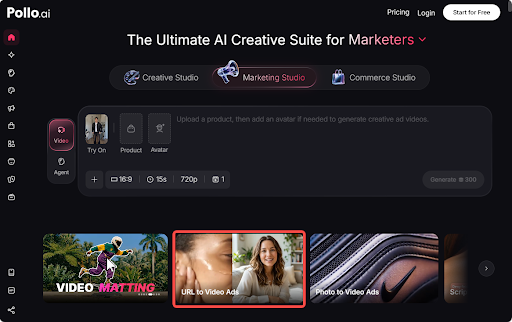
This is where AI-powered video generation has changed the equation for fashion and apparel brands. Pollo AI’s URL to Video Ads feature allows sellers to paste a product URL from Shopify, Amazon, Etsy, or other major platforms and receive a finished, platform-ready short video ad in seconds. The AI extracts product details, pricing, key selling points, and customer review sentiment automatically, then builds a video narrative designed to resonate with buyers — without a script, a camera, or an editing timeline.
Understanding What AI Video Generation Actually Does for Fashion Sellers
Before learning operation steps, grasp how AI turns fashion product listings into videos instead of merely animating photos. It analyzes listing semantics: product highlights, common buyer doubts and purchase-triggering emotions, then creates targeted visual stories.
For fashion goods, AI videos showcase fabric texture, garment draping, inclusive fit on various body shapes and aspirational lifestyle scenes for target shoppers. Customized from real listing data, video quality relies heavily on original product content quality.
Besides Pollo AI, Mango AI stands out. Its drag-and-drop panel plus AI visual effects let creators fully tweak animation styles and plots. Fashion brands with abundant creative materials can use it alongside Pollo AI’s auto URL mode to produce highly personalized animated clips.
How AI Video Tools Compare for Fashion Brands
The AI video landscape now includes several tools with meaningfully different approaches, and understanding those differences helps fashion brands choose the right solution for their specific needs. Pollo AI’s URL-based generation is optimized for speed and scale — it is the right choice when you need to produce video content across a large catalog quickly, with minimal manual input. The automated extraction of product data and buyer-relevant narrative makes it particularly effective for marketplace sellers on Amazon and Etsy who need to compete in algorithmically driven environments.
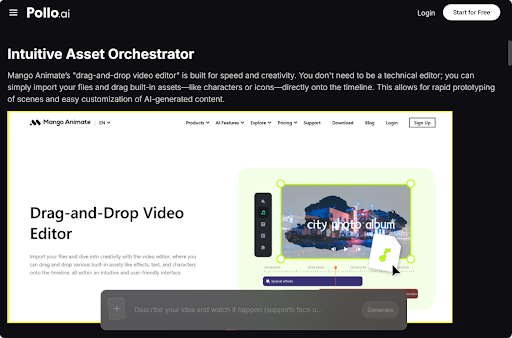
Mango AI takes a different approach. Mango Animate, the underlying platform, functions as a full AI video generator focused on animated storytelling, combining a drag-and-drop interface with sophisticated AI-powered visual effects. This makes it a stronger fit for fashion brands that want to produce branded animated content — lookbook-style presentations, brand story videos, or stylized campaign content — where creative control over the animation style matters more than generation speed.
The two tools are not competing for the same use case. A fashion brand’s ideal workflow might use URL-based AI generation for product-level advertising content and animation-focused tools for brand-level storytelling content.
Step-by-Step: Creating Fashion Product Video Ads With AI
Step 1 — Audit and Optimize Your Product Listings First
The quality of your AI-generated video is directly tied to the richness of your source listing. Before generating any video, review each product page you plan to target and ensure it contains specific, descriptive language about materials, fit, styling versatility, and key differentiators. Listings that rely on generic category language — “comfortable,” “stylish,” “great quality” — will produce less targeted video output than listings that describe the specific weave of a fabric, the adjustability of a strap, or the exact occasions a garment suits.
Customer reviews are particularly valuable source material for AI video generation. If your listing has accumulated detailed reviews that mention specific use cases, fit experiences, or styling combinations, the AI can incorporate these authentic customer perspectives into the video narrative. This creates the kind of social proof-driven storytelling that performs strongly in fashion advertising.
Step 2 — Generate Your First Video Ad Using URL Input

Copy the URL of your target product listing and input it into Pollo AI’s URL to Video Ads tool. Select your preferred output format — vertical for TikTok and Instagram Reels, square for feed posts, or horizontal for YouTube pre-roll — and choose from the available creative styles. For fashion content, UGC-style formats tend to perform strongly because they mirror the organic content that fashion audiences already engage with on social platforms.
The platform will automatically match the video to the appropriate aspect ratio for your target channel and apply your brand colors and logo if you have configured your brand profile. The entire generation process takes seconds rather than the hours or days a traditional production workflow would require.
Step 3 — Review, Customize, and Prepare for Publishing
Once your initial video is generated, review it against your brand standards and campaign objectives. Assess whether the narrative emphasis aligns with the selling points most relevant to your target customer segment — a Gen Z audience on TikTok responds to different triggers than a millennial shopper on Amazon. Adjust style parameters if needed and generate variations to test different creative approaches against the same product.
For fashion brands managing large catalogs, the ability to generate multiple video variations per product — each emphasizing different features or styled for different platforms — is one of the most significant efficiency advantages AI video production offers. What would require separate production sessions for each variation can now be accomplished within a single workflow.
Conclusion: Video at Catalog Scale Is Now Within Reach
The fashion brands gaining ground in e-commerce right now are not necessarily those with the largest production budgets. They are the ones that have figured out how to produce high-quality video content consistently, at the pace their catalog and publishing schedule demands.
AI video generation — particularly URL-based tools that automate the extraction of product data and buyer narrative — has made that pace achievable for brands of any size. Start with your best-selling products, generate your first video ads, measure the performance difference against your static listings, and build your workflow from there.