


































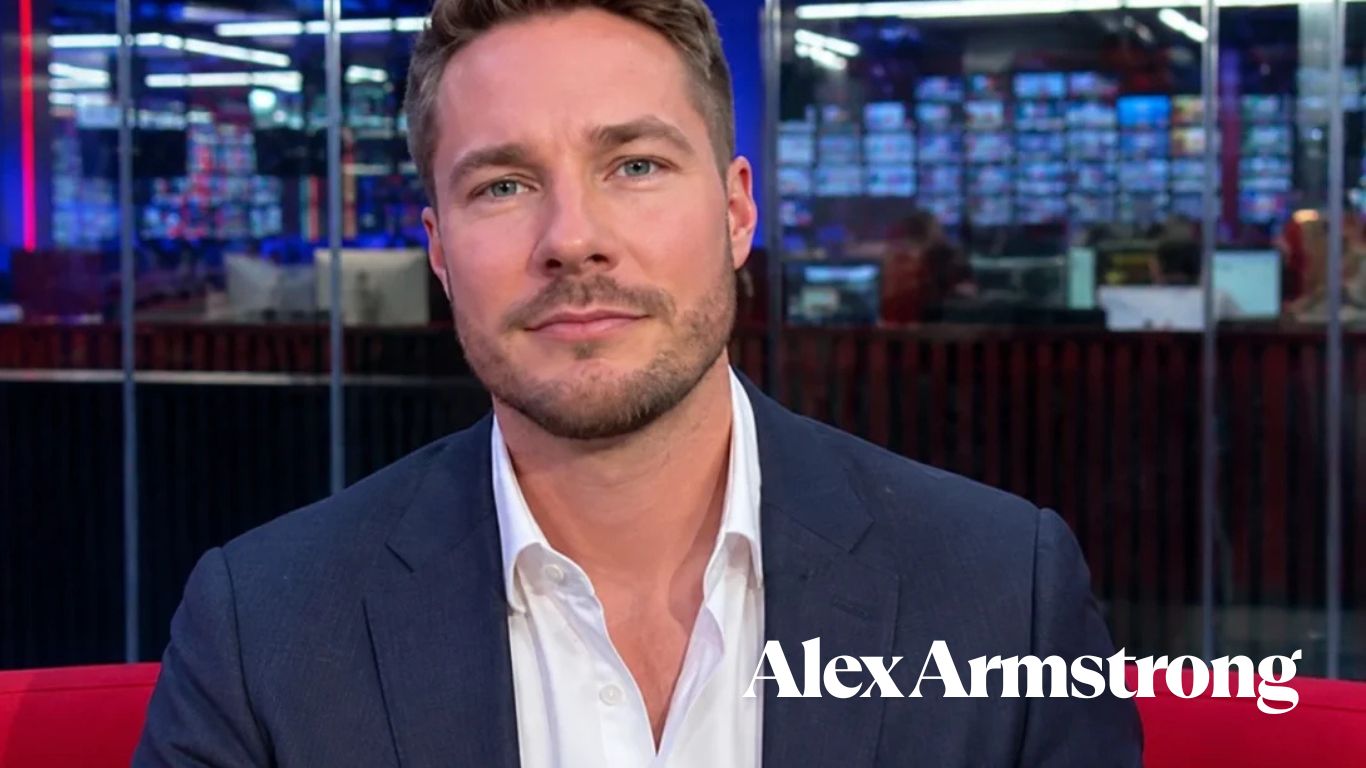
Alex Armstrong’s ascent at GB News speaks to both the presenter and contemporary British media. Armstrong emerged through a channel based on personality, argument, and directness in a television market that was previously dominated by meticulously neutral newsreaders and strictly regulated formats. He didn’t come with decades of celebrity on popular television. Rather, he increased his visibility through commentary, digital clips, guest appearances, and a style that aligns with GB News’s audience-first approach to politics and culture.
Armstrong’s late-night debates and incisive speeches on immigration, free speech, criminality, political trust, and national identity made him well-known to many viewers. Others first became aware of him when he covered breakfast programming amid a trying time for veteran Eamonn Holmes of GB News. Because viewers are curious about Alex Armstrong’s background, identity, and potential future direction for the channel, search interest in “alex armstrong gb news” has been steadily increasing.
In actuality, Armstrong continues to be a comparatively discreet public person. Much of Armstrong’s personal history is still not widely known, in contrast to well-known television figures whose biographies have been studied for decades. However, what is available depicts a broadcaster influenced by opinion media, entrepreneurship, and the evolving economics of contemporary television.
Building a Career Before GB News
Before becoming a familiar face on GB News, Alex Armstrong developed experience across media and business projects. His career reflects a broader change in broadcasting, where presenters are increasingly expected to understand not only television but also digital audiences, online engagement, and the changing habits of modern viewers.
Armstrong’s rise did not come through the traditional broadcasting ladder alone. Instead, he developed a profile around commentary, opinion-led discussions, and media appearances, areas that have become increasingly influential in today’s news environment.
Alongside broadcasting, Armstrong has also been involved in the technology and startup world. He became publicly associated with Sayvr, a food technology company focused on meal planning, nutrition, and reducing household food waste through digital tools.
According to company records, Sayvr Limited was incorporated in 2023. The business was previously registered under the name Byte App Limited before being renamed Sayvr Limited in 2024. Armstrong has been listed as a co-founder alongside Samuel Day, highlighting his involvement in the growing space where media, technology, and entrepreneurship overlap.
This business background offers some insight into Armstrong’s approach to communication. His presenting style often feels shaped by the digital era: concise, direct, and designed to create strong audience engagement. His delivery is less like traditional news reporting and more aligned with modern commentary formats where individual presenters become central to the conversation.
This style has become a defining feature of GB News itself. The channel has built much of its identity around recognisable presenters with distinct voices rather than relying solely on traditional news anchors. Armstrong’s background and presentation style fit naturally within that model.
Joining GB News
GB News launched in June 2021 with the ambition of offering an alternative approach to British television news. The channel positioned itself around debate, opinion, and perspectives it believed were missing from mainstream broadcasting. Rather than following the traditional model of neutral news presentation, GB News placed greater emphasis on personality-led programming.
Armstrong joined the channel during this early stage as GB News was still establishing its identity and expanding its presenter lineup.
One important step in his early broadcasting journey came through newspaper review segments on breakfast television alongside Eamonn Holmes. Armstrong has previously spoken about Holmes’ encouragement during his early appearances, describing him as someone who helped build his confidence and supported his development within the network.
These newspaper review segments have historically been an important platform in British breakfast television. They allow commentators to demonstrate quick thinking, personality, and the ability to discuss a wide range of topics under time pressure. For emerging broadcasters, strong performances in these formats can often lead to larger opportunities.
As Armstrong became more established at GB News, his role expanded beyond occasional contributions. He began appearing more frequently in political discussions, reaction segments, and presenter roles, becoming part of the channel’s wider opinion-focused lineup.
GB News provided an environment where newer broadcasters could develop a stronger public identity than might have been possible within more traditional media organisations. Armstrong’s growth reflects the channel’s broader strategy of promoting presenters who could connect directly with audiences and create recognisable voices.
Alex Armstrong Tonight and Career Growth
Alex Armstrong’s profile within GB News grew significantly with the launch of Alex Armstrong Tonight, a programme that placed him at the centre of the channel’s evening opinion and debate schedule. The show combines interviews, political discussion, and commentary, reflecting the style that has become closely associated with GB News programming.
Unlike traditional news formats that focus primarily on reporting events, the programme gives greater importance to discussion, analysis, and the presenter’s perspective. Armstrong’s role is not simply to introduce stories but to guide conversations, challenge guests, and shape debates around major political and cultural issues.
The topics covered on the programme often reflect wider debates taking place across Britain, including immigration, crime, policing, government policy, free speech, media bias, and social issues. These subjects are also central themes across much of GB News’s wider output, but Armstrong has developed a recognisable style when discussing them.
His approach is direct and conversational. He often presents arguments in a clear, confident manner, which appeals to viewers who prefer a more personality-driven style of political discussion. At the same time, this approach has attracted criticism from those who believe opinion-led broadcasting can sometimes create a sharper divide between commentary and traditional news reporting.
Armstrong’s rise also happened during an important period for GB News. After facing challenges in its early years, including criticism over its launch, audience figures, and advertiser concerns, the channel gradually developed a loyal viewer base. Rather than competing directly with established broadcasters through traditional news coverage, GB News focused on creating a distinct identity built around presenters, debate, and strong editorial viewpoints.
This environment created opportunities for presenters like Armstrong. His role was not to replicate the style of broadcasters from older institutions but to represent a different type of television personality: one shaped by political discussion, online audiences, and a more immediate style of communication.
Over time, Armstrong became a regular presence across different GB News programmes, increasing his visibility beyond his own show. His appearances in evening, daytime, and breakfast programming helped establish him as one of the channel’s recognisable newer faces.
Filling In for Eamonn Holmes
One of the most notable moments in Alex Armstrong’s broadcasting career came in 2026 when he stepped into breakfast television coverage following the health issues faced by Eamonn Holmes.
Holmes, one of the most experienced and recognisable presenters associated with GB News, temporarily stepped away from broadcasting after suffering a stroke. During his recovery period, Armstrong appeared alongside Ellie Costello on breakfast programming, helping cover the presenter’s absence.
The opportunity was significant because breakfast television requires a different skill set from evening political commentary. Morning programmes demand quick reactions, flexibility, live broadcasting ability, and a warmer connection with viewers who may be starting their day.
For Armstrong, the role represented a chance to demonstrate that his abilities extended beyond opinion-led evening discussions. While audiences had become familiar with his political commentary, breakfast television placed him in a broader broadcasting environment with a wider audience.
Armstrong later spoke about Holmes’ influence on his career, describing him as an important figure who supported him during his early days at GB News. His reflections offered a rare personal insight into his professional relationships and showed the respect he holds for established broadcasters who helped create opportunities for newer presenters.
Temporary presenting roles often become important career moments in television. They allow audiences and networks to see how presenters perform in different formats. Armstrong’s increased visibility during this period helped introduce him to viewers who may not have previously followed his evening programmes.
The experience also added another dimension to his public image. Rather than being viewed only through the lens of political debate, he appeared as a broadcaster capable of handling live television, audience connection, and the traditions of British breakfast broadcasting.
Broadcasting Style and Public Image
Alex Armstrong represents a newer style of television presenter shaped by the rise of opinion-led media. His broadcasting approach is built around clarity, confidence, and direct engagement rather than the highly restrained style traditionally associated with British news presentation.
He tends to use straightforward language, strong opinions, and conversational delivery. Supporters often describe his style as honest, accessible, and willing to address topics that they believe are avoided by other broadcasters. Critics, however, argue that his approach can sometimes feel overly confrontational or more focused on debate than balanced discussion.
His public image is strongly connected to political and cultural conversations dominating Britain today. Topics such as immigration, national identity, crime, public safety, free speech, and government accountability frequently appear in his commentary.
Armstrong has also been critical of Labour politicians, including party leader Keir Starmer and London Mayor Sadiq Khan, reflecting the wider political positioning often seen across GB News programming.
However, his audience is not necessarily seeking traditional impartial broadcasting. GB News has built its identity around presenters with clear viewpoints, arguing that audiences want transparency about a broadcaster’s perspective rather than the appearance of complete neutrality.
This approach creates both opportunities and challenges. Strong opinions can help presenters build loyal audiences quickly, especially online where short clips and opinion-based discussions spread widely. At the same time, presenters working in this space face greater scrutiny because statements are often analysed, shared, and debated beyond the original broadcast.
Unlike some television personalities, Armstrong has avoided building a public profile around lifestyle content, celebrity appearances, or personal exposure. His online presence remains focused mainly on broadcasting, political commentary, and current affairs.
Politics, Criticism, and Controversy
Any discussion of Alex Armstrong’s career exists within the wider debate surrounding GB News itself. Since launching, the channel has been both praised and criticised for changing the style of British television news.
Supporters argue that GB News provides alternative viewpoints and gives audiences access to opinions they believe are underrepresented elsewhere. Critics argue that the channel moves too close to partisan broadcasting and that some programmes blur the traditional boundaries between news reporting and political commentary.
Armstrong has become part of this broader conversation through his presenting style and the subjects he covers. His critics often focus on the tone of political debates and argue that certain discussions, particularly around immigration and cultural issues, can become too confrontational.
The channel has also faced regulatory attention from Ofcom, particularly around programmes involving politicians appearing as presenters. These debates have contributed to wider discussions about impartiality rules and the future direction of British broadcasting.
The larger issue is that television news is changing. For decades, British broadcasters operated under strong traditions of neutrality and formal presentation. GB News challenged that model by embracing a format closer to opinion-driven broadcasting, where presenter identity and audience connection play a central role.
Armstrong represents this newer generation of broadcaster. Whether viewers agree with his views or disagree with his approach, his career reflects a significant shift in how political media is created and consumed.
Business Interests and Estimated Net Worth
Beyond his broadcasting career, Alex Armstrong has also developed an identity as an entrepreneur. His involvement with Sayvr, a food technology startup, has added another dimension to his professional profile beyond television and political commentary. The company focuses on using technology to improve meal planning, nutrition management, and reducing household food waste.
Armstrong’s connection to the startup world reflects a wider trend among modern media personalities who no longer build careers through a single industry. Many broadcasters today combine television work with technology, business projects, writing, speaking opportunities, or digital ventures.
Before becoming a recognised face on GB News, Armstrong was also linked to roles outside traditional media, including business and operations-focused positions. This background helps explain why his career has developed across multiple fields rather than following the conventional path of a television journalist.
When it comes to Alex Armstrong’s net worth, there is no officially confirmed public figure. Unlike some high-profile celebrities or business founders, Armstrong has not publicly disclosed his earnings, investments, or personal finances. Any exact figures shared online should therefore be treated cautiously.
A broadcaster’s income can come from multiple sources, including television contracts, writing, speaking engagements, business interests, and potential company ownership. Armstrong’s career represents this newer hybrid model, where media visibility and entrepreneurial activity often exist alongside each other.
His startup involvement also aligns with the digital mindset visible in his broadcasting style. Technology companies and modern media both reward adaptability, audience understanding, and the ability to communicate ideas quickly. Those qualities are increasingly valuable in today’s attention-driven environment.
Private Life and Relationships
Despite his growing public profile, Alex Armstrong has maintained a relatively private personal life. Unlike many television personalities who regularly share details about their relationships, family, and lifestyle online, Armstrong has largely kept those areas away from public attention.
Information about his marriage, partner, children, or family background has not been widely confirmed through reliable public sources. While various online pages may speculate about private details, there is limited verified information available.
This level of privacy is increasingly uncommon among public figures. Many modern personalities build their careers through constant online visibility, sharing personal moments alongside professional updates. Armstrong has taken a different approach, keeping his public identity focused mainly on broadcasting and political commentary.
That separation between public and private life has shaped how audiences view him. Viewers are familiar with his opinions, presenting style, and political discussions, but much less is known about the person behind the television role.
For broadcasters working in politically sensitive areas, maintaining personal boundaries can also be a practical decision. Public commentary often attracts strong reactions, and many presenters choose to protect their private lives from the wider debates surrounding their work.
Influence at GB News
Alex Armstrong’s importance at GB News extends beyond individual programmes. His rise reflects the channel’s wider strategy of building a new generation of presenters who combine television broadcasting with digital audience engagement.
Traditional television influence was once measured mainly through ratings, newspaper coverage, and appearances on major programmes. Today, influence is also shaped by online conversations, social media clips, and the ability to create discussion beyond the original broadcast.
Armstrong’s presentation style works particularly well in this environment. His arguments are often structured around clear viewpoints and strong statements, making them suitable for digital sharing and online discussion.
This approach mirrors a broader transformation in political media. Audiences increasingly follow individual presenters rather than only networks or programmes. A recognisable personality can become a brand in their own right, with viewers tuning in because of the presenter as much as the subject being discussed.
GB News has built much of its identity around this presenter-led model. The channel promotes debate and opinion as central parts of its programming, creating a space where broadcasters with strong personalities can develop loyal audiences.
Armstrong represents this shift. Whether audiences agree with his views or not, he has become part of the conversation about how modern British political broadcasting is changing.
Where Alex Armstrong GB News Is Now
As of 2026, Alex Armstrong remains an active presenter and commentator within GB News. He continues to host Alex Armstrong Tonight and appears across the channel’s wider programming lineup.
His career trajectory shows how quickly the media landscape has changed. A presenter no longer needs decades inside traditional news organisations to build a significant audience. Digital platforms, opinion-based formats, and personality-led programmes have created new routes into broadcasting.
At the same time, Armstrong’s involvement outside television suggests he is building a broader professional identity. His combination of broadcasting experience and entrepreneurial interests reflects a generation of public figures who move between industries rather than staying within a single career path.
The future of his career will likely depend on several factors: the continued growth of GB News, audience demand for opinion-based programming, and the changing relationship between traditional television and digital media.
Whatever direction his career takes, Armstrong has already become part of a wider transformation in British broadcasting. He represents a new type of media personality: one shaped by television, online audiences, political discussion, and entrepreneurial culture.
Frequently Asked Questions
Who is Alex Armstrong on GB News?
Alex Armstrong is a British television presenter and political commentator associated with GB News. He is known for hosting Alex Armstrong Tonight and appearing across political discussion programmes covering current affairs, social issues, and national debates.
Is Alex Armstrong related to Alexander Armstrong from Pointless?
No. Alex Armstrong from GB News is a different person from Alexander Armstrong, the presenter best known for hosting Pointless. The similarity in names often causes confusion online, but they are separate broadcasters with different careers.
What is Alex Armstrong Tonight?
Alex Armstrong Tonight is a GB News programme focused on political interviews, commentary, and debate. The show follows the channel’s opinion-led format, combining current affairs discussion with presenter-driven analysis.
What happened between Alex Armstrong and Eamonn Holmes?
Armstrong gained wider attention after appearing on breakfast programming during Eamonn Holmes’ absence. He later wrote about Holmes’ influence on his career and described the difficulty of stepping into the role of a highly respected broadcaster.
Is Alex Armstrong married?
There is currently no widely confirmed public information about Alex Armstrong’s marital status or private relationships. He has kept these details largely away from public discussion.
What business is Alex Armstrong involved in?
Armstrong has been publicly connected with Sayvr, a food technology startup focused on meal planning, nutrition, and reducing food waste.
What are Alex Armstrong’s political views?
Armstrong’s commentary generally focuses on issues such as immigration, national identity, crime, free speech, and government policy. His style has attracted both supporters who appreciate his direct approach and critics who question the tone of opinion-led broadcasting.
Conclusion
Alex Armstrong’s rise at GB News reflects the changing nature of modern British broadcasting. His career has developed within a media environment where personality, digital engagement, and audience connection are becoming just as important as traditional journalistic pathways.
Unlike many television figures who build their public image around personal exposure, Armstrong has kept much of his private life away from the spotlight. Instead, his identity has been shaped almost entirely by his work, political commentary, and role as a presenter.
His career also highlights the wider shift taking place across television. Audiences increasingly connect with individual voices rather than simply trusting established institutions. GB News has embraced this model, creating opportunities for presenters who bring strong viewpoints and distinctive styles.
Whether viewers support or criticise his approach, Armstrong has become part of an important conversation about the future of news, opinion, and political media in Britain.
For now, he remains one of the emerging figures in the UK’s opinion-led broadcasting landscape, representing a generation of presenters shaped by television, social media, political debate, and the changing expectations of modern audiences.