
































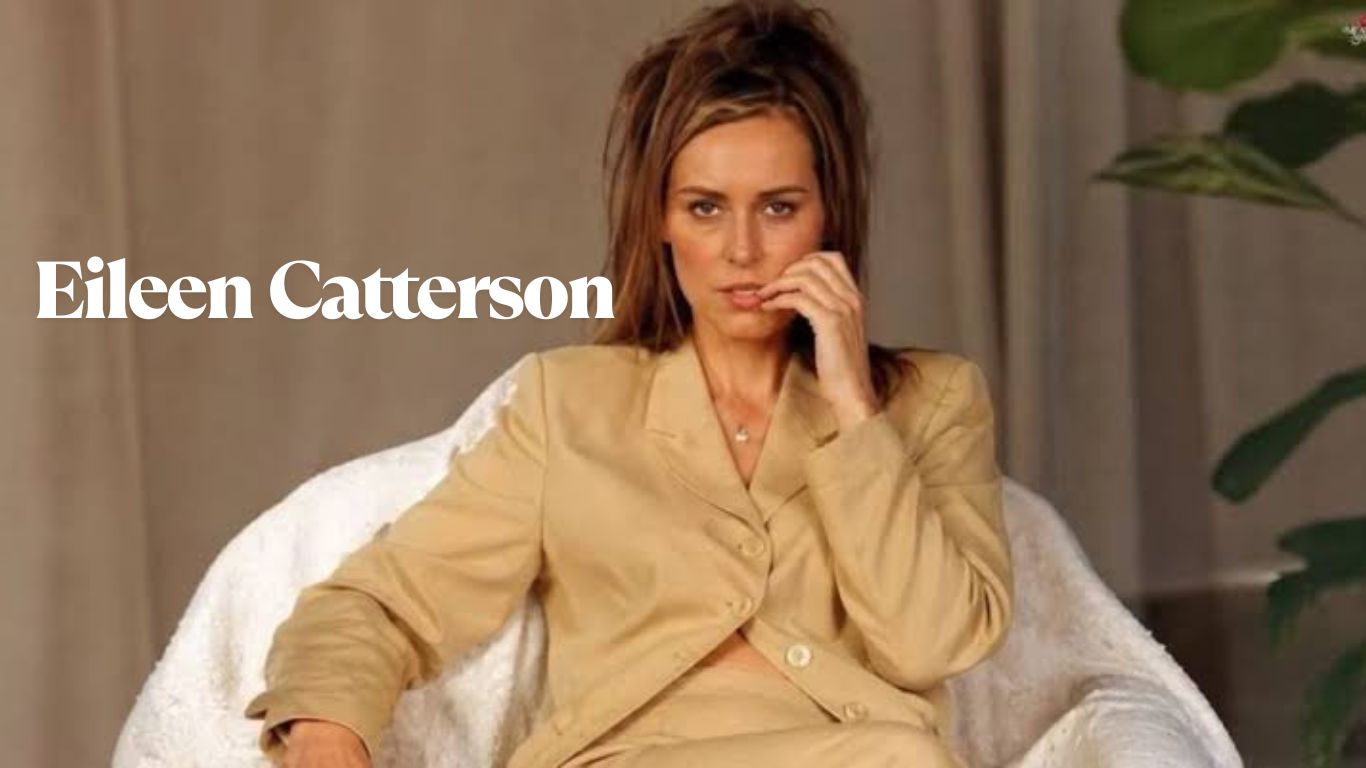
Eileen Catterson has led a public life that defies the typical celebrity narrative. She rose to prominence at a young age, won one of Scotland’s most prominent beauty pageants, made her way through modelling circles, and eventually gained widespread recognition as the long-term partner of Wet Wet Wet lead singer Marti Pellow. She did not, however, turn exposure into a long-term public career, in contrast to many others who survived the glamour of pageants, pop celebrity, and tabloid attention. The facts are intriguing, the gaps are genuine, and the woman at the center of the story has maintained a significant portion of her life as her own, which is one of the reasons people continue to look for her.
Most people know Eileen Catterson from her time as a model and as Miss Scotland in 1987. Her name is also frequently associated with Pellow, who became one of the most well-known pop singers in Britain throughout the 1990s thanks to his success with Wet Wet Wet. Although neither of them has made their personal lives a regular feature of the celebrity press, their friendship has endured for decades in the public consciousness. Writing about Catterson requires careful consideration of what is known, what has been reported, what is still confidential, and why that confidentiality is important.
Early Life and Family Background
Eileen Catterson is a Scottish former model and beauty pageant titleholder who first gained public attention in the late 1980s. Public records associated with her name suggest she was born in March 1970, which aligns with one of the most widely reported details of her early career: she was just 17 years old when she won the title of Miss Scotland in 1987.
Her rise came during a time when beauty pageants held a much stronger place in British popular culture than they do today. Pageant winners were often featured in newspapers, local media, television appearances, and community events. For a young woman with ambitions in modelling, winning a national title could create opportunities that extended far beyond the competition itself.
Very little has been publicly confirmed about Catterson’s childhood, family background, education, or early personal life. Over the years, various online biographies have attempted to fill those gaps, but many details are repeated without reliable sources. A responsible profile should recognise that privacy and avoid presenting speculation as fact.
What is clear is that by her late teens, Catterson had entered a highly visible world shaped by modelling, beauty competitions, and public attention. Unlike many modern public figures whose lives are documented from childhood through social media, Catterson’s early years belong to a different era, when a person could become known nationally without leaving behind a detailed digital record.
The limited information available about her upbringing is not unusual for someone who became recognised before the internet transformed celebrity culture. Models and pageant winners of the 1980s often appeared in magazines, newspapers, and promotional materials, but much of that history is not easily searchable today. As a result, separating confirmed facts from assumptions is especially important when discussing her early life.
Miss Scotland 1987: The Achievement That Changed Her Life
Eileen Catterson’s most significant public milestone came in 1987 when she was crowned Miss Scotland. The title placed her among the country’s most recognised beauty representatives and connected her to a long tradition of Scottish pageantry.
At the time, winning Miss Scotland often came with the expectation of representing the country internationally, including at the Miss Universe competition. However, Catterson’s journey took an unexpected turn. Reports state that she was unable to compete at Miss Universe because she was considered too young under the competition’s eligibility rules.
At just 17 years old, she had achieved one of the biggest accomplishments available within the pageant world, yet the international opportunity associated with the title was unavailable to her. That unusual circumstance became one of the defining details attached to her early public profile.
Many beauty queens are remembered for international placements, television appearances, or later entertainment careers. Catterson’s pageant legacy is different. Her story is remembered not only because she won Miss Scotland, but also because her age prevented her from taking the next traditional step in the competition circuit.
Despite that setback, the title gave her national recognition and helped establish her presence in the modelling and entertainment industries. It introduced her to a world where appearance, confidence, and public presentation could open doors quickly.
Modelling Career and Public Image
Following her Miss Scotland win, Catterson was widely recognised as a model. However, much of her professional work from the late 1980s and early 1990s is difficult to trace through modern online archives. Unlike today’s digital-first careers, modelling at that time was often recorded through magazines, agency portfolios, catalogues, and print campaigns that were not always preserved online.
The most accurate description is that Catterson built a modelling career after gaining attention through pageantry. While some online profiles make detailed claims about specific projects or achievements, many of these are difficult to verify without supporting records.
Her public image reflected the style of the era: elegance, glamour, confidence, and a sense of national pride. Beauty queens and models were often presented as representatives of a particular moment in popular culture, with opportunities ranging from fashion work and appearances to introductions within the entertainment industry.
However, Catterson’s appeal as a public figure does not come only from her modelling background. What makes her story interesting is the contrast between early visibility and later privacy. She became known during a period of intense media interest but did not continue building a highly public persona.
Unlike many modern personalities who turn recognition into a permanent online presence, Catterson appears to have stepped away from the spotlight. Her career remains remembered because of where it began: a Scottish beauty title, a modelling background, and a connection to one of Britain’s most recognisable musicians.
Meeting Marti Pellow: The Relationship That Kept Her in the Public Eye
Although Eileen Catterson first became known through pageantry and modelling, she is now most widely recognised because of her long-term relationship with Scottish singer Marti Pellow.
Born Mark McLachlan, Pellow rose to fame as the lead vocalist of the Scottish band Wet Wet Wet. The group became one of the biggest British pop acts of the late 1980s and 1990s, producing major hits including “Sweet Little Mystery,” “Goodnight Girl,” and “Love Is All Around.” As Pellow’s fame grew, interest naturally extended beyond his music to the people closest to him.
Reports have long linked Catterson and Pellow as a couple, with many accounts suggesting their relationship began around 1990. A frequently repeated story claims they first connected around a football match, with some versions mentioning the famous Celtic and Rangers rivalry. However, details of exactly how they met vary across sources, and many of those early stories have been repeated without clear confirmation.
What remains consistent is that Catterson became known as the person beside Pellow during one of the most successful and challenging periods of his life. Their relationship developed away from the typical celebrity spotlight, with Catterson maintaining a relatively private presence despite being connected to one of Scotland’s most famous musicians.
Their partnership has attracted attention because of its longevity. In an entertainment world where celebrity relationships often become short-lived headlines, Catterson and Pellow’s connection has continued across decades, surviving the pressures that came with fame, media attention, and personal struggles.
Marti Pellow, Wet Wet Wet, and the Peak of 1990s Fame
To understand why Catterson remains a subject of public interest, it is important to understand the scale of Marti Pellow’s success.
Wet Wet Wet formed in Scotland in the early 1980s and became one of the defining British pop groups of their generation. Their biggest breakthrough came in 1994 when their cover of “Love Is All Around” featured in the film Four Weddings and a Funeral.
The song became a cultural phenomenon, spending an extended period at number one on the UK Singles Chart and becoming one of the most recognisable songs of the decade. Pellow’s distinctive voice turned him into a household name, with the band receiving widespread media attention and a huge international following.
With that level of fame came increased public interest in his personal life. Partners of famous performers often become part of the wider celebrity narrative, even if they did not seek attention themselves. Catterson’s connection to Pellow placed her close to the centre of British pop culture during one of its most visible periods.
However, she did not appear to use that association as a platform for constant publicity. Unlike some celebrity partners who build careers around media appearances, Catterson maintained a quieter profile. Her public identity remained connected to her own early achievements while also being linked to Pellow’s career.
A Long-Term Relationship Away From the Spotlight
One of the most notable aspects of Catterson and Pellow’s relationship is how little they have shared publicly compared with many celebrity couples.
Their relationship has often been described as private and enduring. While Pellow’s career placed him under intense media attention, Catterson largely avoided becoming a regular feature of entertainment coverage. She appeared to maintain a boundary between public curiosity and personal life.
That privacy has contributed to ongoing interest in their relationship. When a public figure shares little, audiences often become more curious about the details they do not know. Questions about marriage, family, and their life together have continued for years, partly because the couple have chosen not to make those answers a central part of their public image.
Rather than building a celebrity brand around their relationship, Catterson and Pellow seem to have allowed their connection to exist mostly away from public discussion. This has made their story different from many modern celebrity relationships, where personal details are frequently shared through interviews and social media.
Marriage Questions and Family Life
One of the most searched questions about Eileen Catterson is whether she and Marti Pellow are married.
The answer is not completely clear from publicly available information. Some older references have described Catterson as Pellow’s “wife,” while other sources use the term “partner” and state that a legal marriage has never been publicly confirmed.
Because of this uncertainty, the most accurate description is that Catterson has been Marti Pellow’s long-term partner. Without a verified marriage record or direct confirmation from the couple, assumptions about their legal status should be avoided.
Questions about whether they have children have also circulated online. However, there is no reliable public confirmation that Catterson and Pellow have children together. Many online claims about celebrity families are repeated without evidence, particularly when public figures choose to keep personal matters private.
In Catterson’s case, the lack of information appears to be intentional. She and Pellow have consistently kept much of their private life away from the public conversation, and that privacy deserves consideration.
Supporting Marti Pellow Through Addiction and Recovery
Another significant chapter in Catterson’s connection to Pellow’s story relates to his well-documented struggles with addiction.
Marti Pellow has spoken openly about his past heroin addiction and the difficult period surrounding his recovery. His honesty about those experiences has become an important part of his personal story, showing the challenges he faced during and after Wet Wet Wet’s peak years.
Catterson’s name is often mentioned in connection with this period because reports have described her as someone who remained supportive while also recognising the seriousness of his struggles.
The role of a partner during addiction recovery is complex. It can involve compassion, patience, and commitment, but also the need to establish boundaries and protect personal wellbeing. Accounts of Catterson’s involvement suggest a relationship built not only on loyalty but also on resilience during difficult circumstances.
It is important, however, not to reduce her identity solely to her role in Pellow’s recovery. She was not simply “the woman behind the singer.” Before their relationship became part of public discussion, she had already established her own identity through pageantry and modelling.
Her significance comes from the combination of those experiences: a young woman who achieved national recognition, a model who stepped into public life, and a person who later became associated with one of Scotland’s most famous musicians while maintaining her own privacy.
A Life Away From the Spotlight: Eileen Catterson’s Choice of Privacy
One of the most defining aspects of Eileen Catterson’s story is not just the fame she experienced, but the way she later chose to step away from it.
After gaining national attention as Miss Scotland and building a modelling career, Catterson could have continued pursuing a highly visible public role. Instead, she appears to have taken a quieter path, maintaining a life that exists largely outside interviews, television appearances, and social media.
This makes her different from many people connected to celebrity culture today. In an era where public attention can easily be turned into a personal brand, Catterson has not appeared to seek constant visibility. She has not built a public identity around her relationship with Marti Pellow, nor has she regularly shared private details about her personal life.
Her privacy has, in many ways, become part of what makes her interesting. The less she has revealed, the more curiosity has grown around her. Questions about her career, family, and current life continue to appear because there is a natural fascination with someone who experienced fame but chose not to remain inside its spotlight.
However, privacy should not be mistaken for mystery created by secrecy. In Catterson’s case, it seems more like a personal choice: allowing certain chapters of her life to remain public while keeping others for herself.
Money, Work, and Net Worth
Questions about Eileen Catterson’s net worth appear frequently online, but there is no verified public figure that accurately represents her personal wealth.
Many celebrity biography websites publish estimated net worth figures, but these numbers are often based on assumptions rather than confirmed financial records. Without publicly available information about her earnings, investments, property ownership, or business activities, a precise estimate cannot be responsibly confirmed.
Catterson’s known public career includes her work as a model and her early success through beauty pageantry. She was also reportedly connected to a company record under her name, although business registrations alone do not provide a complete picture of personal finances.
It is also important to separate Catterson’s financial situation from Marti Pellow’s career earnings. Pellow’s wealth comes from decades in the music industry, including his success with Wet Wet Wet, solo work, touring, and theatre performances. Those earnings should not automatically be attributed to Catterson unless publicly confirmed.
The most accurate description is simple: Eileen Catterson’s personal net worth is private and not publicly established.
Media Attention and Common Misunderstandings
Because Catterson has maintained a relatively low public profile, much of the information available online comes from secondary sources. This has created a mixture of confirmed details, repeated claims, and speculation.
One common example is the description of her relationship with Marti Pellow. Some articles have referred to her as his “wife,” while others describe her as his long-term partner. The couple’s relationship has lasted for decades, but a legally confirmed marriage has not been clearly established in public records.
Similar uncertainty surrounds questions about children and family life. Various online discussions have made claims about their private family circumstances, but these details have not been consistently confirmed by reliable public sources. The couple have historically kept personal matters away from media attention, making speculation difficult to verify.
This highlights a wider issue with celebrity biographies: repetition does not always equal proof. A detail appearing on multiple websites does not necessarily make it accurate. For private individuals connected to famous people, careful reporting matters.
Catterson’s story is a good example of why a biography should focus on what is known rather than attempting to fill every gap.
Cultural Legacy and Why People Still Remember Eileen Catterson
Eileen Catterson occupies a unique place in Scottish popular culture.
Her story connects two very different eras: the world of 1980s beauty pageants and modelling, and the huge British pop success of the 1990s through her relationship with Marti Pellow.
For those who remember the height of Wet Wet Wet’s popularity, Catterson became part of that cultural moment. She was associated with one of Scotland’s most recognisable performers during a period when British pop music dominated television, radio, and the charts.
But her lasting interest comes from more than celebrity association. Catterson represents a type of public figure from before the social media era, when someone could become famous without documenting every part of their life.
Today, audiences are used to constant updates, personal videos, and behind-the-scenes access. Catterson’s story feels different because so much of it exists outside public view.
Her journey reflects a quieter version of fame: achieving recognition, experiencing public attention, and then choosing a more private existence.
Where Is Eileen Catterson Now?
Eileen Catterson appears to live a largely private life away from regular media coverage. She remains best known for three things: winning Miss Scotland in 1987, her modelling background, and her long relationship with Marti Pellow.
There is limited confirmed information about her current daily life, professional activities, or personal interests. She does not appear to maintain a highly visible public career, and she has largely avoided the type of constant media presence common among modern celebrities.
Her continued connection to Pellow means her name occasionally returns to public attention, especially when his career or personal story is discussed. However, her own approach appears consistent with the choices she has made for decades: remaining present without seeking publicity.
In many ways, that balance defines her public image. She became known through achievement and association with fame, but she has not allowed fame to completely define her.
Frequently Asked Questions
Who is Eileen Catterson?
Eileen Catterson is a Scottish former model and beauty pageant winner best known for being crowned Miss Scotland in 1987. She later became widely recognised because of her long-term relationship with Wet Wet Wet singer Marti Pellow.
How old is Eileen Catterson?
Public information associated with Eileen Catterson lists her birth year as 1970. Based on that information, she would be in her mid-50s in 2026.
Was Eileen Catterson Miss Scotland?
Yes. Eileen Catterson won the Miss Scotland title in 1987 while she was still a teenager. The achievement remains the most documented milestone from her early public career.
Is Eileen Catterson married to Marti Pellow?
Eileen Catterson and Marti Pellow are widely described as long-term partners. Some sources have used the term “wife,” but a publicly confirmed marriage has not been clearly established.
Do Eileen Catterson and Marti Pellow have children?
There is no reliable public confirmation about whether the couple have children together. They have kept their family life private, and many online claims remain unverified.
What is Eileen Catterson’s net worth?
Eileen Catterson’s net worth is not publicly verified. Online estimates should be treated cautiously because there is no reliable public financial information confirming a specific figure.
What is Eileen Catterson doing now?
Eileen Catterson appears to live a private life away from regular public attention. She remains remembered for her pageant success, modelling career, and long association with Marti Pellow.
Conclusion
Eileen Catterson’s story is not one of constant publicity or endless reinvention. It is the story of someone who experienced early recognition, entered the world of modelling, became connected to one of Scotland’s biggest musical figures, and then chose a quieter life away from the spotlight.
Her journey reflects a different kind of celebrity experience. She became known without becoming permanently exposed. She was connected to fame but did not appear dependent on it.
What makes Catterson interesting is not only what is publicly known, but also the boundaries she has maintained. In a culture where visibility often becomes a measure of success, her decision to protect her privacy stands out.
Her legacy remains tied to Scottish pageant history, British pop culture, and a decades-long relationship that has endured through both success and challenges. The most accurate portrait of Eileen Catterson is therefore not just that of a former beauty queen or celebrity partner, but of someone who experienced fame and chose to define herself beyond it.