


































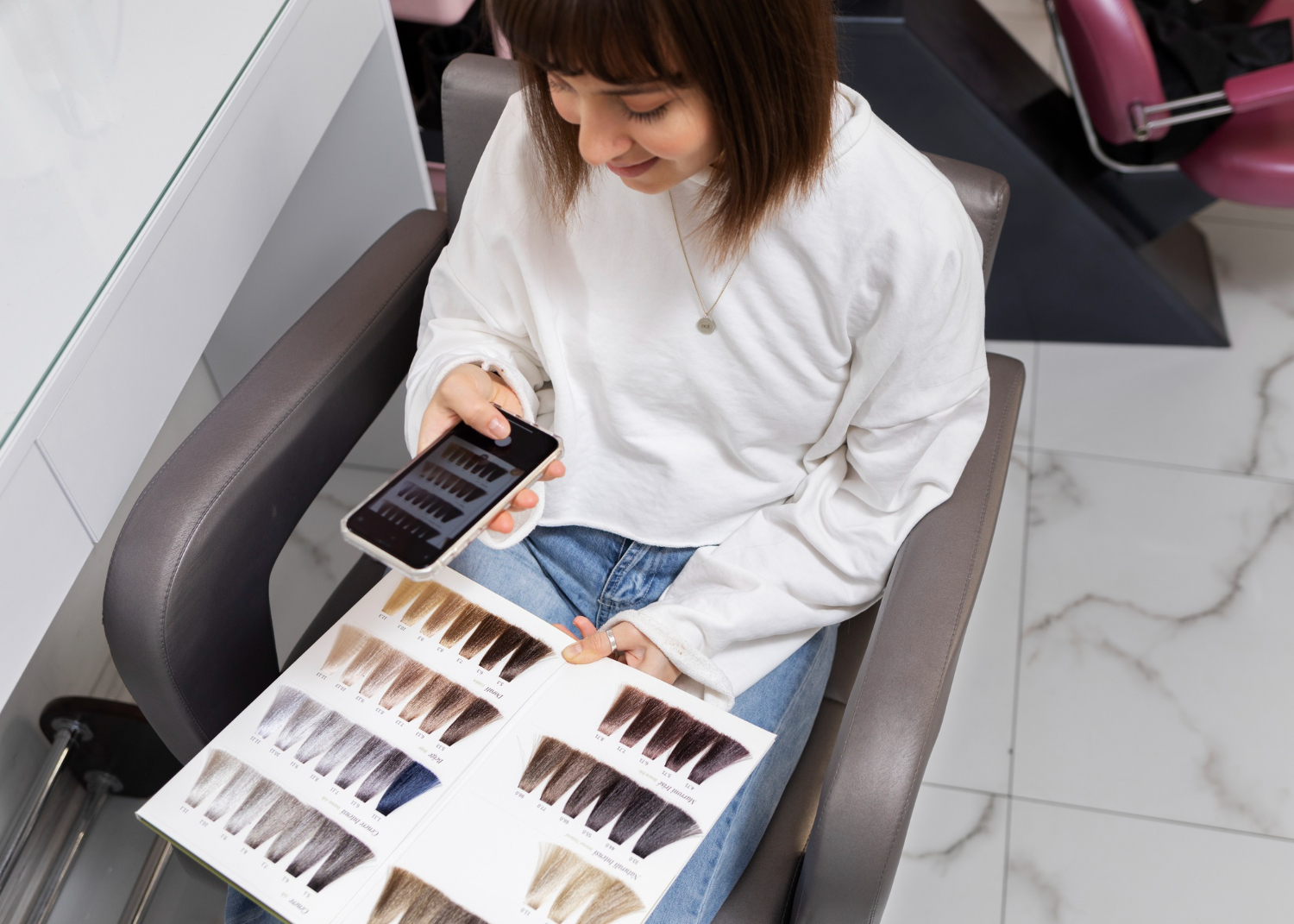
Bond-building technology has fundamentally transformed how we approach bleached, colored, and heat-damaged hair over the last decade. Professional salon formulas work by re-linking broken disulfide bonds at a molecular level, whereas standard deep conditioners merely coat the outer cuticle for a temporary polish. Understanding the distinct biochemical differences between professional applications and retail retail bottles helps clients make smarter investments for their long-term hair health.
Understanding the Professional Olaplex System
The professional two-step service delivers concentrated Bis-Aminopropyl Diglycol Dimaleate directly into the hair shaft during or immediately after chemical processing. Step No. 1 Bond Multiplier is mixed into bleach or dye to prevent structural degradation, while Step No. 2 Bond Perfector seals remaining bonds and restores tensile elasticity before shampooing. For complete styling integration, many clients pair their restorative appointments with full aesthetic prep at a premium PIED-DE-POULE beauty salon hair and makeup station to achieve a flawless finish.
| Parameter | In-Salon Treatment (No. 1 & No. 2) | At-Home System (No. 0 & No. 3) |
| Active Ingredient Concentration | Highest available (Professional grade) | Diluted consumer formulation |
| Primary Function | Structural repair during chemical processing | Post-service maintenance and surface prep |
| Application Method | Applied by trained colorist with precise timing | DIY application prior to shampooing |
| Results Duration | 4 to 6 weeks of structural integrity | 1 to 2 weeks per application |
While home maintenance products prolong softness between salon visits, they cannot replicate the deep structural repair achieved during an in-person appointment. Professional assessment ensures the solution penetrates evenly without overloading fine or low-porosity strands with excess liquid balance.
The Reality of Retail Olaplex Maintenance
Take-home kits like No. 3 Hair Perfector are engineered to preserve the internal bonds established during your professional appointment rather than rebuilding the entire hair architecture from scratch. Utilizing diluted active percentages ensures safety for unsupervised consumer use while preventing protein overload on fragile ends. When integrated into a weekly routine, these retail remedies buffer against environmental factors like London tap water minerals and daily UV exposure.
- No. 0 Intensive Bond Building Treatment: Prepares strands by dampening the cuticle to maximize absorption of subsequent treatments.
- No. 3 Hair Perfector: Re-links broken surface bonds once or twice weekly to curb breakage from thermal styling tools.
- No. 4 & No. 5 Shampoo and Conditioner: Delivers daily moisture infusion while maintaining optimal pH levels without weighing down natural volume.
Proper sequencing remains critical when using take-home treatments to avoid product buildup on the scalp and lengths. Over-applying retail products without clarifying occasionally creates a water-impermeable barrier that prevents moisture penetration.
Cost Breakdown and Performance Longevity
An in-salon application represents an upfront financial commitment, yet its effects endure through multiple washing cycles because the chemical reconnectivity happens within the cortex. Stylists measure liquid proportions down to the milliliter based on hair density, ensuring zero wasted product and optimal bond restoration. This targeted application prevents unnecessary chemical strain on already weakened cuticle layers.
Retail bottles cost less per purchase, but incorrect home application often leads to rapid product exhaustion and uneven results. Uncontrolled processing times or applying formula to bone-dry hair reduces active ingredient efficacy significantly. Investing in professional execution ensures every drop delivers maximum structural return on investment.
Making the Right Investment for Your Hair
Determining whether to book a professional service or buy retail bottles depends heavily on your current hair condition and recent chemical history. Virgin or minimally processed strands usually respond well to routine home care, while heavily lightened or heat-compromised locks require the strength of concentrated in-salon steps. Assessing your lifestyle, styling habits, and long-term hair goals helps determine the most effective balance between the two approaches.
Experiencing a tailored olaplex in salon treatment provides immediate, high-impact structural repair that baseline retail products simply cannot match. Professional diagnostics combined with precise chemical concentration ensure your hair retains elasticity, shine, and strength through every season. Combining expert in-chair applications with disciplined home care offers the ultimate strategy for resilient, healthy hair.
Frequently Asked Questions
Can I substitute in-salon Olaplex entirely with the No. 3 take-home kit?
No, because No. 3 contains a much lower concentration of active ingredients meant solely for maintenance. It cannot rebuild severely damaged disulfide bonds as deeply or rapidly as professional step No. 1 and No. 2 formulations.
How often should I get a professional Olaplex treatment in London?
Most clients benefit from a professional treatment every 4 to 6 weeks, ideally alongside routine color or trim appointments. This frequency maintains structural integrity against hard water and seasonal weather changes.
Will Olaplex make my hair feel greasy or weighed down?
No, Olaplex is a bond builder rather than a heavy moisturizing oil or protein mask. It repairs internal strand architecture without leaving heavy silicone residue on the cuticle.
Is Olaplex suitable for virgin, uncolored hair?
Yes, uncolored hair still suffers bond breakage from heat styling, environmental pollution, and mechanical friction from brushing. The treatment restores natural elasticity and smooths split ends effectively.
Do I need to wash my hair before arriving for a professional salon service?
It is best to arrive with your normal hair condition, as your stylist will wash and prep your locks correctly before applying step No. 1 and No. 2. This ensures clean strands for maximum bond penetration.