

































Nobody set out to build a perpetual motion machine and end up with the most cinematic casino game in history, but that is roughly what happened. Blaise Pascal, French physicist and mathematician, spent time in 1655 trying to construct a machine that would run forever without needing external energy. The machine did not work. What came out of the experiment was a spinning wheel with numbered slots, which Pascal himself probably found deeply disappointing given that perpetual motion was the goal and a wheel that gradually slows to a stop is almost the opposite of that. Three and a half centuries later, his failed physics project is in every major casino on earth and has appeared in more films than most leading actors.
The wheel took about a hundred years to evolve from Pascal’s workshop version into something resembling modern roulette, picking up influences from English parlour games, Italian street games, French gaming houses that were doing brisk business in the 18th century. By the time it looked like what we recognise now, it had zeros and double zeros added as house advantage slots, a numbered layout from 1 to 36, and a betting table refined through decades of play in Paris salons. The mathematics were already producing what they still produce today: outcomes that feel almost predictable, that seem to follow patterns, but that resist any system built to exploit them with a stubbornness that has financially ruined several people across the centuries who believed otherwise.
What Monaco Did to the Wheel
In 1842 two brothers named François and Louis Blanc built a version with just a single zero. This sounds like a minor design choice and it is anything but. Removing one zero dropped the house edge from 5.26% to 2.7%, which made the game dramatically better for players and dramatically more popular everywhere it appeared. The Blanc brothers did this in Hamburg rather than France because France had banned gambling, and when Germany followed suit their next opportunity arrived in the form of an invitation from Prince Charles III of Monaco. Monaco had financial problems. The Blanc brothers had a solution. They opened a casino, named it Monte Carlo in the Prince’s honour, and the railway from Nice arrived in the 1860s and connected the whole operation to the rest of Europe.
What followed is one of the stranger intersections of infrastructure and culture. The train that became available was an opening for the wealthy to make Monaco reachable. It became the shorthand for gambling, the sophisticated kind of gambling. An English Mechanic known as Joseph Jagger, was the man who became famous for actually breaking the bank in Monte Carlo, after identifying a biased wheel. He won what would today be several million pounds before the casino worked out what was happening and moved the wheels between tables overnight. Charles Wells did something similar in 1891. The phrase broke the bank at Monte Carlo entered common usage because people kept doing it, and the stories were impossible to keep quiet.
Why Films Keep Coming Back to the Wheel
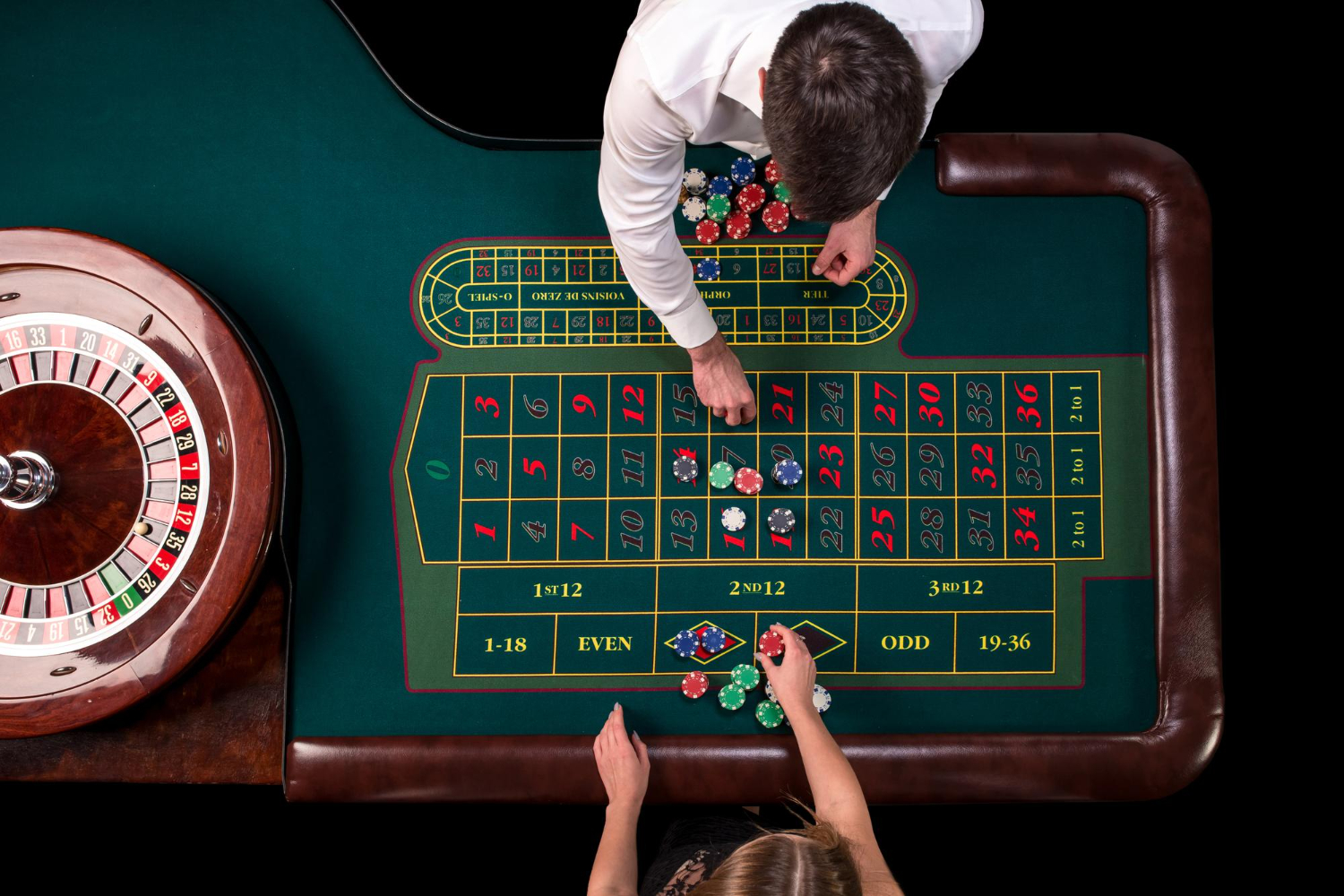
The cinematic thing about roulette is not the game. It is physics. A spinning wheel, a ball moving against the direction of the spin, the gradual slowing, the clatter and rattle as the ball finds its pocket. All of that happens visibly, in real time, in a way that communicates itself to anyone in the room regardless of whether they know the rules. No other casino game does this. Cards are static. Slot machines are enclosed. Roulette puts the mechanism of chance on open display and makes you watch it resolve, which is dramatically effective in ways that screenwriters and directors have been exploiting since Casablanca in 1942, when Rick uses the roulette table to allow a refugee couple to win the money they need for their papers. The game is being used as a moral symbol, not just a setting. James Bond has played roulette in Monte Carlo across several films because the combination of that location and that game communicates sophistication and composure under pressure with almost no dialogue required.
The Boyle Gaming online roulette version carries the same choice that has existed since the Blanc brothers removed one zero in 1842. The European single-zero wheel gives the house a 2.7% edge. The American double-zero wheel, which arrived when the French travelled to New Orleans and American casinos added a second zero for extra revenue, gives the house 5.26%. Every other variable in how you play matters less than which wheel you choose. This has been true since the 19th century and has not changed.
Why It Outlasted Everything
Every system ever devised to beat roulette has eventually run into the same wall. The Martingale, which involves doubling your bet after every loss, works until the table limit stops you or your bankroll runs out. The Fibonacci applies a mathematical sequence to bet sizing with the same eventual result. D’Alembert, Labouchere, the various wheel-bias strategies that Jagger used in 1873. All of them work until they do not, which is because the wheel has no memory. Each spin is independent of every previous spin. The number that came up seventeen times in the last hundred is not more or less likely to appear on the next spin than any other number. Every serious mathematician who has ever looked at this has reached the same conclusion and every gambler who has ever sat at a roulette table has had a moment of believing they had found the exception.
That tension, between the apparent pattern and the actual randomness, is what has kept the wheel relevant for three and a half centuries. Pascal failed to build his perpetual motion machine. What he built instead keeps moving regardless.