



























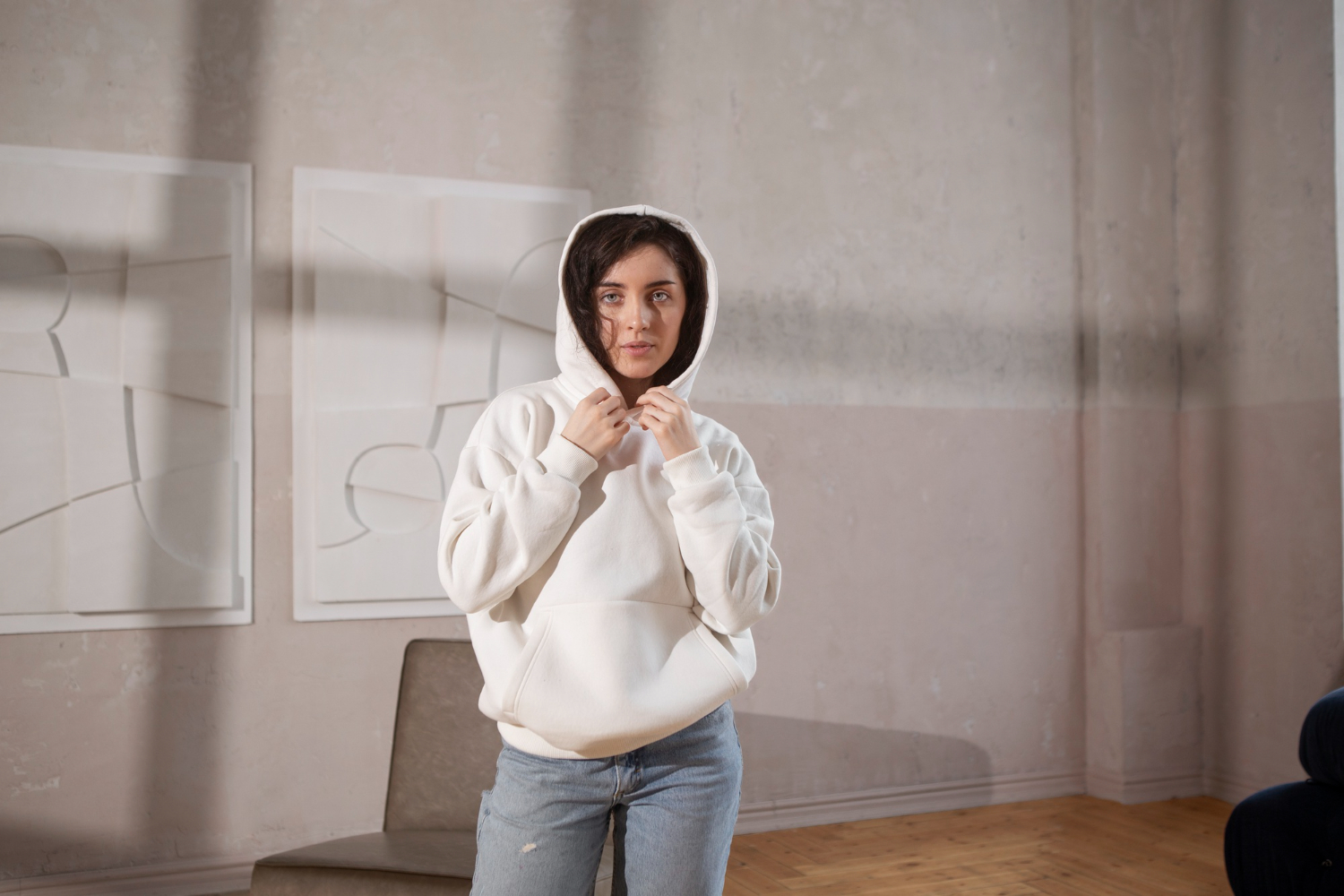
Open Instagram on any given evening and there’s a decent chance someone in your feed is modelling a hoodie with a small, deliberately understated logo on the chest, not a chain, not a football club, but their own business. Candle makers, personal trainers, bakers who started out selling banana bread from their kitchen table: an unusually large number of small businesses now have their own branded loungewear, and it’s worth asking why that particular garment, of all the things a fledgling brand could invest in, keeps coming up first.
The economics that make it work for very small operations
A few years ago, getting decent quality branded clothing made in small runs meant either a minimum order that didn’t suit a one-person business, or paying over the odds for a handful of units. That’s changed. Buying wholesale hoodies in plain colourways and having them printed or embroidered locally, in batches as small as ten or twenty, has become genuinely affordable, which means the barrier to entry for “having merch” has dropped from something only established brands did to something anyone with a logo and a weekend can put together.
Comfort clothing meets brand building
Part of the appeal is simple: a hoodie is something people actually want to wear, unlike a lot of promotional merchandise that ends up at the back of a drawer. If you run a small business and you’re choosing your first piece of branded clothing, you want something that your customers, your friends, and you yourself will reach for on a normal Tuesday, not just at a trade stand. A hoodie ticks that box in a way a polo shirt or a tote bag doesn’t always manage.
It’s not really about the clothing
What’s interesting is how many small business owners describe this as being less about selling merchandise and more about building a sense of identity, both for themselves and for the people who support them.
A regular customer wearing your logo is doing something a five-star review can’t: they’re walking around being a visible, ongoing advert, and they’re doing it because they want to, not because you paid for a billboard. For businesses without a marketing budget in any conventional sense, that’s a genuinely useful dynamic.
Getting the details right
The businesses that do this well tend to avoid two mistakes:
- Over-designing: a huge logo across the whole front reads as promotional rather than something someone would choose to wear day to day, whereas a smaller, well-placed print or embroidery reads as a genuine item of clothing that happens to carry a brand.
- Ignoring fit and fabric weight: people are far more likely to wear, and be seen in, a hoodie that’s genuinely comfortable and holds its shape after a few washes than one that was chosen purely on price.
The gifting angle nobody plans for
There’s also a side effect few business owners plan for: branded hoodies quietly become gifts. Customers buy them for partners, parents give them to children who’ve expressed even passing interest in a brand, and suddenly a small business has a piece of clothing circulating well outside its usual customer base, particularly around Christmas and birthdays. It costs the business nothing beyond the original print run, and it reaches people who were never going to see an online advert in the first place
Why some businesses hold off entirely
Not every small business owner jumps straight into branded clothing, and the hesitation is usually reasonable. Committing to even a small print run feels like a bigger step than it is, particularly for someone used to spending nothing beyond ingredients, materials or their own time.
The businesses that move past that hesitation successfully tend to reframe the decision: rather than asking whether they can afford a first batch of hoodies, they ask what else that same amount of money would buy in terms of visibility, and usually the answer is not much. A print run that gets worn repeatedly by real supporters tends to outperform an equivalent spend on a single boosted social post, if only because the exposure lasts for years rather than a single afternoon.
Learning from your first attempt
Plenty of small business owners have a story about a first merchandise run that didn’t quite land, often for one of a few familiar reasons:
- A logo too large
- A colour that didn’t suit anyone
- A fit that only worked for one body type
These early missteps are common and rarely fatal, but they do explain why so many owners now treat the first batch as a genuine test rather than a finished product. Ordering a small quantity, gathering honest feedback from the handful of people who actually wear it, and adjusting before a second, larger order tends to produce a far better result than trying to get everything right in one attempt.
Choosing who gets one first
A detail that often gets overlooked is who the first batch actually goes to. Owners who see the best results tend to prioritise their most engaged regulars and supporters over friends and family, precisely because those are the people most likely to be photographed somewhere the brand’s actual audience might see it. Handing the first run to people with no real connection to the business, however well meaning, tends to produce a lot of clothing worn once for a photo and then never again, which defeats much of the purpose of making it in the first place.
A trend that’s likely to keep growing
As more small businesses build their identity primarily through social media rather than physical premises, having something tangible that customers can wear, and by extension photograph and share, is only going to become more central to how a young brand gets noticed. It’s a low-cost, low-risk way to test whether people actually want to represent your brand, and unlike most marketing spend, if nobody wants to wear it, you’ll know almost immediately.