

































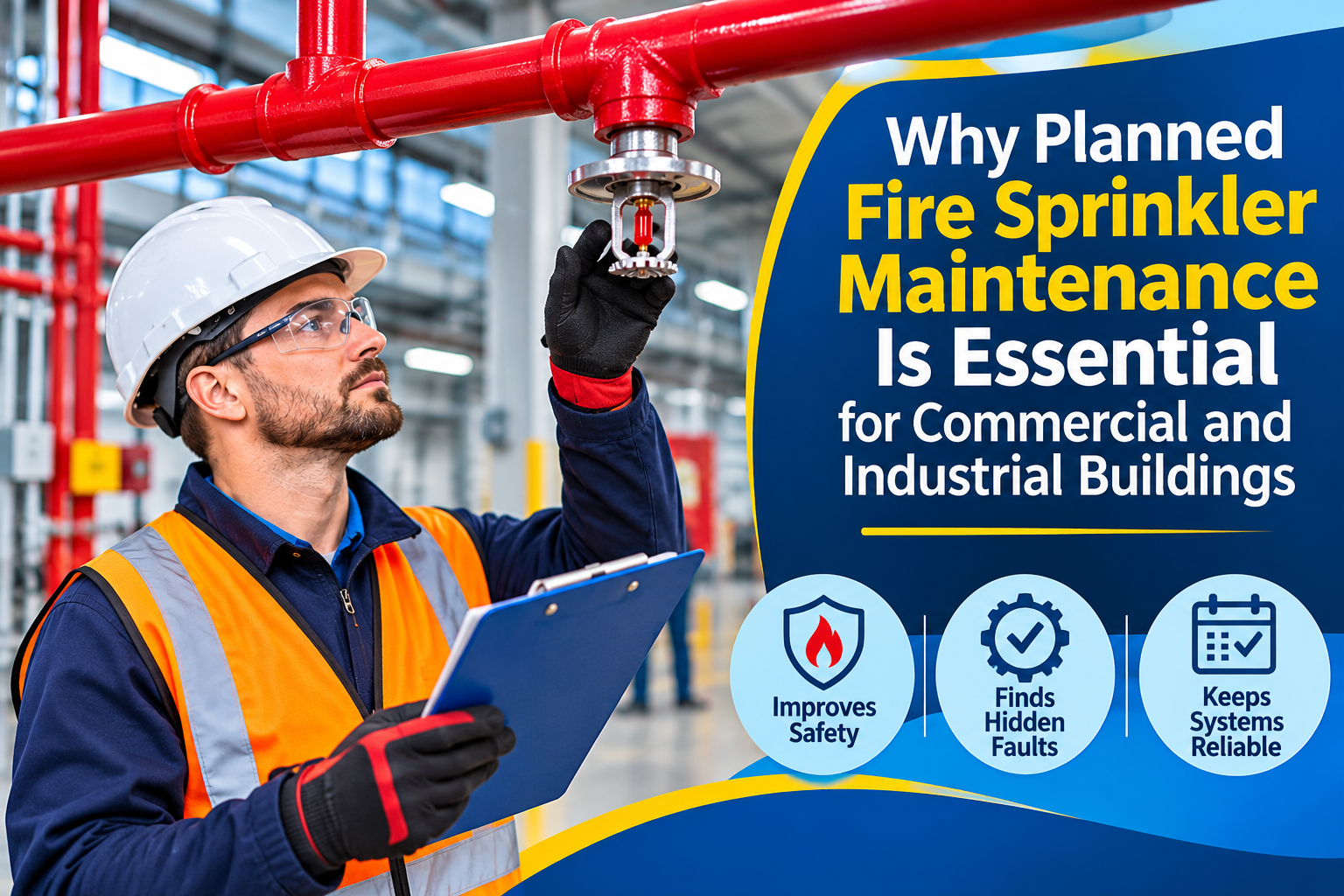
Commercial and industrial buildings rely on various fire protection measures to protect occupants, equipment, stock, and property. Among these measures, automatic fire sprinkler systems play an important role in controlling or suppressing developing fires. However, their effectiveness depends on the condition of individual components and the continued suitability of the installation. Planned Fire Sprinkler Servicing helps building owners and facilities managers monitor system condition, identify maintenance requirements and address developing faults before they compromise fire protection arrangements. Establishing a structured maintenance programme is particularly important in busy commercial and industrial environments, where operational changes, equipment movement and storage activities can influence sprinkler system performance.
Understanding the Importance of Sprinkler Protection in Commercial Buildings
Commercial buildings accommodate different activities, occupancy levels and fire hazards. Offices, retail premises, distribution centres and manufacturing facilities each have specific fire protection requirements that influence the design and operation of sprinkler installations.
Automatic sprinkler systems provide an important layer of protection by responding to heat from a developing fire. In most conventional installations, individual sprinkler heads activate when exposed to temperatures sufficient to operate their heat-sensitive elements. This targeted response can help limit fire development and reduce the likelihood of extensive damage. However, sprinkler protection depends on the system remaining in suitable working condition throughout its operational life.
Why Planned Maintenance Is Better Than Reactive Repairs
Reactive maintenance involves addressing equipment problems after they are identified, often when a component has already failed, or its performance has deteriorated. While repairs are necessary when faults occur, relying exclusively on reactive maintenance can leave building managers unaware of developing problems.
A planned maintenance programme provides regular opportunities to assess equipment condition and identify potential concerns. This allows repairs and component replacements to be organised more effectively, reducing the uncertainty associated with unexpected faults. For commercial and industrial buildings, where operational interruptions can be costly, scheduled maintenance can also help facilities teams coordinate servicing activities around business requirements.
Maintaining the Reliability of Essential Components
Fire sprinkler systems contain interconnected components that must operate together during a fire. These may include sprinkler heads, pipework, control valves, flow switches, pumps, storage tanks and monitoring equipment, depending on the installation.
Deterioration or failure affecting one component may compromise the performance of other parts of the system. For example, a closed control valve can interrupt the water supply to a protected area, while a defective pump may affect the availability of the required water pressure. Planned servicing helps assess relevant components and identify where further investigation, maintenance or corrective action is necessary.
Managing Fire Protection in Industrial Environments
Industrial properties can present complex fire safety considerations because of the materials, equipment and processes involved in their operations. Manufacturing facilities may contain machinery, combustible materials, or production activities that influence fire hazards in particular areas.
Regular sprinkler maintenance allows facilities managers to review equipment condition in the context of these operational demands. Inspections may identify accidental damage, environmental deterioration or obstructions that require attention. However, when industrial activities change significantly, a separate specialist assessment may be necessary to establish whether the existing sprinkler design remains suitable for the revised hazards.
Addressing Storage Changes in Warehouses
Warehouses and distribution centres frequently experience changes in stock levels, storage arrangements and operational layouts. Increased storage heights, different packaging materials, or changes to the type of goods stored may affect the effectiveness of existing sprinkler protection.
Routine servicing provides opportunities to identify visible changes that could interfere with sprinkler discharge or require further investigation. Building managers should ensure that storage arrangements remain consistent with the assumptions used when the sprinkler system was designed. A competent specialist should assess significant alterations rather than relying solely on routine maintenance to confirm continued suitability.
Checking Water Supplies and Pump Performance
An adequate water supply is fundamental to operating a water-based sprinkler system. Depending on the installation, water may be supplied through mains connections, dedicated storage tanks, pumps or a combination of arrangements.
Planned inspection and testing help assess whether relevant water supply equipment remains operational and whether identified conditions require corrective action. Pump maintenance, tank inspections and other appropriate checks should follow the requirements applicable to the particular system. Maintaining these arrangements is especially important in larger industrial and commercial properties, where sprinkler installations may protect extensive operational areas.
Reducing Maintenance Disruption to Business Operations
Commercial and industrial buildings often operate according to demanding schedules. Unexpected equipment problems can create difficulties when repairs require access to restricted areas or temporary changes to normal operations.
Planned maintenance allows organisations to prepare for servicing requirements, coordinate contractor access and schedule work around operational priorities. Where maintenance affects the availability of sprinkler protection, appropriate impairment management arrangements should be established. Relevant parties should be informed, necessary precautions considered, and the system returned to service promptly after the work is completed.
Supporting Building Management and Fire Safety Responsibilities
Building owners, employers and other responsible parties may have duties relating to the maintenance of fire protection equipment under applicable legislation and fire safety arrangements. These responsibilities vary depending on the property’s location, occupancy, and use.
A structured sprinkler maintenance programme supports responsible management by helping organisations maintain awareness of equipment condition and outstanding defects. However, servicing alone does not demonstrate that every fire safety obligation has been satisfied. It should form part of a wider approach that includes fire risk assessments, alarm maintenance, emergency procedures and other relevant protective measures.
Maintaining Accurate Inspection and Servicing Records
Maintenance records provide valuable information about the history and condition of a sprinkler installation. They may include inspection dates, test results, identified faults, completed repairs and recommendations for further work.
These records can help facilities managers identify recurring problems, plan future expenditure and communicate effectively with specialist contractors. They also support continuity when responsibility for a building changes or new facilities management teams are appointed. Maintaining accurate documentation is particularly useful in properties with complex sprinkler arrangements or multiple protected areas.
Establishing a Long-Term Maintenance Strategy
An effective maintenance strategy should reflect the type of sprinkler system, applicable standards, manufacturer guidance, and the property’s operational characteristics. Routine checks undertaken by trained site personnel may complement periodic inspections and servicing by competent specialists.
Building managers should also establish clear procedures for reporting defects, arranging corrective work and reviewing changes that may affect fire protection. Maintenance should not be treated as a one-off administrative requirement but as an ongoing process that supports the reliability of essential building safety equipment.
Frequently Asked Questions (FAQs) About Planned Fire Sprinkler Maintenance
Why is planned sprinkler maintenance important for commercial buildings?
Planned maintenance helps building managers monitor equipment condition, identify developing faults and organise corrective work. It supports the continued readiness of sprinkler installations and allows maintenance activities to be coordinated with normal business operations. It should form part of a wider fire safety management strategy.
Do industrial sprinkler systems have different maintenance requirements?
Maintenance requirements can vary depending on system design, environmental conditions, operational activities, and applicable standards. Industrial properties may require particular attention to equipment damage, storage arrangements and changing fire hazards. A competent specialist can establish an appropriate maintenance programme for the installation.
Can warehouse storage changes affect sprinkler performance?
Yes. Changes in storage height, commodity type, packaging or layout may affect the assumptions used when a sprinkler system was designed. Significant changes should receive specialist assessment to determine whether the existing protection remains appropriate for the revised storage arrangements.
How can businesses minimise disruption during sprinkler maintenance?
Businesses can coordinate servicing with operational schedules, arrange contractor access in advance and communicate maintenance requirements to relevant personnel. Where protection is temporarily affected, follow appropriate impairment management procedures to address the associated fire safety risks.
What should fire sprinkler maintenance records include?
Records should document relevant inspection dates, test results, identified defects, maintenance activities and corrective actions. They may also include recommendations for further investigation and details of outstanding work. Accurate documentation supports maintenance planning and effective communication between responsible parties.
Conclusion
Planned fire sprinkler maintenance plays an important role in supporting the safety and operational reliability of commercial and industrial buildings. Regular inspections, testing and servicing provide opportunities to identify equipment faults, review changing operational conditions and arrange corrective work before problems become more serious.
For building owners and facilities managers, maintaining sprinkler protection requires an ongoing commitment to appropriate maintenance, accurate documentation and specialist assessment when building activities change. Integrating these measures into a wider fire safety strategy can help preserve the effectiveness of installed sprinkler systems throughout the property’s operational life.