


































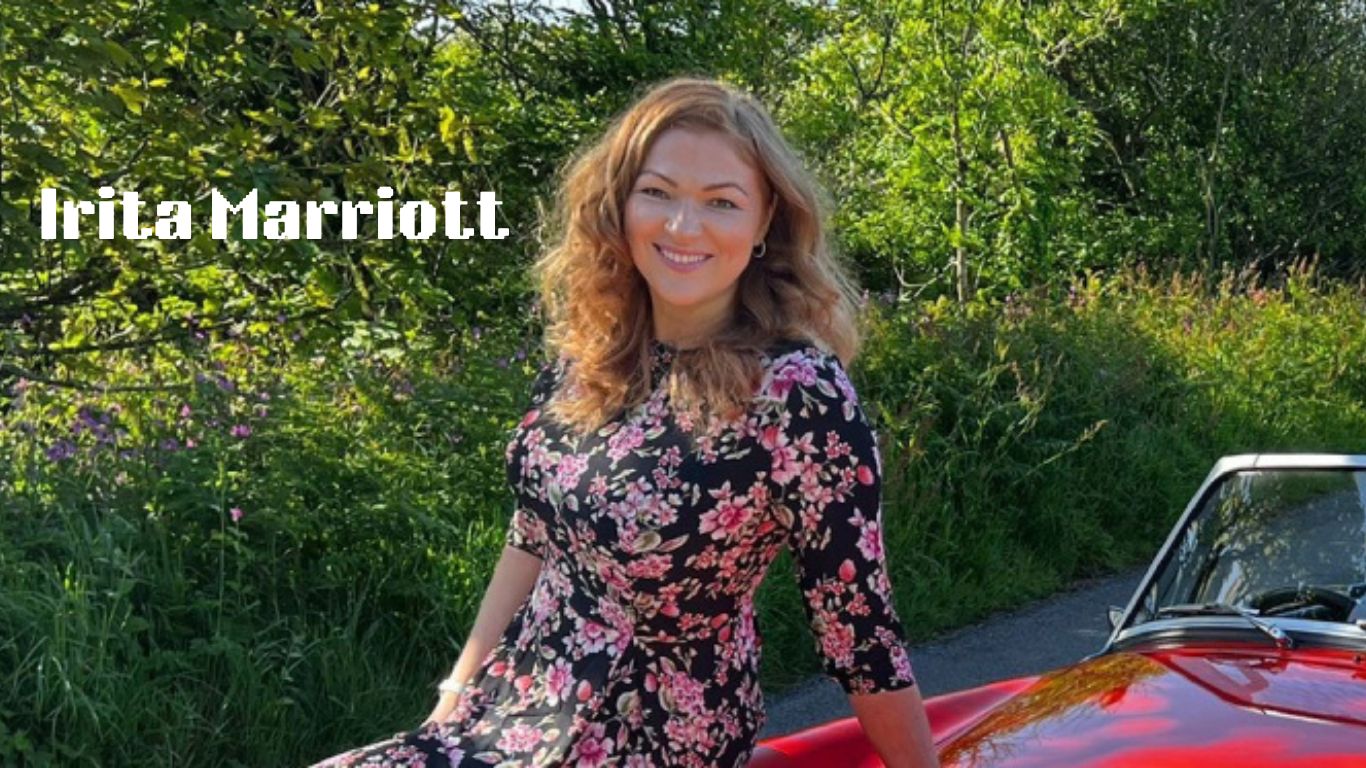
Few figures in the antiques industry have earned the admiration and respect that Irita Marriott enjoys today. Recognised for her infectious enthusiasm, extensive knowledge, and remarkable talent for identifying exceptional pieces, she has become one of Britain’s leading auctioneers and antiques specialists.
Television audiences know her from popular programmes such as Antiques Road Trip, Bargain Hunt, and The Greatest Auction, where her warm personality and expert insights have introduced viewers to the fascinating world of antiques. Yet her achievements on screen represent only one chapter of a much larger story.
Originally from Latvia, Irita’s journey to becoming one of the UK’s most recognised antiques experts has been anything but conventional. From growing up on a rural farm to launching her own successful auction house in Derbyshire, her career has been built on perseverance, curiosity, and an enduring appreciation for craftsmanship and history.
This biography explores her early life, the experiences that shaped her career, her rise within the antiques trade, her success on television, and the lasting impact she continues to make across Britain’s collecting community.
Early Life and Background
Irita Marriott was born and raised in Latvia, where she spent her childhood surrounded by the countryside and a close-knit community. Life on the family farm was simple but rewarding, teaching her valuable lessons about responsibility, patience, and resilience from an early age.
Growing up in a self-sufficient environment encouraged her to appreciate the importance of preserving resources and recognising quality. Rather than replacing things, people valued well-made possessions that could last for generations. This mindset would later become one of the foundations of her career in antiques.
Although she has often described her upbringing as modest, she remembers it with great affection. Living close to nature helped shape her practical outlook and gave her a genuine appreciation for traditional craftsmanship. Everyday objects were never viewed as disposable. Instead, they represented skill, purpose, and history.
Even before entering the antiques world, Irita was fascinated by the stories connected to objects. She understood that every handcrafted piece carried traces of the people who created and owned it, an idea that would later become central to her professional philosophy.
Like many young people seeking broader opportunities, she eventually decided to build a life outside Latvia. After completing her education, she moved to the United Kingdom in her early twenties, beginning an entirely new chapter with little more than determination and a willingness to work hard.
Starting Fresh in the United Kingdom
Arriving in Britain meant adapting to a new country, new culture, and new opportunities. At the time, antiques were not part of her career plans. Instead, she accepted a position at a garden centre, where her dedication and attention to detail quickly earned recognition.
Her ability to understand products and connect with customers helped her progress through the business. Before long, she was promoted to the role of buyer, taking responsibility for selecting merchandise, managing stock, and negotiating with suppliers.
Although the position was rooted in retail rather than antiques, it provided valuable commercial experience. She developed a strong understanding of product quality, consumer demand, pricing strategies, and purchasing decisions, all of which later proved invaluable in the antiques trade.
The role also taught her an important lesson: an item’s true worth extends beyond its price tag. Factors such as craftsmanship, rarity, timing, historical significance, and emotional appeal all contribute to its value. This broader perspective would become one of the defining principles of her work as an antiques expert.
The years she spent in retail sharpened both her business instincts and negotiation skills, preparing her for the challenges that lay ahead.
Falling in Love with Antiques
After settling in Derbyshire, Irita began exploring local antique fairs, auction houses, and markets during her spare time. What began as casual curiosity soon developed into a genuine passion.
She was captivated by the history hidden behind every object. A porcelain figurine, an antique cabinet, or a decorative vase represented much more than its appearance. Each piece reflected the craftsmanship of its maker and the lives of those who had treasured it over the years.
Determined to learn more, she joined a local auction house, where she immersed herself in every aspect of the business. Her early responsibilities included cataloguing items, researching their origins, preparing auction listings, and assisting with valuations.
The work required patience, precision, and countless hours of research. It was far from glamorous, but every task deepened her understanding of the industry.
During this period, she developed expertise in several key areas, including:
- Provenance and ownership history
- Identifying restoration and assessing condition
- Recognising different historical periods and design styles
- Understanding collector demand and market trends
Her willingness to learn, combined with an excellent eye for quality, allowed her to progress quickly. Before long, she was conducting valuations, advising clients, and playing a much larger role in auction sales.
By 2012, Irita had gained enough confidence and experience to become a full-time antiques dealer.
This new chapter took her across Britain and Europe in search of exceptional pieces. She attended specialist fairs, visited private collections, and worked closely with experienced dealers to source unique antiques.
These buying trips were often demanding, involving long journeys, early mornings, and meticulous research. However, they also helped her build lasting relationships within the antiques community while refining the instinct for quality that would eventually become her trademark.
Each purchase expanded her knowledge, strengthened her reputation, and reinforced her belief that every antique tells a story worth preserving.
Long before television audiences came to know her name, Irita Marriott had already established herself through years of dedication, practical experience, and an unwavering commitment to learning. Those formative years laid the foundation for a career that would eventually make her one of Britain’s most respected figures in the world of antiques.
The Expertise Behind the Name
Every successful antiques dealer develops an instinct for recognising quality, but Irita Marriott’s reputation has been built on more than experience alone. Her ability to identify remarkable pieces comes from years of study, practical knowledge, and an appreciation for craftsmanship that extends beyond market trends.
Rather than chasing whatever happens to be fashionable, she focuses on objects with lasting appeal. Fine workmanship, historical importance, and distinctive design are the qualities she values most when assessing an antique.
Over the years, she has become particularly knowledgeable in several specialist areas, including:
- European porcelain and ceramics from the 18th and 19th centuries
- Decorative antiques with artistic and historical significance
- Collectables with unusual stories or rare origins
- Vintage furniture and carefully crafted interior pieces
What truly distinguishes Irita, however, is her ability to explain why an item matters.
Instead of discussing antiques purely in terms of price, she introduces people to the history behind each object. By sharing details about its maker, period, craftsmanship, and journey through time, she helps collectors appreciate far more than its financial value.
This storytelling approach has encouraged many newcomers to explore antiques with confidence, proving that collecting is as much about curiosity as it is about expertise.
Putting People Before Possessions
Throughout her career, Irita has maintained one simple belief: antiques are ultimately about people.
Every painting, piece of jewellery, ceramic bowl, or antique cabinet has been part of someone’s life. Behind each object are memories, family traditions, celebrations, and moments that deserve to be remembered.
This perspective shapes the way she works with every client.
Whether helping a family sell inherited belongings or advising someone purchasing their very first antique, she approaches each conversation with patience, honesty, and empathy.
She has also worked hard to make auctions feel less intimidating.
For many people, auction houses can seem formal or difficult to understand. Irita has challenged that perception by encouraging open communication, providing clear explanations, and creating an environment where newcomers feel comfortable asking questions.
Her message remains consistent: anyone can develop an appreciation for antiques. You do not need specialist knowledge to enjoy beautiful craftsmanship or become interested in history.
Family Life Beyond the Auction Room
Although much of her career is lived in the public eye, Irita keeps her personal life relatively private.
She lives in Derbyshire with her husband and their two sons, balancing family life with the responsibilities of running a growing business and filming television programmes.
Managing auctions, travelling for valuations, attending antique fairs, and appearing on television creates an incredibly busy schedule. Even so, she has often spoken about the importance of maintaining time with her family.
Those closest to her provide the support and stability that allow her to continue pursuing the career she loves.
Rather than sharing every aspect of her private life publicly, she prefers to keep the spotlight on her work while occasionally offering followers a glimpse behind the scenes of her professional journey.
Shaping the Future of the Antiques Industry
Irita Marriott’s influence reaches far beyond her own career achievements.
At a time when fast fashion, disposable products, and mass manufacturing dominate consumer culture, she continues to champion craftsmanship, sustainability, and lasting quality.
Her work reminds people that antiques are far more than decorative possessions. They represent the skills, traditions, and stories that have been passed from one generation to the next.
In many ways, she has helped redefine what it means to collect antiques in the modern world.
Inspiring a New Generation of Collectors
Television has introduced millions of people to the antiques trade, but Irita has played an especially important role in making the subject feel approachable.
Many younger viewers once considered antiques something reserved for specialists or older collectors. Through her engaging presentation style, she has shown that discovering historic objects can be exciting, educational, and surprisingly accessible.
Her enthusiasm has encouraged many first-time buyers to visit local auctions, browse antique markets, and explore the history behind family heirlooms.
By making antiques easier to understand, she has helped transform them from niche collectibles into meaningful pieces of everyday history.
Encouraging More Women to Enter the Industry
Auctioneering has traditionally been viewed as a male-dominated profession, particularly in senior leadership roles.
By establishing her own auction house while becoming one of Britain’s best-known television experts, Irita has demonstrated that success in the industry depends on knowledge, commitment, and leadership rather than gender.
Her achievements have inspired many women to consider careers in valuation, dealing, auction management, and specialist collecting.
She continues to serve as an example of how expertise and determination can open doors within even the most traditional professions.
Bringing Auctions into the Modern Era
Another of Irita’s major contributions has been helping modernise the auction experience.
Today’s buyers expect greater convenience, transparency, and flexibility than previous generations. Recognising these changing expectations, her auction house combines traditional expertise with modern technology.
Digital catalogues, online bidding, and clear communication allow collectors from across the UK and overseas to participate with confidence.
This balance between heritage and innovation reflects the direction in which the antiques industry continues to evolve.
Promoting Sustainable Living
As environmental awareness continues to grow, antiques have become increasingly relevant.
Buying an antique means giving an existing object a new life rather than contributing to unnecessary manufacturing and waste.
Irita frequently highlights the value of preserving well-made items instead of replacing them with mass-produced alternatives.
Her work encourages people to appreciate longevity, craftsmanship, and responsible consumption, demonstrating that sustainability and beautiful design often go hand in hand.
Beyond Television
Although television introduced Irita Marriott to a national audience, her influence extends well beyond the screen.
She has inspired countless people to become more curious about design, history, and collecting. Many viewers have gone on to attend auctions, visit antique fairs, or research treasured family possessions after watching her programmes.
She also serves as an example for aspiring entrepreneurs.
Rather than following a conventional career path, she built her success through continuous learning, practical experience, and genuine passion for her chosen profession.
One of the messages she shares most often is that expertise develops over time.
Nobody begins as an expert. Knowledge grows through curiosity, patience, and a willingness to keep learning.
That belief has helped make the antiques world feel more welcoming to people from all backgrounds.
Authenticity and Public Image
A significant part of Irita’s popularity comes from her personality.
She combines professionalism with warmth, making even complex historical subjects easy to understand without ever appearing distant or intimidating.
Whether discussing a rare porcelain figure or valuing a treasured family heirloom, she communicates with genuine enthusiasm and respect.
Her authenticity has earned the trust of viewers, collectors, and clients alike.
Through social media, she regularly shares moments from her professional life, including auction previews, antique fairs, valuations, and behind-the-scenes preparations.
Rather than presenting only polished success, she also shows the research, travel, and hard work that happen behind every auction.
This openness has helped strengthen the connection she has built with her audience.
Challenges Along the Way
Like every successful entrepreneur, Irita’s journey has included its share of challenges.
Creating an auction house required careful planning, financial investment, and the ability to manage multiple responsibilities simultaneously.
Balancing those demands while maintaining a busy television career added further pressure.
She has also spoken about experiencing moments of uncertainty, particularly during her early years on television when working alongside well-established experts.
Instead of allowing self-doubt to limit her, she relied on preparation, continuous learning, and confidence in her abilities.
Her experience demonstrates that confidence is rarely something people are born with. More often, it develops through persistence and practical experience.
She also believes mistakes play an important role in professional growth.
Even experienced dealers occasionally misjudge purchases or encounter unexpected issues with antiques.
Rather than viewing these moments as failures, she treats them as valuable learning experiences that strengthen her knowledge for the future.
Looking Ahead
As the antiques market continues to evolve, Irita Marriott Auctioneers & Valuers continues to expand while remaining true to its founding principles.
The business now attracts buyers and sellers interested in antiques, jewellery, decorative arts, collectables, and other specialist items.
Online bidding has opened the business to collectors around the world, reflecting Irita’s vision of combining traditional auction values with modern accessibility.
Looking to the future, there is considerable potential for further growth through educational workshops, specialist valuation events, collector experiences, and digital resources that help newcomers learn more about antiques.
Despite these opportunities, one thing remains unchanged.
Honesty, expertise, and strong personal relationships continue to sit at the heart of everything she does.
Why Irita Marriott Continues to Matter
The antiques industry is changing.
Today’s collectors are younger, increasingly connected through digital platforms, and more interested in sustainability than ever before.
Within this evolving landscape, Irita Marriott represents an important bridge between tradition and innovation.
She has shown that historical knowledge can exist comfortably alongside modern technology, and that expertise becomes even more valuable when shared with warmth and generosity.
Her work proves that antiques are not simply objects from the past. They are connections between generations, preserving stories, craftsmanship, and culture for the future.
Conclusion
Irita Marriott’s career is a remarkable example of what passion, determination, and curiosity can achieve.
From her childhood in rural Latvia to becoming one of Britain’s most respected antiques experts, auctioneers, and television personalities, every stage of her journey reflects resilience and an enduring love of history.
She has built far more than a successful business.
Through her auction house, television appearances, and commitment to educating the public, she has helped people see antiques in a new light. Rather than viewing them as relics of the past, she encourages others to appreciate them as lasting symbols of craftsmanship, creativity, and human stories.
In an age defined by rapid change and disposable consumer culture, Irita continues to champion the value of preserving objects with meaning.
Her greatest legacy is not simply the antiques she has bought, valued, or sold. It is the renewed appreciation she has inspired for the history, artistry, and personal memories that those objects carry from one generation to the next.