


































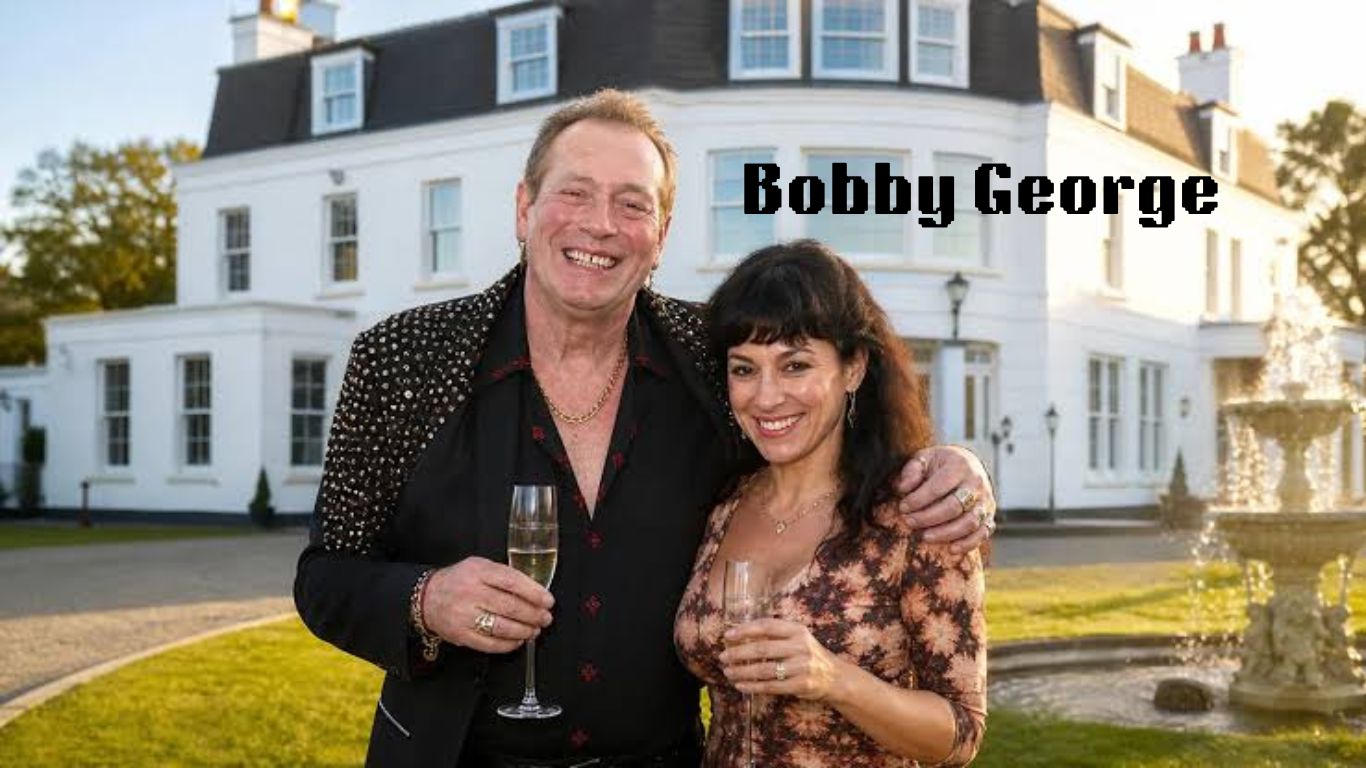
Although Bobby George never captured a World Championship title, he achieved something few players ever manage: becoming one of the most recognisable personalities in the history of darts. With his signature gold jewellery, extravagant entrances, colourful outfits, and unforgettable smile, he transformed himself into a sporting icon whose popularity extended far beyond the oche.
Because of his enduring fame, many fans continue searching for Bobby George’s net worth, curious about how a darts player from an era of relatively modest prize money accumulated significant wealth and maintained his public profile for decades.
The truth is that Bobby George has never publicly revealed his financial status. Various online sources estimate his fortune to be between $1 million and $5 million, but these figures remain speculative and are not supported by official financial records. His overall wealth is better understood by looking at his entire career, which includes tournament earnings, television work, exhibition events, public appearances, property investments, publishing, and his remarkable ability to remain relevant long after retiring from top-level competition.
Who Is Bobby George?
Born Robert Francis George on 16 December 1945 in London, Bobby George is widely regarded as one of the sport’s greatest entertainers. Throughout his career, he worked as a professional darts player, television personality, commentator, and exhibition performer.
Affectionately known as “The King of Bling,” George earned his nickname through his extravagant style. At a time when most darts players appeared on stage wearing simple shirts and carrying little more than their darts, George embraced glamour. Gold jewellery, sparkling outfits, dramatic entrances, and a larger-than-life personality quickly became his trademark.
His reputation wasn’t built solely on appearance. George reached the BDO World Championship final twice, first in 1980 and again in 1994, proving himself against some of the strongest competitors of his generation. However, what truly separated him from his peers was his understanding that television audiences wanted more than sporting excellence. He realised early that personality could be just as valuable as performance.
That insight helped him enjoy a career that extended well beyond competitive darts. After leaving the professional circuit, he became a familiar television face, a respected exhibition player, an after-dinner speaker, and a brand ambassador. These activities played an important role in building his long-term financial success, making tournament winnings only one part of the story behind Bobby George’s wealth.
Early Life and Working-Class Roots
Long before the bright lights of televised darts, Bobby George came from humble beginnings.
Raised in post-war London, he grew up in a working-class environment where local pubs, community competitions, and sport were central parts of everyday life. Like many people of his generation, George entered practical trades rather than glamorous professions before discovering his future career.
Before becoming a professional darts player, he worked as a builder and floor layer, jobs that demanded discipline, resilience, and hard work. Those experiences helped shape the straightforward personality and determination that later became his trademark both on and off the stage.
George also spent time boxing during his younger years. Many believe this sporting background contributed to the confidence, composure, and commanding stage presence that later defined him as one of darts’ most charismatic competitors.
Professional darts looked very different during the early years of George’s career. There were no elite academies, sponsorship deals, or million-pound tournaments. Most competitions took place in pubs, clubs, county events, and local leagues, where prize money was relatively modest and players often relied on other jobs to support themselves.
Success required more than talent alone. Players needed confidence, resilience, and the ability to entertain spectators. George naturally possessed those qualities, allowing him to stand out from the crowd long before he became a household name.
Building a Career in Darts
Unlike today’s players, Bobby George didn’t have access to structured coaching systems or professional development programmes.
Instead, he developed his skills through years of practice, local competitions, and countless matches across the county circuit. His steady rhythm, mental strength, and confidence under pressure gradually earned him recognition throughout British darts.
By the late 1970s, George had established himself among some of the sport’s biggest names, including Eric Bristow, John Lowe, Jocky Wilson, and Leighton Rees. Competition was fierce, with every major tournament featuring world-class talent.
Breaking through during such a competitive era required more than consistency. George distinguished himself with both his performances and his unmistakable personality.
His breakthrough arrived at the 1980 BDO World Championship, where he advanced all the way to the final. Waiting for him was Eric Bristow, already emerging as one of the greatest players the sport had ever seen.
Although George fell short in the final, reaching the championship match transformed his career. Overnight, he became one of the most recognisable figures in darts and established a reputation that would continue opening doors for decades.
The 1980 World Championship: A Career-Defining Moment
Many players are remembered for the championships they win.
Bobby George is remembered for something different.
His appearance in the 1980 BDO World Championship Final remains one of the defining moments of his career, despite ending in defeat against Eric Bristow.
At the time, Bristow was beginning a period of dominance that would shape professional darts throughout the decade. Competing alongside such a legendary player immediately elevated George’s standing within the sport.
While some runners-up gradually fade into history, George avoided that fate because he offered audiences far more than results alone. The championship final gave him sporting credibility, but it was his personality that transformed him into a lasting television favourite.
His confident walk to the stage, colourful appearance, and natural showmanship brought something fresh to professional darts. Fans appreciated not only his talent but also the entertainment value he delivered every time he competed.
Financially, the era was vastly different from modern professional darts. Prize funds during George’s peak years were only a fraction of today’s payouts, with world champions now earning sums that would have been unimaginable in the early 1980s.
For that reason, assessing Bobby George’s financial success purely through prize money would provide an incomplete picture.
Becoming “The King of Bling”
Bobby George’s famous nickname wasn’t created by marketing experts. It developed naturally because of the unique image he built throughout his career.
Everything about his presentation reflected confidence and extravagance. From the gold jewellery around his neck to his eye-catching outfits, dramatic entrances, and infectious smile, every appearance felt like a performance before a single dart had even been thrown.
This distinctive style quickly made him one of the easiest players to recognise.
Nicknames, memorable entrances, and colourful personalities have always been part of darts culture, but George elevated them to another level. He created a personal brand that fans instantly associated with excitement and entertainment.
Importantly, his image never felt forced.
The flamboyant appearance matched his genuine personality, making the character believable rather than manufactured. That authenticity helped audiences connect with him and ensured his popularity lasted well beyond his competitive career.
His recognisable image also proved commercially valuable.
Event organisers knew Bobby George could attract audiences regardless of the tournament. Television producers appreciated his confidence, humour, and ability to engage viewers. Even casual sports fans who rarely followed darts could immediately recognise “The King of Bling.”
That level of public recognition is difficult to achieve in any sport. It helped George generate income through exhibitions, media work, speaking engagements, endorsements, and promotional appearances long after his days as a full-time competitor had ended.
Ultimately, Bobby George demonstrated that personality could become just as valuable as sporting success. While many players built careers through trophies alone, George built an enduring brand that continues to be remembered decades later.
A Remarkable Return to the World Championship in 1994
One of the most impressive chapters of Bobby George’s career came in 1994, when he reached the BDO World Championship Final for a second time.
Fourteen years had passed since his first appearance in the final, and during that period the sport had evolved considerably. A new generation of players had emerged, competition had intensified, and many believed George’s best years were behind him.
Instead, he proved his critics wrong.
His run to the final demonstrated not only his ability but also his determination. Despite battling significant back problems throughout the tournament, George continued to compete at the highest level and secured another place in darts’ biggest event.
In the final, he faced John Part, who would later establish himself as one of the greatest players in darts history. Although George was defeated once again, simply reaching another world final after such a long gap was an extraordinary achievement.
More importantly, it reminded fans that Bobby George was far more than an entertaining personality. He remained a genuine competitor capable of challenging the very best in the sport.
That balance between sporting credibility and entertainment would later become one of the biggest reasons behind his continued commercial success.
Prize Money Was Only One Part of His Income
Looking back at Bobby George’s career earnings, younger darts fans are often surprised by how modest tournament prize money was during his playing days.
Today, professional darts offers life-changing rewards, with world champions taking home hundreds of thousands of pounds from a single tournament. During George’s peak years in the late 1970s and 1980s, the financial landscape was very different.
Although televised darts attracted large audiences, sponsorships were limited, prize funds were considerably smaller, and the commercial side of the sport had not yet reached its modern scale.
As a result, even the biggest stars of that era rarely became wealthy through tournament winnings alone.
George understood this reality early in his career.
Rather than relying exclusively on prize money, he built multiple income streams. Television appearances, exhibition matches, speaking engagements, sponsorships, branded merchandise, and later publishing opportunities all helped increase his earnings over several decades.
This broader approach explains why estimating Bobby George’s net worth requires looking beyond official tournament results.
Television Helped Keep Him in the Spotlight
Retirement from professional competition did not mark the end of Bobby George’s public career.
Instead, television introduced him to an entirely new audience.
His knowledge of the game, combined with his humour and distinctive personality, made him a natural choice for broadcasting roles. He regularly appeared on BBC darts coverage, where his entertaining commentary and relaxed style appealed to both dedicated fans and casual viewers.
Explaining a technical sport while keeping audiences entertained isn’t an easy task, but George managed to do both.
His television work ensured that his name remained familiar long after his competitive career had slowed down. Unlike many former athletes who gradually disappear from public view, George maintained a consistent media presence.
Over the years, he also appeared in documentaries, entertainment programmes, comedy shows, and various television specials that celebrated both his career and his larger-than-life personality.
This continued visibility likely created further opportunities for paid appearances, endorsements, and exhibition bookings.
It also introduced Bobby George to younger generations who had never watched him compete but recognised him as one of darts’ most famous personalities.
Exhibition Matches Became a Major Source of Income
One of Bobby George’s greatest strengths was his ability to entertain an audience.
That quality made exhibition darts an ideal fit after his professional playing career.
Exhibition events are less about competition and more about creating an enjoyable experience for fans. George excelled in that environment, combining impressive dart-throwing with humour, storytelling, and audience interaction.
Sports clubs, corporate functions, charity events, and social evenings regularly booked him because they knew he could deliver far more than simply a game of darts.
Although the exact fees he earned have never been disclosed publicly, exhibition appearances likely became one of the most reliable sources of income during the later stages of his career.
Unlike tournament winnings, which depend entirely on results, exhibitions allow popular personalities to continue earning long after retirement.
George’s famous nickname and unmistakable style ensured there was always demand for appearances from “The King of Bling.”
Public Speaking and Entertainment
Bobby George’s popularity naturally extended into public speaking.
As an after-dinner speaker and event host, he built another successful career by sharing stories from decades in professional darts.
His talks often featured memorable rivalries, humorous moments from tournaments, behind-the-scenes experiences, and reflections on how the sport evolved over the years.
Audiences appreciated not only his achievements but also his ability to entertain.
In this field, personality often matters more than sporting success alone.
George’s confidence, charisma, and natural storytelling skills made him an ideal guest for sporting dinners, business events, and charity functions.
These appearances further strengthened the personal brand he had spent years building and created another dependable source of long-term income.
George Hall: The Property That Became Part of His Image
Whenever discussions about Bobby George’s wealth arise, one property almost always enters the conversation: George Hall in Essex.
The impressive residence became nearly as famous as its owner.
Known for its grand design, extensive grounds, lakes, entertainment areas, and luxurious features, the property perfectly reflected the extravagant image that George had cultivated throughout his career.
For many fans, the house represented the lifestyle of “The King of Bling.”
However, owning an expensive property doesn’t necessarily reveal someone’s complete financial position.
Real estate values can fluctuate, while mortgages, maintenance costs, taxes, and ownership arrangements all influence actual wealth.
Nevertheless, George Hall remains a strong indication that Bobby George successfully converted decades of public recognition into valuable long-term assets.
The home also reinforced his public identity.
Rather than separating his private life from his famous image, George allowed the property to become part of the legend surrounding his colourful personality.
Family Life Away from the Oche
While Bobby George has always enjoyed public attention, he has generally kept much of his personal life relatively private.
He has been married to Marie George for many years, and she has regularly appeared alongside him in interviews and public events.
Unlike many modern celebrities who share every aspect of their personal lives online, George has preferred a quieter approach.
Most information about his family has come through documentaries, magazine interviews, and occasional television appearances rather than constant media exposure.
Behind the scenes, family support undoubtedly played an important role throughout his career.
Professional darts required frequent travel, late-night competitions, exhibition events, and continuous interaction with fans. Maintaining such a demanding schedule for decades would have been difficult without a stable personal life.
The George family’s connection to darts continued through Bobby’s son, Richie George, who also became a professional player.
Richie reached the semi-finals of the 2013 BDO World Championship, creating another memorable chapter in the family’s sporting history.
His success demonstrated that darts talent had become part of the George family legacy, further strengthening Bobby George’s reputation within the sport.
A Reputation That Extended Beyond Results
By the mid-1990s, Bobby George had achieved something that relatively few athletes accomplish.
He had successfully transformed from an elite competitor into a respected public figure.
His continued television work, exhibition appearances, speaking engagements, and public profile ensured that his financial opportunities remained strong even after his days of competing regularly had ended.
Rather than relying solely on trophies or prize money, George built a career around entertainment, personality, and recognisability.
That approach proved remarkably successful and remains one of the biggest reasons why discussions about Bobby George’s net worth continue today.
Overcoming Injuries and Career Challenges
Like many professional athletes, Bobby George faced physical setbacks throughout his career.
Although darts may appear less physically demanding than many other sports, competing at the highest level requires exceptional balance, coordination, concentration, and consistency. Even minor injuries can disrupt a player’s stance, throwing rhythm, and accuracy.
One of George’s most notable achievements came during his run to the 1994 BDO World Championship Final, when he competed despite suffering from serious back problems. Many players would have struggled to perform under those conditions, yet George continued to compete against the world’s best.
His determination strengthened his reputation as a resilient competitor who refused to let injuries define his career.
Beyond physical challenges, George also experienced major changes within the sport itself.
Professional darts evolved dramatically during his lifetime. New governing bodies emerged, television contracts changed, prize money increased significantly, and the structure of the game became far more commercial than it had been during his early years.
Unlike today’s professionals, players of George’s generation had far fewer resources and support systems to help them navigate those transitions.
His ability to remain relevant throughout these changes speaks not only to his talent but also to his adaptability.
Books, Publishing and Later Career Income
Even after stepping away from full-time competition, Bobby George continued finding new ways to connect with fans.
One of the biggest milestones in his later career was the release of his autobiography in 2025. The book offered readers a closer look at his life, career, and experiences in professional darts, giving longtime supporters a chance to revisit many of the moments that made him one of the sport’s most colourful figures.
While the financial details surrounding book sales remain private, publishing often provides more than royalty income alone.
A successful autobiography can generate renewed media interest, increase speaking engagements, lead to additional interviews, and introduce a sporting legend to a younger audience.
For George, the book represented another chapter in a career that has consistently extended beyond competitive darts.
Brand Partnerships and Merchandise
Bobby George’s larger-than-life personality made him an ideal figure for endorsements and branded merchandise.
For decades, darts equipment manufacturers have partnered with well-known players to release signature products, and George’s popularity made him an obvious choice.
His famous nickname, “The King of Bling,” became a recognisable brand in its own right.
Fans who admired his style were naturally drawn to products carrying his name, whether darts, accessories, or promotional merchandise.
Although specific financial details have never been disclosed, licensing agreements and branded products almost certainly contributed to his long-term earnings.
Unlike tournament prize money, these partnerships often continue generating income years after retirement.
Estimating Bobby George’s Net Worth
One question continues to attract significant online attention:
How much is Bobby George actually worth?
The honest answer is that nobody outside his personal circle knows for certain.
Bobby George has never publicly disclosed his finances, and there are no official documents confirming his wealth.
Various websites estimate his net worth at somewhere between $1 million and $5 million, but these figures should be treated as informed speculation rather than verified fact.
A more realistic way to understand his financial success is to consider the full scope of his career.
His income likely came from multiple sources, including:
- Tournament prize money
- Television broadcasting
- Exhibition matches
- Public speaking
- Corporate appearances
- Brand endorsements
- Merchandise licensing
- Publishing
- Property ownership
Taken together, these revenue streams suggest that George built his wealth steadily over several decades rather than through a single lucrative payday.
More Than a Darts Player
Perhaps Bobby George’s greatest achievement wasn’t financial at all.
He transformed himself into one of the first true personalities in professional darts.
Many players are remembered solely for the trophies they won. George became famous because he understood that entertainment mattered just as much as sporting excellence.
Long before elaborate walk-ons became standard, he treated every appearance as a performance.
His gold jewellery, flamboyant clothing, dramatic entrances, and unmistakable confidence created an identity that fans instantly recognised.
Today’s stars often invest heavily in personal branding, but Bobby George was doing exactly that decades earlier.
In many ways, he helped change expectations for how professional darts could be presented on television.
Bobby George’s Lasting Influence on Darts
George’s impact reaches far beyond his own playing career.
Modern professional darts embraces colourful entrances, personalised music, memorable nicknames, elaborate stage production, and larger-than-life personalities.
While he certainly wasn’t responsible for every aspect of this evolution, he played an important role in proving that charisma could attract audiences alongside sporting excellence.
He demonstrated that fans didn’t simply want to watch great darts.
They wanted memorable characters.
Today’s generation of players continues to benefit from that shift in the sport’s culture.
Bobby George Today
Although Bobby George no longer competes regularly at the highest level, he remains an admired figure within the darts community.
He continues making occasional public appearances, participating in interviews, attending fan events, and celebrating the history of the sport.
His autobiography has also helped introduce his story to newer generations while allowing longtime supporters to revisit one of darts’ most entertaining careers.
Today, George is regarded as one of the elder statesmen of the game.
For many fans, he represents an era when televised darts combined fierce competition with unforgettable personalities.
His popularity has endured because he offered something unique that statistics alone could never measure.
Confusion With Another Bobby George
One reason online estimates of Bobby George’s wealth sometimes vary dramatically is because people occasionally confuse him with another man of the same name.
There is an American businessman named Robert T. “Bobby” George, based in Cleveland, Ohio, who has built a career in restaurants, hospitality, and property investment.
Some websites mistakenly combine information about the businessman with the British darts legend, resulting in wildly inaccurate estimates.
The two men are entirely unrelated.
Bobby George, the former darts player, earned his reputation through professional sport, broadcasting, exhibitions, and entertainment.
His financial history should not be confused with business ventures linked to the American entrepreneur.
Legacy
Very few athletes become larger than the sport they play.
Bobby George achieved exactly that.
Although he never lifted a World Championship trophy, he created something arguably more enduring: a public identity that remains instantly recognisable decades after his competitive career ended.
His influence can still be seen in modern darts, where personality, presentation, and entertainment are now considered essential parts of the sport.
George proved that success isn’t measured only by titles.
It can also be measured by the lasting impression someone leaves on fans.
That may explain why people continue searching for Bobby George’s net worth.
They’re not simply interested in his finances.
They’re interested in understanding how one of darts’ greatest entertainers built a career that lasted far beyond the scoreboard.
Frequently Asked Questions
What is Bobby George’s net worth?
Bobby George has never publicly revealed his exact net worth. Most online estimates place his wealth between $1 million and $5 million, although these figures are unofficial and should be treated as estimates rather than confirmed financial information.
How did Bobby George make his money?
His earnings came from multiple sources, including professional darts, television broadcasting, exhibition matches, public speaking, brand endorsements, merchandise, publishing, and property ownership.
Did Bobby George ever win the World Championship?
No. Bobby George reached the BDO World Championship Final twice but finished runner-up on both occasions. He lost to Eric Bristow in 1980 and John Part in 1994.
Why is Bobby George called “The King of Bling”?
He earned the nickname because of his extravagant image, which featured gold jewellery, flashy clothing, dramatic entrances, and a confident stage presence that made him one of darts’ most recognisable personalities.
Is Bobby George still involved in darts?
Yes. Although he no longer competes professionally, he remains active through public appearances, interviews, exhibitions, and fan events. He continues to be regarded as one of the sport’s most respected figures.
Who is Bobby George’s wife?
Bobby George has been married to Marie George for many years. The couple have largely kept their personal lives private despite Bobby’s long public career.
Is Richie George related to Bobby George?
Yes. Richie George is Bobby George’s son and also enjoyed a successful professional darts career, reaching the 2013 BDO World Championship semi-finals.
Are online estimates of Bobby George’s net worth reliable?
Not entirely. Since Bobby George has never disclosed his finances publicly, online estimates are based on publicly available information and educated assumptions. Some websites also mistakenly confuse him with an American businessman who shares the same name, leading to inaccurate figures.
Final Thoughts
Bobby George’s story is about much more than money.
While his exact net worth remains unknown, his career demonstrates how personality, determination, and adaptability can create opportunities long after an athlete’s competitive years have ended.
Rather than relying solely on prize money, George built a successful career through television, exhibitions, endorsements, publishing, and public appearances. More importantly, he established himself as one of the most memorable personalities in darts history.
His influence continues to be felt today, proving that lasting success isn’t always measured by championship trophies. Sometimes, it’s measured by the legacy a person leaves behind, and few have left a bigger mark on professional darts than Bobby George.