

























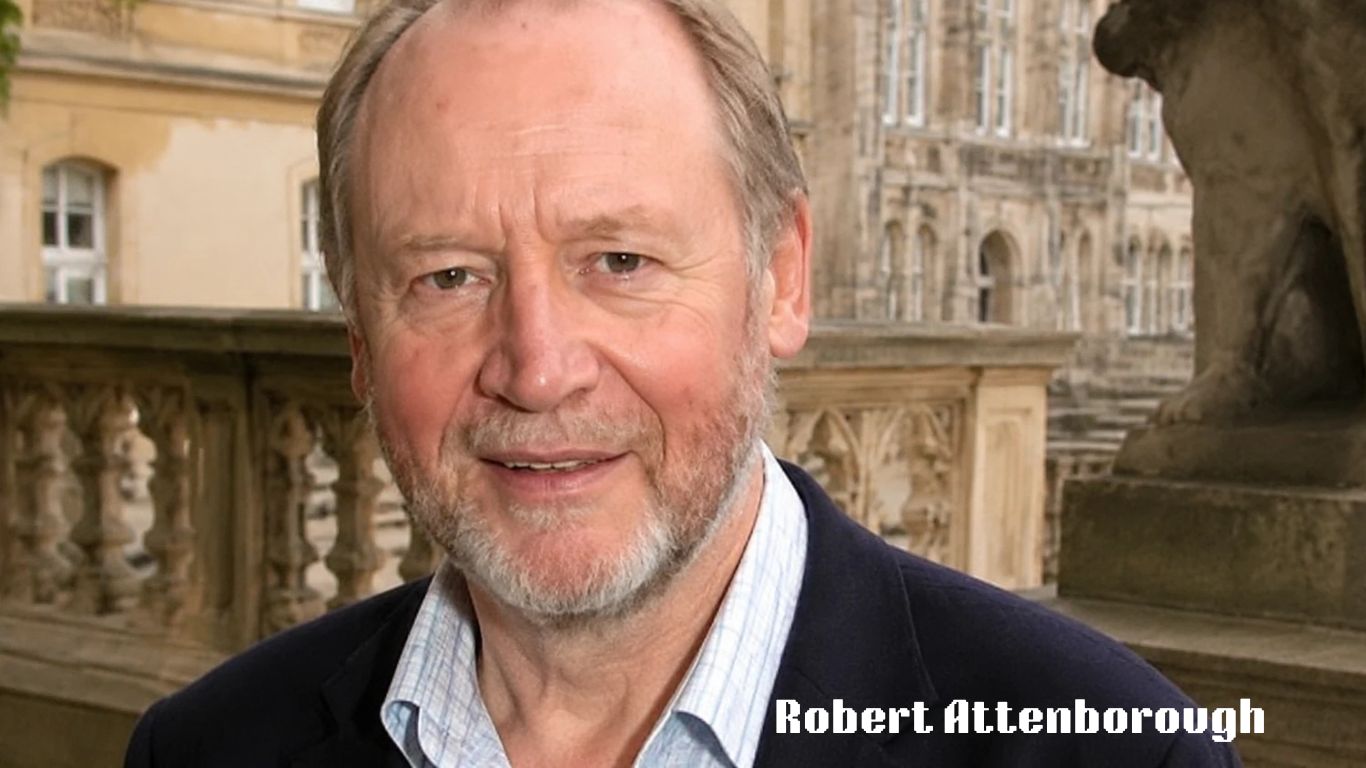
His father, Sir David Attenborough, is known around the world, and his voice has shaped how millions of people see the natural world. Yet Robert Attenborough has built a life with its own quietly compelling story, one rooted not in television cameras but in science, curiosity, and academic achievement. In 2026, Robert is 74 years old. His life reflects a deliberate choice to pursue research and intellectual work while his family name remained familiar across screens and stages worldwide. That contrast is part of what makes his story so interesting in its own right.
A Scientist with a Life of His Own
Robert Attenborough was born in August 1951 and grew up in a family that valued learning and scientific inquiry. When he was a child, his father, Sir David Frederick Attenborough, was just beginning to establish himself as a broadcaster. His mother, Jane Elizabeth Ebsworth Oriel, remained a deeply important family figure until her death in 1997. Robert’s younger sister, Susan, went on to become a primary school teacher, while Robert developed a stronger interest in biological studies.
Although his father became one of the most celebrated natural history broadcasters of the 20th and 21st centuries, Robert chose a quieter path. While David’s work brought global recognition, Robert devoted his career to the study of human biology and evolution. Public records and academic profiles in 2026 identify Robert as 74 years old, based on his August 1951 birth date.
Early Life and Family Background
The Attenborough household in the mid-20th century was filled with books, curiosity, and academic encouragement. Their father, who already had a strong interest in science and broadcasting, encouraged both children to observe the world carefully and think critically about it. For Robert, this helped foster an early interest in natural science and anthropology rather than media and performance.
Education was highly valued in the family, and that environment shaped Robert’s long-term commitment to scholarship. His parents married in 1950 and remained together for nearly five decades, until Jane’s death in 1997. David and Jane raised Robert and Susan with a combination of affection, discipline, and intellectual curiosity that influenced both children deeply. David has often spoken in books and interviews about his love for his family, and at times about the regret he felt for missing certain moments while away on long filming trips. Robert’s childhood, however, was marked by a home that treated learning as something meaningful in itself.
Choosing Academia Over Fame
Unlike many children of public figures, Robert Attenborough did not pursue fame. Instead, he studied biological anthropology, a discipline that examines human populations, development, and biology. His research focused particularly on human societies in the Asia-Pacific region, especially Papua New Guinea, with an emphasis on population biology and health.
For much of his career, Robert worked as a senior lecturer in bioanthropology at the Australian National University (ANU) in Canberra. Colleagues and students knew him as a committed teacher and researcher whose work shaped a generation of biological anthropology students. In addition to teaching, he helped broaden the ANU curriculum by contributing to subjects such as human diversity, physiology, and behavioural ecology, strengthening the academic profile of the field.
Although he retired from full-time work in 2013, Robert continued to have a strong academic presence. His role as a Senior Fellow at the McDonald Institute for Archaeological Research at the University of Cambridge reflects a long career of serious scholarship spanning countries and decades.
Research Focus: People, Populations, and Evolution
Robert’s research has largely centred on human biology, adaptation, and population change over time. He has authored and co-authored numerous journal articles and book chapters, many of them focused on the genetic history and human populations of New Guinea. His work on regional population dynamics, ancient DNA, and human adaptation places him within the wider scientific discussion on human evolution and diversity.
In contrast to his father’s famous wildlife documentaries, Robert’s work focuses on people. David Attenborough helped millions understand animal life and ecosystems on a global scale, while Robert examined how human biology interacts with society, environment, and evolutionary pressure. Both careers are driven by curiosity and a desire to understand the natural world, but they take very different forms.
A Life Away from Public Attention
Given his father’s extraordinary fame, especially as Sir David marked his 100th birthday in 2026, Robert has kept a notably private life. While news outlets cover David’s milestone celebrations and broadcasting legacy, Robert’s name is more often found in academic directories and research profiles than in entertainment media.
There is limited verified public information about his personal life, including whether he is married, has children, or what hobbies he enjoys. Unlike many public figures whose family lives are widely documented, Robert’s life has remained largely out of the spotlight. That privacy reflects the nature of his work, which has been grounded in long-term research, teaching, and collaboration rather than public performance.
Contributions to Science and Education
Academic work tends to value depth and longevity over headlines, and Robert’s career reflects that. As a teacher, he covered important subjects such as human variation and the evolution of behaviour. He helped shape programmes that connected biological evidence with anthropological insight, the kind of work that develops over years and appears in peer-reviewed journals rather than newspapers.
His association with major institutions such as ANU and Cambridge also speaks to the respect he has earned among fellow scholars. As a Senior Fellow at the McDonald Institute for Archaeological Research, he worked alongside researchers exploring human evolution through biological data, anthropological theory, and archaeological evidence.
Robert’s work on the people of Papua New Guinea remains especially valuable because it contributes to our understanding of human diversity across the world. Papua New Guinea’s genetic, cultural, and environmental richness has made it an important focus for researchers studying how human beings adapt to some of the planet’s most varied landscapes.
Family Legacy and Personal Connection
In family stories shared by Sir David in interviews, Robert is often mentioned with affection. One especially touching story involves David giving Robert a salamander for his eighth birthday, continuing a tradition his own father had once followed with him. The story reflects both family warmth and a shared fascination with living creatures, whether human or animal.
Sir David Attenborough’s work in natural history broadcasting made the Attenborough name globally recognised, but the family’s influence extends beyond television into science, education, conservation, and the arts. Robert’s sister, Susan, chose a life in teaching and community service, showing that the family’s legacy was never limited to one field alone.
Robert built his career in an era before digital media connected people in the way it does now. Even so, he created a life that spans countries and academic communities, from England to Australia and back through his Cambridge affiliations. Though his work was never broadcast to millions at once, it has still left a meaningful global intellectual mark.
What Robert Attenborough Is Doing Now
In 2026, Robert Attenborough remains involved in academic research, consulting, and scholarly discussion. While he has formally stepped back from full-time teaching, he has not stepped away from his field. His work continues to be cited by anthropologists and research institutions, and his listing in Cambridge’s McDonald Institute directory suggests he remains active in research and mentoring.
Robert’s contributions are measured not by public visibility but by the students he shaped and the respect he earned from colleagues. That difference captures both his personal choices and the nature of academic life itself.
Frequently Asked Questions
How old is Robert Attenborough?
He was born on 31 August 1951, which makes him 74 years old in 2026.
Who are Robert Attenborough’s parents?
His father was the naturalist and broadcaster Sir David Frederick Attenborough, and his mother was Jane Elizabeth Ebsworth Oriel.
What does Robert Attenborough do?
Robert Attenborough is a scientist and biological anthropologist. He was a senior lecturer at the Australian National University and is now a senior fellow at the McDonald Institute for Archaeological Research.
Is Robert Attenborough famous?
He is well known in academic circles, but he is not a public celebrity in the way his father is. Information about his work is far more available than details about his private life.
Where does Robert Attenborough live?
He has lived and worked in Canberra, Australia, through his time at ANU and retains academic ties to the University of Cambridge.
Does Robert Attenborough have children?
There is no confirmed public information from reliable sources about his children or broader family life beyond his professional biography.
Why is Robert Attenborough less well known than his father?
He chose academia rather than public broadcasting, which naturally brings less media attention. His focus has been research and teaching rather than public performance.
Conclusion
In a family famous for bringing nature into public view, Robert Attenborough’s life shows that quiet intellectual dedication can be just as meaningful. At 74 in 2026, he continues to contribute to the study of human biology and anthropology, adding depth to a family legacy already known around the world. His career is a reminder that impact is not always measured by fame. Sometimes it is measured by the knowledge passed on, the students guided, and the work that endures.
Sir David Attenborough’s century of storytelling deserves celebration, but Robert’s achievements are also a meaningful part of an extraordinary family history.