



































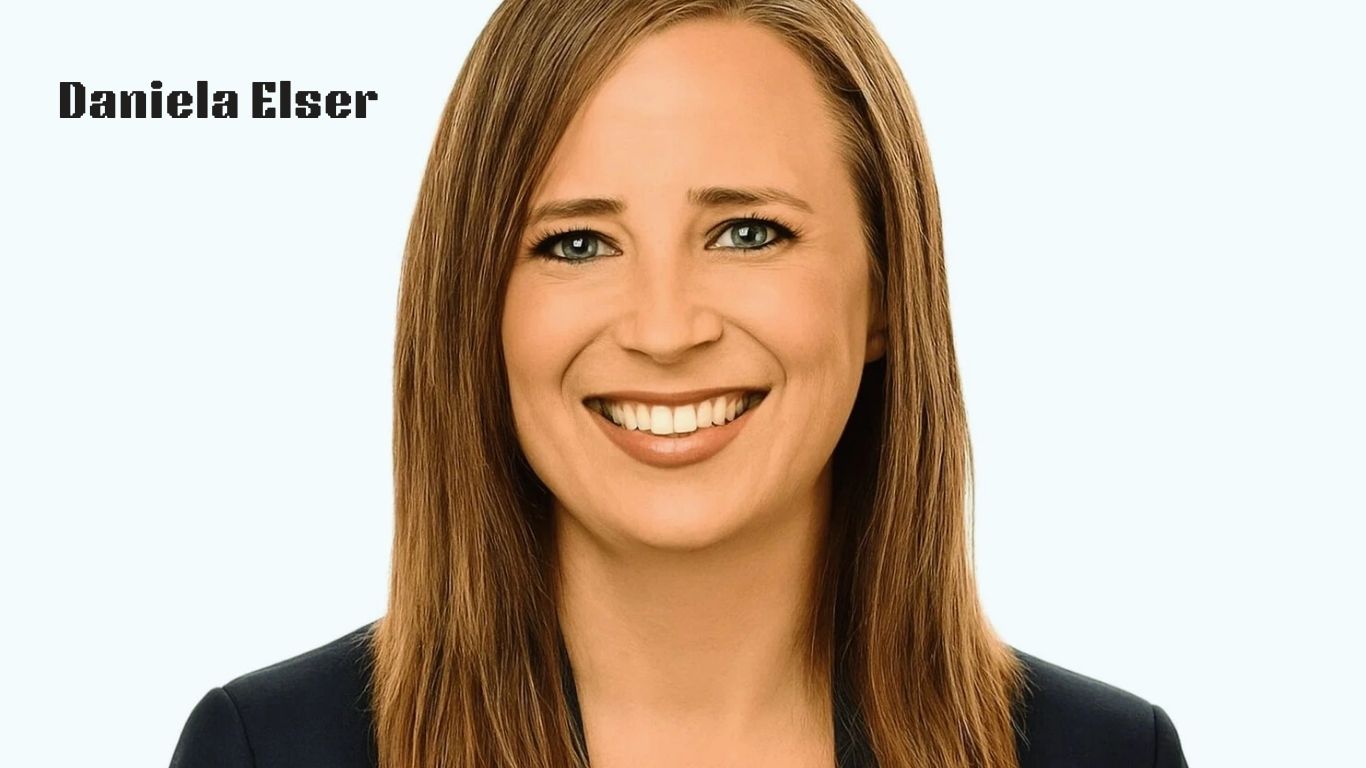
When I saw Daniela Elser’s work for the first time, I was struck by something that is becoming less common in modern journalism: true authenticity wrapped in fearless clarity. She doesn’t whisper about the British royal family in her articles. Instead, they question, push, and change the way that millions of people get their royal news. At first, I was just mildly interested in celebrity journalism. Now, I really admire how one Australian writer has changed the way people talk about the royal family, having an impact on public discourse around the world. This is Daniela Elser’s story. Her name has become linked to brave journalism and saying the truth without apologizing.
Who is Daniela Elser? Getting to Know the Woman Behind the News
There is a new type of journalist called Daniela Elser. She doesn’t believe in simple stories and instead looks deeper into how media, power, and public image work. Mostly based in Australia, she built her job at news.com.au, where her columns reach millions of readers looking for more than just celebrity gossip. She is different from other royal critics because she isn’t afraid to ask tough questions and follow the answers wherever they lead, even if they don’t agree with what most people think.
Her background comes from a serious schooling in journalism. She got her Bachelor of Arts with honors from the University of Sydney, which is where she learned the basics of how to tell stories and analyze history. This academic background was very important to her later work because it helped her see stories not as separate events but as parts of bigger cultural and political patterns. After finishing her undergraduate studies, she went to school for writing and came into the media world with both intellectual rigor and technical skill.
How I Got From Being an Entertainment Editor to a Royal Commentary Icon
Elser’s job path is a great example of how to grow professionally and position yourself strategically. In 2010, she got her start as a reporter by working as an entertainment writer at news.com.au. This job was very important because it taught her about the realities of digital publishing, like meeting tight deadlines and making a lot of content, as well as how to keep readers’ attention in a media landscape that is becoming more and more fragmented. A lot of journalists think that entertainment beats aren’t very important, but Elser saw something more important: when entertainment news is done well, it can be used to look at society, power, and the public’s interest in stories.
She made the choice to move to Marie Claire Australia in 2011, where she started as Features Editor and quickly rose to become Features Director. This wasn’t a sideways move; it was a planned move toward longer stories and more in-depth studies. During the five years she worked in this position, she improved her ability to write engaging stories that were both personal and culturally important. This experience was very helpful because it taught her how to write about complicated topics in a way that is easy for people to understand and makes them feel something.
By 2018, Elser had made a big change in his work. She then started to comment on things on her own, with a strong focus on royal matters, especially the British royalty. This wasn’t a choice made at chance. She understood that the royal family was a special mix of old and new, power and scrutiny from the public, private and unwanted attention. When Prince Harry and Meghan Markle became important players in the royal family, it created a chance for someone with her analytical skills to offer truly new points of view.
The Unique Style: What Makes Daniela Elser’s Voice Stand Out
Elser’s writing stands out right away because of her unique style, which is sure of itself, sharp, and full of wit. She doesn’t write in the overly-sweet way that most royal news does. Instead, her writing cuts through media myths like a knife through butter. Her writing style is a mix of humor and serious fact-checking. She finds cultural connections in even the most formal royal events. When she looks at a royal event or public speech, she looks at the modern media system, how people think about things, and the human drama that lies beneath the pomp and circumstance.
Her tone is straight-forward and honest. She finds flaws in public stories that most people don’t question. For example, most people who talked about Prince Harry and Meghan Markle’s decision to leave the royal family either praised their bravery or criticized their choices. Elser did something more complex: she looked at the problems with their stated goals. The couple said they were leaving because they wanted more peace, but afterward they signed multimillion-dollar media deals, published in-depth memoirs, and did a lot of high-profile interviews. Elser didn’t pick a team; instead, he asked the couple the harder question: what do they really want?
This analytical method goes beyond looking closely at celebrities. It shows a stronger dedication to media knowledge and thinking critically. Not only does she report what happened, but she also asks why it happened, what stories are being told about it, and who gains from those stories. People who are intellectually hungry but often only get surface-level news in mainstream media really connect with this level of analysis.
How one reporter changed the way people talk about royalty around the world
Daniela Elser’s work has an impact that goes far beyond the number of people who read it. Her posts often start huge debates and discussions on social media sites like Reddit and X (formerly Twitter), where thousands of people reply and argue about them. But her influence isn’t just shown by how many people interact with her posts—it’s also clear from how other writers cite her work, how her frameworks show up in later stories, and how readers directly credit her with changing how they feel about the royal family.
Her most well-known work has been about a few main ideas:
The story of Prince Harry and Meghan Markle—She has been constantly analyzing how the couple handles their public image and the discrepancies between what they say they want to do and what they actually do.
- King Charles’s reign and transition—Her stories have looked at how the new king or queen balances modernity with custom.
- Princess Catherine’s changing role: She has looked into how the Princess of Wales speaks through her public appearances, body language, and strategic positioning.
These topics aren’t just rumors; they help us understand modern monarchy in the context of democratic societies, how the media has changed, and how people’s expectations of institutions and power are changing.
Why bold commentary makes people angry: the controversial part
Even though Elser is ready to question accepted stories, she is not loved by everyone. People who support the monarchy and see it through the lens of custom and respect sometimes find her comments too harsh. On the other hand, people who are against the royalty sometimes think she doesn’t criticize far enough. This division is actually instructive; it shows how deeply different people think about how systems work.
What critics call “excessive sharpness,” fans call “essential clarity.” In a time when the media cleans up stories and PR firms manage messages, Elser’s failure to soften her analysis is welcome to readers who are sick of euphemisms and spin. She doesn’t shy away from controversial subjects, and she often talks about what she sees as unfair coverage in the media or the way people try to explain away bad behavior. This style has earned her both devoted fans and loud critics, but it has clearly made her one of Australia’s most important journalists working today.
The fact that she sometimes gets hate mail shows an important truth about the media today: telling the truth is now itself controversial. In a world where many news sources and commentators try hard not to offend anyone, Elser’s dedication to direct analysis stands out as truly offensive, even when the content itself isn’t offensive.
Commentary on the Royal Family Beyond the News: A More in-Depth Look
Elser’s work is different from most royal journalism because she is ready to look into the psychological, social, and political issues that lie beneath the surface. She is looking at the royal family and the following things at the same time:
- How do press stories get started, and who has the power to change them? This is called media dynamics and narrative construction.
- How do institutions that have been around for hundreds of years stay relevant in modern democracies?
- Psychological factors and traumatic events: What makes people make choices, and how do those choices affect families and institutions?
Gender and power: How do the relationships between men and women work in systems that were built on hundreds of years of male tradition?
She is different from critics who only talk about what people wore or which royals went to which events because she looks at things from different angles. She’s interested in the things that hold these public moments together, like how decisions are made, how strategies are worked out, and how emotions play a role.
Platform and Distribution: Keeping Things Old-School in the Digital Age
Elser has made the strategic decision to work within traditional media structures instead of building a personal brand through individual social media platforms, which is different from many modern commentators. Her work is mostly found on news.com.au, but it is also shared on The New Zealand Herald and Yahoo News Australia. It’s interesting that they chose to stay in institutional media instead of becoming an influencer.
Instead of making her look like a media star or entertainer, this choice makes her look like a serious journalist. Not building a personal brand empire, but making a name for herself as a serious journalist whose work is worth sharing that news outlets want to print it. This difference is more important than it might seem at first glance because it affects how her work is received, supported, and kept in media archives.
Personal Knowledge: The Benefits of Going to School in Sydney
By looking at Elser’s work, I’ve seen that her viewpoint from Sydney gives international outlets something they don’t always have: a geographical and cultural distance from British institutions along with a deep understanding of how the English language media works. A lot of British critics either give narrow views from inside the country or touristy views from outside. When they write about British subjects, Australian writers often find themselves in a very good middle ground. They know enough about Commonwealth society to talk about subtleties, but they stay far enough away to see blind spots that commentators in the UK might miss.
This point of view is especially helpful when looking at how people around the world see the royal family. When an Australian journalist talks about the British monarchy, they are automatically acknowledging that these institutions exist in a world where they don’t have institutional power. By looking at the monarchy as a cultural event instead of an unquestionable institution, this new way of looking at things gives readers new ways to think about things that they might not find in more traditional coverage.
How Elser’s Influence Is Changing the Future of Royal Commentary
In the future, Elser’s impact on royal journalism is sure to grow even more. She has shown that the market wants commentary that doesn’t just accept accepted stories without questioning them. As the media changes and people question the authority of institutions more, her model of engaged, analytical news seems likely to become more popular instead of less important.
There are signs that she’s looking into bigger projects, like writing books or starting a show. No matter what form they take, they’ll probably show how much she values serious analysis over excitement. Her impact goes beyond the people who read her work; she set the standard for how modern journalists should balance being easy to understand with being intellectually rigorous and entertaining with being morally responsible.
Why Daniela Elser is Important in Today’s Media World
In a world full of “hot takes,” “viral moments,” and algorithms that urge people to be angry, Daniela Elser stands for something more and more valuable: a journalist who actually analyzes stories instead of just reacting to headlines. She looks at why things happen, what they say about larger cultural patterns, and what they mean for how people talk about things and how institutions change.
She’s important because she won’t take easy answers to hard questions. She is important because she understands that institutions like the royal family are both very personal stories about people and places with huge societal meaning. She’s important because she shows that serious, well-thought-out writing can still get people interested and change the way people talk about things.
Daniela Elser has become an important voice in modern media discussions about the British monarchy and, more generally, how institutions find legitimacy and relevance in democratic societies. It doesn’t matter if you agree with her conclusions or actively disagree with her frames. Journalism can do amazing things when it blends careful analysis with real bravery, like what she did.
In conclusion
Daniela Elser went from being an entertainment editor to being Australia’s most important royal reporter by refusing to accept common stories without questioning them. It wasn’t a coincidence that she became popular; it showed that people really wanted real news that put truth over taste.
What makes Elser unique is her skill at balancing fun with serious analysis. While others look for viral moments, she looks into how media stories, institutional power, and public image work on a deeper level. Her unwavering criticism feels revolutionary in a time of algorithmic echo chambers and clean news coverage because it just asks: why?
Millions of people agree with her main point: institutions must earn their legitimacy through scrutiny, not through inherited custom, in democracies. In her view, the royal family is made up of flawed people who have to deal with old systems. They are not holy figures who can’t be criticized. People who felt something was off about respectful coverage but didn’t know how to say it have been freed by this point of view.
Elser’s impact goes beyond the people who read his work directly. Her ways of looking at things have changed the way people talk about media, power, and holding institutions accountable. She has proven beyond a reasonable doubt that people want informed commentary that respects their ability to think critically and recognizes real complexity without falling back on false certainty.
Daniela Elser is important because she represents the most basic qualities of journalism: bravely seeking the truth, being strict while also being approachable, and giving critical analysis with a sense of humor. She reminds us that critically examining institutions doesn’t make them less important; instead, it makes democratic involvement stronger. Her work shows us that it is possible to care deeply about something while also asking a lot of questions about it. That message, spread on millions of screens by her unique voice, may be the most important thing that modern media has done to help people be better informed citizens.