


































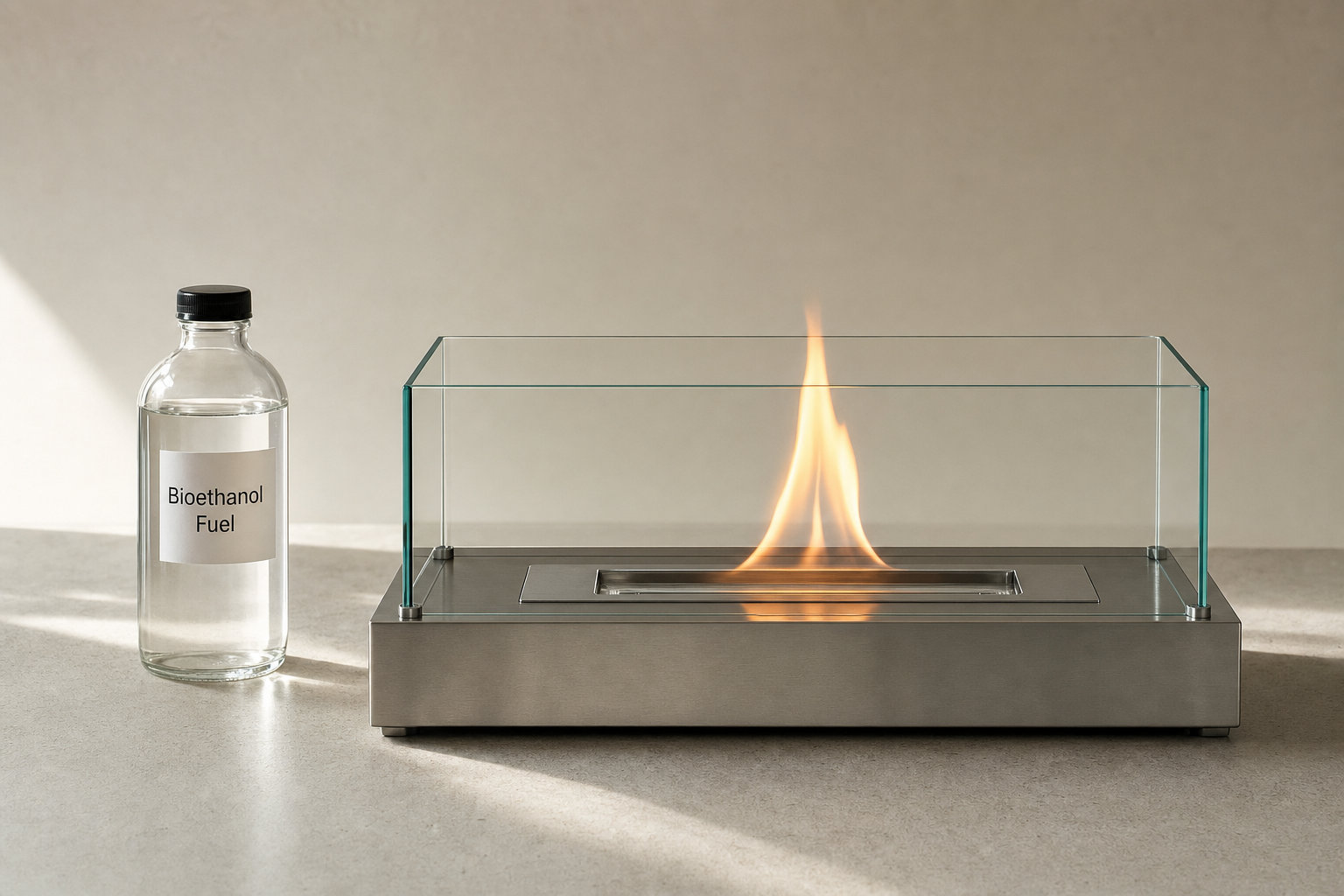
Bioethanol fuel has become a prominent contender among modern heating alternatives for those seeking environmentally mindful solutions. Its appeal lies in the use of renewable, plant-derived resources and the potential for cleaner indoor heating, especially in homes without chimneys. Today, an increasing number of homeowners are asking what sets bioethanol fuel apart from traditional options.
As interest in greener lifestyles rises, many residents look for heating choices with reduced environmental impact. Bioethanol fuel offers a way to add warmth and visual appeal to living spaces, particularly where installing conventional fireplaces is not practical. Read more This article addresses why bioethanol fuel has gained popularity, how it is made, and what it can deliver for households that prioritise sustainability, ease of use, and thoughtful design.
Bioethanol as a distinctive heating fuel
Bioethanol fuel is a liquid produced by fermenting plant-sourced sugars or starches, such as those found in wheat or maize. It is sold in bottles or cartons specially prepared for household use, distinct from fuels designed for vehicles or industrial settings.
Unlike fossil-derived liquid fuels, bioethanol fuel is not extracted from ancient geological reserves. Its chemical structure allows for a clean-burning flame, giving a clear aesthetic and enabling a more controlled combustion process in dedicated fireplaces.
The journey from crops to finished bioethanol
Manufacturers typically use crops rich in natural sugars as the starting point for bioethanol fuel. Through fermentation, naturally occurring yeast converts these sugars into ethanol, which is then distilled and purified for use in home heating applications.
To distinguish it from drinking alcohol and meet safety regulations, producers add chemicals in a process called denaturing. This makes bioethanol fuel unsafe to consume, while still allowing it to burn efficiently in the controlled environment of modern fireplaces.
Sustainability factors and carbon perspectives
One of the main attractions of bioethanol fuel is its renewable origin. The crops used to create it can be replanted each year, offering a contrast to the finite reserves tapped for fossil fuels.
While product labels may describe bioethanol fuel as “carbon neutral,” the complete picture depends on several factors. Claims rely on the idea that carbon dioxide released during burning is roughly offset by the amount absorbed by plants during growth, but transportation, feedstock production, and processing methods also contribute to its environmental footprint.
Environmental messages vary in the market, so it is important to consider the full lifecycle impact before making a decision. This maintains a focused look at environmental relevance without overgeneralising results across different production methods.
Function, installation, and user expectations at home
In home settings, bioethanol fuel is typically used to power fireplaces designed for straightforward installation and operation. The combustion of bioethanol needs only oxygen, producing a flame similar in appearance to a traditional fire but without heavy smoke or particulates.
A key appeal for many is the ability to enjoy a living flame without requiring a chimney or permanent flue. These features make bioethanol-powered fireplaces a practical option in modern flats and houses where structural changes are limited, and the focus is more on atmosphere than primary heat output.
Practicalities of performance, safety, and budget
Bioethanol fuel fireplaces generally offer warmth suitable for enhancing comfort and ambience in a room, but they are designed as supplementary rather than primary heating sources. Heat output depends on fuel chamber size and airflow, and is usually considered ideal for smaller rooms or occasional use during mild weather.
Responsible handling is essential when storing and refuelling with bioethanol fuel. Always follow manufacturer guidance, use containers designed for this purpose, and select only high-quality, purpose-formulated fuel. Maintenance is relatively simple, with little ash or soot left behind, making ongoing cleaning straightforward compared to wood or coal systems.
Fuel costs for bioethanol are typically higher than for mains gas or certain electric heating options, especially with frequent use. Many homeowners value the low-maintenance operation and cleaner performance as important factors. For those choosing between alternatives for atmosphere, sustainability, and installation simplicity, bioethanol fuel presents a solution grounded in renewable materials and contemporary design.
Using this technology thoughtfully, assessing heat needs realistically, and following safety guidance can help ensure that bioethanol fireplaces enhance indoor comfort for households seeking a lifestyle-friendly approach.