


































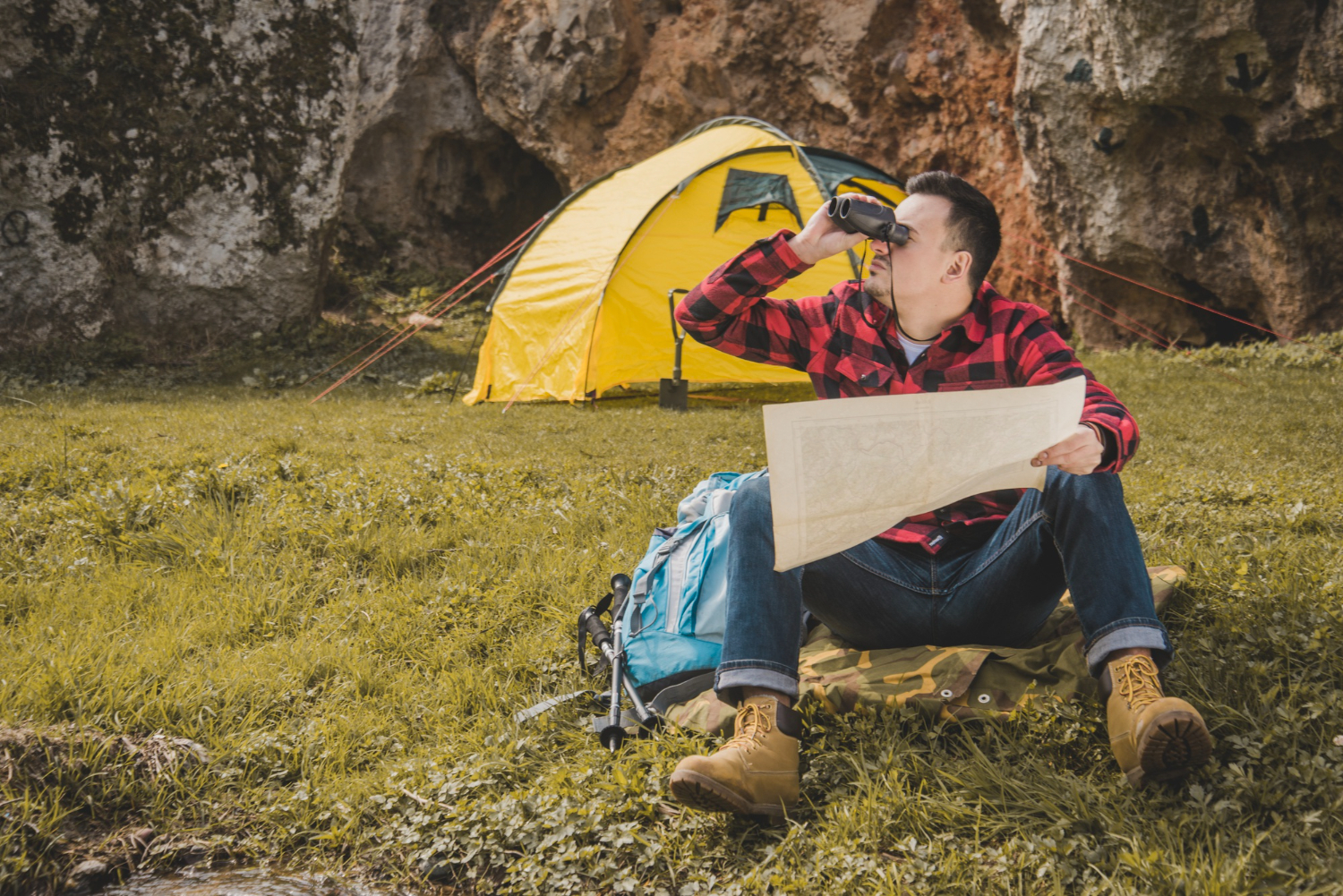
Many a campsite descends into anarchy in its first hour, as everyone unloads stuff willy-nilly, then tries to figure out where everything is. Reverse that process. Before a single bag hits the ground, take a walk, determine “zones” – one for sleep stuff, one for food and cooking, one for hygiene, and one for sitting around doing nothing – then let gear trickle into its preordained spot. No signs or tape needed. Just make the decision early and stuff tends to stay put.
The cooking zone, for obvious reasons, should be downwind from sleep areas and far enough from tent walls that odors won’t seep in. Hygiene works well near the greywater station, since you can contain all the dirty stuff in one place.
Build a modular bin system before you leave home
Simplistic advice often found in blog posts says “pack light”. That sounds great, but light is a completely relative term. What is light for a two-day camping trip is absolutely not light for seven days. The better advice is to pack in a way that makes sense when you’re half-awake and hungry at 7 am.
For that kind of packing, clear-sides plastic totes are your best friend. Heavy-duty so they can take a thrashing, stackable for easy organized storage, and clear sides so you can see what’s inside them from any angle. Buy 3. Add a strip of colored tape to the sides of each still closed bin. Buy three differently colored lids. This bin gets yellow tape, a blue lid. This bin gets red tape, a red lid. Name a bin kitchen supplies, name a bin tools and repair gear, name a bin clothing layers. What’s easily accessible? Kitchen supplies? Your busted headlamp? Clothing layers? There is no eight-minute debacle while exhaustion sets in and you waste precious energy pulling dry bags of clean clothes out of the back of the car.
Use vertical space to keep the ground clear
Campsites can easily get out of control with ground clutter. Everything on the floor is a trip hazard, becomes damp, and attracts creepy crawlies. The solution to this is to think vertically.
You can tie a tension line or some paracord between a couple of trees, or attach it to your canopy framework, and then hang all the items that normally just get thrown into a heap. Hang up towels, swimsuits, your lantern, and a garbage bag. Carabiners or S-hooks are much quicker than tying a new knot for every item you want to hang. A camper trailer with built-in drawer systems, even before you reach the site, has already neatly stowed all your damp, dirty gear away and locked it out of sight, rather than leaving it loose in the dusty boot of your car. No camper trailer? Just a few points above floor level can have a big impact.
You want your first aid kit easily reached, but not on the floor. A just inside the tent door hook will do. It’s the one item you’ll be desperate to reach quickly, but most people bury it under gear.
Run your kitchen through a single chuck box
Prepping food while camping can get chaotic in no time. Small items like salt, pepper, utensils, your camp stove, a can of fuel, and the cutting board will scatter everywhere as soon as you pull it out, and all of those small items hardly ever find their way back to the drawer.
A chuck box is a solution to all these problems. It’s a complete, self-contained kitchen unit – either a custom-built camp kitchen box, or a deep plastic tote that you’ve repurposed to be used as one – that carries everything you need to prepare one meal. Meal’s over? Chuck everything back in and close the lid. In wildlife areas, and especially at established campgrounds in black bear territory, keeping it in a sealed box is important.
When you have a five-minute self-resetting kitchen, you’ll escape stress most people never knew they had.
Do a 10-minute reset every night
Exhausted campers don’t clean up. That’s the night a bag of garbage is flung across the site by the breeze or the morning a stack of gear is soaked by dew because nobody thought to throw a tarp over it.
Build a short reset routine into the end of every evening. Pack chairs against a tree or into storage. Pull a tarp over any exposed gear that shouldn’t get wet. Secure all food in your chuck box or bear canister. Clip loose items to the tension line rather than leaving them on a table.
It’s ten minutes when it’s a habit. It’s a miserable 45 minutes when it’s not. A clean campsite reinforces Leave No Trace principles without you having to give a lecture. If everything is getting taken care of daily, you didn’t leave those cans behind accidentally.
A neat campsite is not an anal retentive end in itself. It’s to spend less mental effort on your setup and more mental effort on what you traveled to do: relax. Most people don’t go camping to fiddle with gear on a shady folding camp chair under the stars. They go camping to relax and internalize that time in nature feeling. Zones, bins, vertical lines, chuck box, and nightly reset are 5 things which multiply together into a setup that almost runs itself.