




































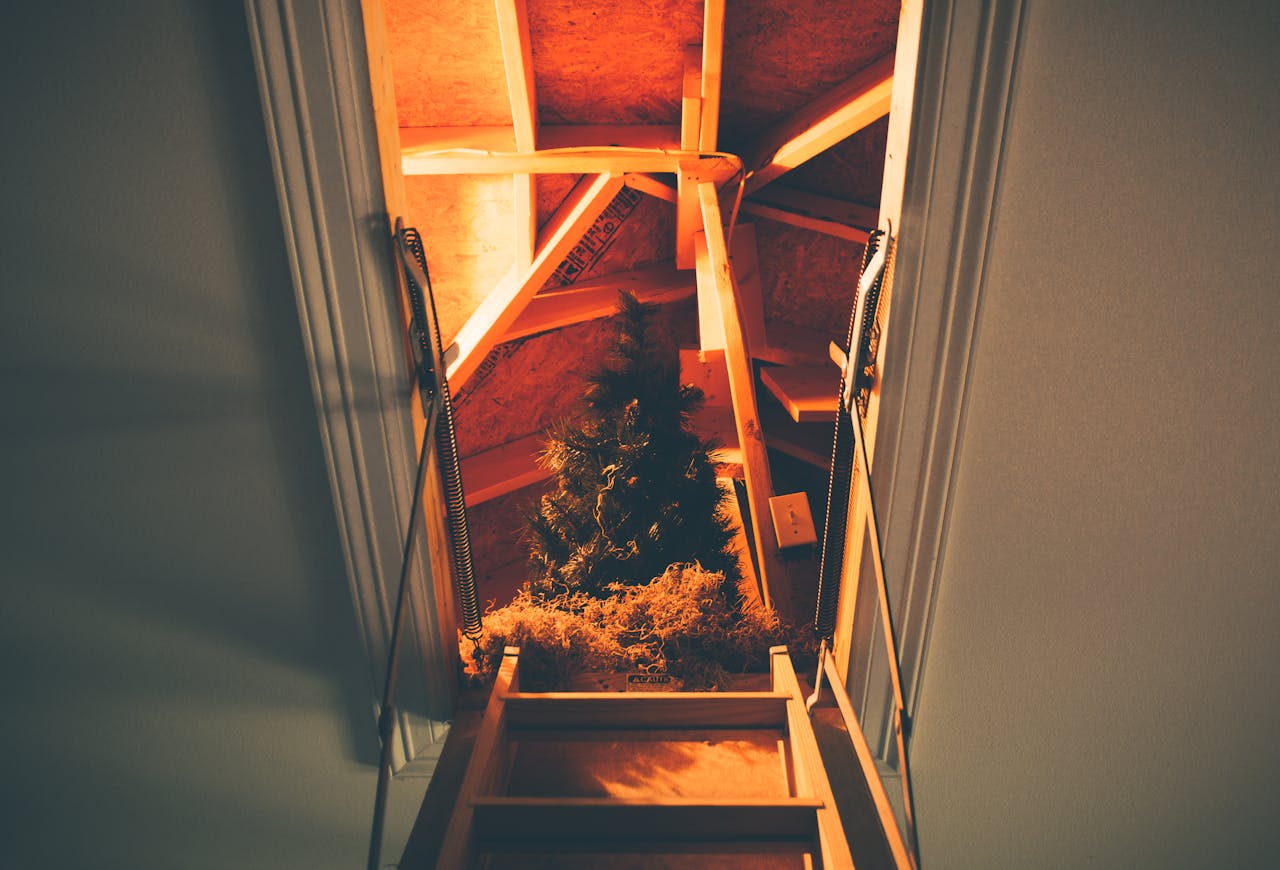
Many households look at the upper space as an area that might solve regular organization issues, and the aim usually becomes creating simple order without complicated construction or expensive materials. The approach could focus on safe access, basic surfaces, and straightforward categories that often keep items available when needed. This overview describes steps that are practical and adaptable, while decisions can be adjusted depending on structure, climate, and how frequently you plan to retrieve or return belongings.
Inspect access, structure, and airflow at the start
Before placing anything, it is sensible to review how you enter the space, what the framing supports, and how air moves through vents, since these elements often determine what can be stored safely and how comfortably you can work. The entry ladder or stairs should be stable, with clear headroom and firm footing, because reliable access usually reduces hesitation and prevents awkward handling. Joists and decking could be checked so the load sits on appropriate members rather than spanning weak gaps, which helps avoid flexing in busy sections. Vents and baffles may be confirmed to remain open, and this reduces moisture buildup that often affects boxes and soft goods. A simple lighting plan with one or two bright sources improves visibility, while a fire-safe path along the center makes movement easier during quick trips.
Create stable pathways and simple storage zones
Movement inside the space becomes easier when you set a clear walking path and then place items along the sides, since this layout usually prevents constant shifting and might keep dust from spreading into frequently used areas. Basic plywood panels or manufactured attic boards can be laid over joists to create stable platforms, and spacing these panels leaves areas for insulation and airflow where required. You could establish zones by broad use case, such as household tools near the entry, travel items together, and seasonal decor along the far side, which organizes decisions without forcing complex sorting. To reduce carrying distance, heavier bins might be closer to the access point, while lighter or less-used items can move higher or deeper. Labels that face the path reduce searching time, and a small hand cart or sliding tote might simplify movement.
Choose containers and labels that simplify retrieval
Selecting a few container sizes that stack well often makes the layout predictable and reduces random gaps, and transparent bins could help you see contents without opening, which saves time during short visits. Sealing lids and desiccant packs can help sensitive materials resist moisture, while soft things can be stored in airy bags to minimize stale aromas. Christmas tree storage keeps the main space uncluttered and speeds up setup by organizing large seasonal decor and protecting fragile components. Broad labels like linens, sports gear, and hardware keep decisions fast, and numbering bins can support a simple index on paper or in a note app. You may also keep one empty container available for quick consolidation when you discover loose items during a later pass.
Support climate control and material protection with basic checks
Conditions in upper spaces often fluctuate, so basic steps that manage heat, moisture, and pests could preserve belongings and keep surfaces usable over time. You might confirm that boards or boxes do not compress insulation, because flattened sections typically lose performance and can create uneven temperatures across the space. Vapor barriers and air sealing around openings are commonly checked as well, and this reduces humid air exchange that may cause condensation on cold days. Items that are sensitive to temperature swings could be placed lower and away from the roof decking. At the same time, a small gap between containers and exterior walls usually prevents contact with colder surfaces. Simple traps or sealed food storage reduce the chance of pests, and a quarterly glance at corners, vents, and wiring may catch early issues before they expand and complicate your plan.
Build recurring routines for safety, inventory, and rotation
A repeatable schedule often keeps the space reliable, since storing items is only part of the process, and retrieval tends to reveal gaps that can be fixed with small adjustments. Twice a year, you could confirm the ladder or stairs are still tight, the walkway remains clear, and any smoke alarm or heat detector is functioning as intended, because these checks support safer movement. An inventory note that lists bin numbers and general contents may be updated after each visit, and this makes planning easier when you are not near the space. Rotation helps too, where items that you will need soon are moved forward, while rarely used items shift back. A brief disposal review removes damaged goods or packaging that no longer serves a purpose, and it frees capacity so the system does not gradually become congested.
Conclusion
Turning the upper space into a workable area can rely on straightforward steps that address access, surfaces, container choices, basic environmental factors, and periodic reviews that are easy to repeat. The outcome often improves when changes are small and consistent, while decisions are guided by frequency of use and simple categories rather than complex rules. You may start with a path and a few bins, then extend the method as needs grow, since steady routines usually maintain order.