
































Walk into any UK living room in 2026, and you will likely spot something that was rare a decade ago. A handmade canvas on the wall. A paint-by-numbers portrait of a beloved pet. A gallery wall mixing framed prints with original pieces. The old line between store-bought decor and homemade art has blurred.
The global wall art market is estimated at $63.67 billion in 2026, with canvas pieces accounting for 45 per cent of that value, according to The Business Research Company and Fortune Business Insights. At the same time, sales of craft-based art kits continue to climb as people look for screen-free ways to unwind at home. These two trends feed the same desire: spaces that feel personal and alive.
Making and curating wall art is one of the most satisfying home projects you can take on. The wellness science behind creative hobbies explains part of the appeal. Paint-by-numbers offers an accessible starting point, while professionally made wall art fills the gaps. This piece covers both sides and how to bring them together.
The Rise of DIY Wall Art in Modern Homes
Mass-produced wall decor dominated UK homes for decades. Identical prints from high street shops hung in living rooms across the country. That’s changing. A 2026 report from Grand View Research shows 56 per cent of consumers now prefer minimalist, personalised interiors, driving demand for pieces with real meaning.
Custom paint-by-numbers kits fit this trend perfectly. They let anyone create a piece of art connected to their own life, a photo of a family holiday, a beloved pet, or a favourite landscape. Unlike a generic print, a hand-painted canvas carries a story and the time and attention of the person who made it.
If you want something truly personal for your home, a custom paint by number kit lets you turn your own photographs into a hand-painted canvas that matches your style and colour preferences. The process is simple enough for beginners, but produces results that look good framed on any wall.
The appeal goes beyond sentiment. Making something with your hands changes how you relate to your home. A wall you decorated yourself feels different from one you hired someone else to fill.
The Art of Slowing Down: How Creative Hobbies Support Mental Health
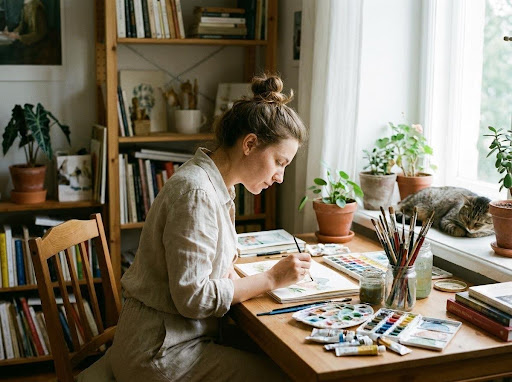
The mental health benefits of creative hobbies are not anecdotal. A growing body of research shows that structured painting produces measurable changes in stress and anxiety.
A 2026 Duke University study with 99 participants found that painting consistently reduced anxiety more than non-creative tasks such as maze solving, regardless of prior art experience. The effect held for everyone, from complete beginners to experienced artists. The key was the act of creating, not the quality of the result.
A meta-analysis of 45 randomised controlled trials published in Behavioural Sciences (Song & Jang, May 2026) found that painting interventions had a “large positive impact” on depression and anxiety, with older adults benefiting most. A systematic review of 14 RCTs involving 1,686 participants (Mizera & Krysta, Psychiatria Danubina, September 2025) found that all 14 trials showed significantly greater reductions in anxiety in art therapy groups compared with controls.
The structured nature of paint-by-numbers plays a role here. It provides enough guidance to prevent creative paralysis, the “blank canvas” fear that stops many people from starting. With numbered sections and pre-mixed colours, you can quickly enter a flow state. Research published in Frontiers in Psychology confirms the therapeutic value of structured art activities for managing stress and improving mood.
This explains why more UK adults are turning to painting as a regular practice. It’s not about becoming an artist. It’s about claiming an hour of focused, screen-free time.
Paint by Numbers: Where Accessibility Meets Artistic Expression
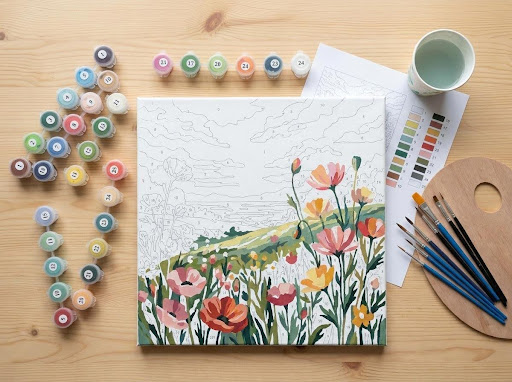
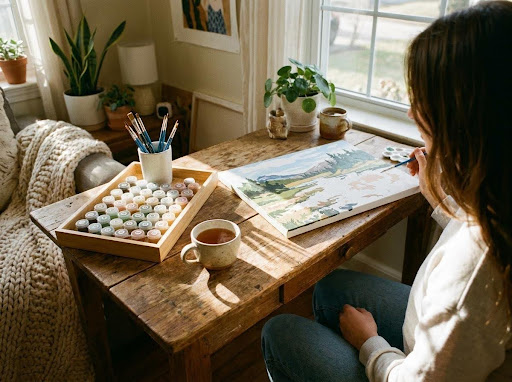
Paint-by-numbers has shed its reputation as a children’s craft. Modern kits use high-quality cotton canvases, acrylic paints with good pigment density, and fine-tipped brushes that allow for detailed work. Designs range from classic landscapes and abstract patterns through to custom kits made from your own photos.
The appeal for non-artists is obvious. You do not need drawing skills, knowledge of colour theory, or expensive materials. The kit arrives with everything you need, and the numbered system guides you through the process section by section. What emerges is a genuine painting you created yourself.
For home decor, paint-by-numbers offers unique value: customisation at a fraction of the cost of commissioning original art. A kit costs roughly the same as a high street print, but the result carries personal meaning. It also gives you control over the colour palette, which matters when you are matching existing furniture and wall colours.
Custom photo kits take this further. You choose the image, and the kit translates it into a numbered canvas. The final painting becomes a conversation piece, a portrait of your dog rendered in acrylic, or a favourite travel photo turned into wall art. The Duke University LaBar Lab found that the creative process itself, not the end result, drives the mental health benefits, which helps explain why beginners find the experience so rewarding.
When to Choose Ready-Made Wall Art for Your Home
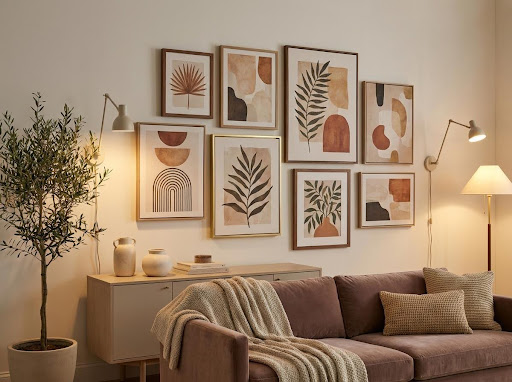
DIY art is not always the right choice. Some spaces call for a professional finish. A large statement piece above a sofa needs proportions, colours, and composition that work at scale. Not every room benefits from the handmade look.
Ready-made wall art fills this gap. Curated canvas pieces offer instant sophistication for spaces where consistency matters. A neutral-toned abstract painting in a dining room or a set of matching prints in a hallway creates a polished finish that ties a room together.
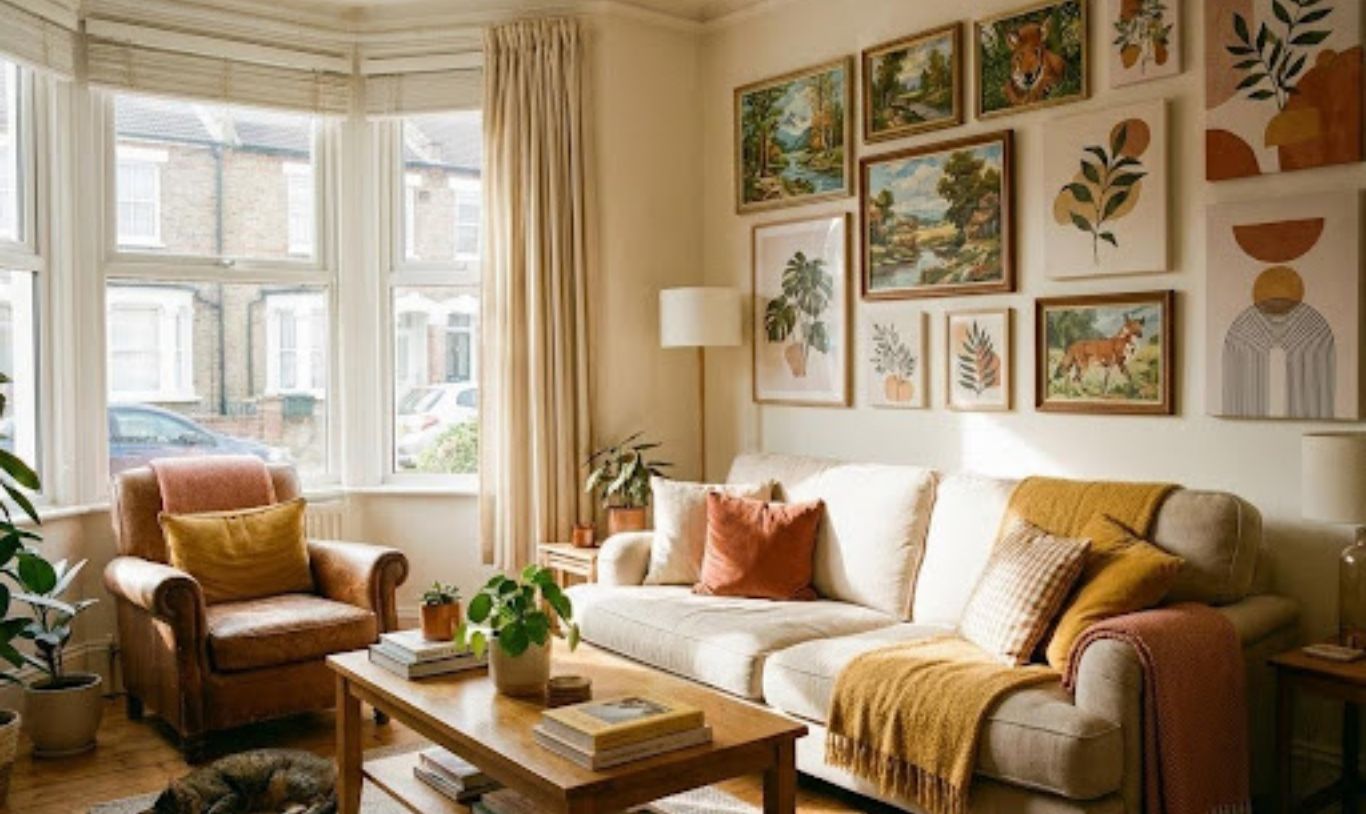
The best interiors happen where DIY and curated art meet. A gallery wall with three or four handmade pieces mixed with one professionally produced canvas creates depth. The handmade pieces bring warmth and personality. The curated piece anchors the room visually.
When you need that anchor, wall art paintings give you a range of styles from abstract to botanical, painted on stretched canvas that arrives ready to hang. They work in spaces where you want a curated look without losing the human touch that makes a home feel lived in.
Displaying Your Collection: From Canvas to Gallery Wall
How you display your wall art matters as much as what you put on the canvas. A well-framed paint-by-numbers piece looks dramatically different from one clipped to a board.
Floating frames work particularly well for painted canvases. They create the illusion that the artwork hovers inside the frame, which suits the textured surface of hand-painted acrylic. Rustic wood frames suit landscape and nature themes. Sleek black or white frames work with abstracts and modern designs.
Lighting transforms how art reads in a room. Position picture lights at a 30-degree angle to the wall to reduce glare and bring out brush texture. LED strip lighting behind gallery walls adds depth without competing with the art itself.
Gallery walls remain popular in UK homes, and mixing DIY with purchased pieces creates the most interesting arrangements. Start with the largest piece as the anchor, then build outward with smaller works. Leave even spacing between frames, and step back frequently to check the balance.
Making small changes to your home environment affects how you feel in your space. Small decor adjustments like thoughtful wall art placement can change your relationship with a room completely, which is why creative home projects have such a strong effect on well-being and self-image.
Practical Tips for Getting Started With Wall Art Projects
Whether you are tackling your first paint-by-numbers project or shopping for ready-made pieces, a few practical points will save you time and frustration.
- For DIY painting: – Prepare your canvas by ironing out any creases before you start. A taut surface makes painting easier and prevents buckling. – Work from the top of the canvas downward to avoid smudging completed sections with your hand. – Keep brush water clean. Rinse regularly or colours muddy together. – Use thin paint layers. Thick layers crack as they dry, especially on canvas. – Seal the finished painting with a clear acrylic spray before framing.
- For purchasing wall art: – Measure your wall space before shopping. Art that is too small looks lost. Art should cover 60 to 75 per cent of the available wall width. – Match undertones, not just colours. A warm-toned painting clashing with cool-toned furniture creates visual tension even if the colours seem close. – Budget for framing. A cheap frame ruins an expensive piece of art. A good frame improves a modest one.
Creating a peaceful home environment goes beyond choosing the right furniture. The colours, textures, and art on your walls all shape how your home feels at the end of the day.
For families, paint-by-numbers works as a shared activity that suits different ages and skill levels. It’s one of the most accessible, family-friendly creative activities you can do together on a weekend afternoon.
The Bigger Picture: Why Wall Art Matters
Wall art does more than fill empty space. It signals who lives in a room and what they value. A home filled only with mass-produced decor can feel anonymous, like a showroom rather than a living space.
The dual approach, making some pieces yourself and buying others with care, produces homes that feel layered and personal. The handmade paint-by-numbers canvas is next to the professional abstract print. The family photo in a hand-painted frame beside the curated landscape. These combinations tell a story.
The data back up what many people already sense. Creative hobbies improve mental health. Personalised spaces increase comfort and well-being. Investing time in your walls, either through making or curating, pays dividends in how your home feels every day.
Start with one piece. Paint something yourself or choose a canvas that speaks to you. Either way, your walls will thank you.