


































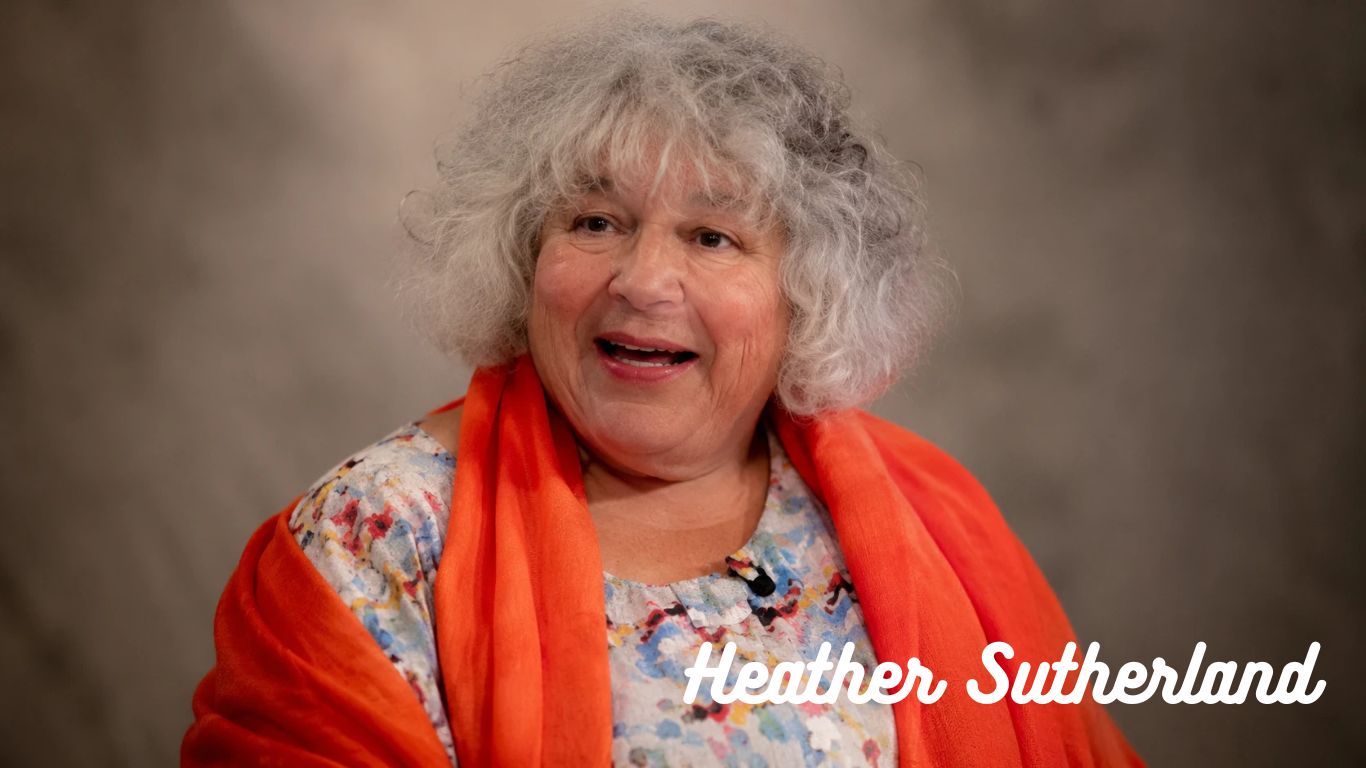
Many readers first discover Heather Sutherland through her connection with Miriam Margolyes, the outspoken actor celebrated for her decades-long career in theatre, film, and television, as well as her fearless honesty and sharp humour. However, reducing Sutherland to simply “the partner of a famous actor” overlooks the remarkable life she has built independently.
Heather Amanda Sutherland is an Australian-born historian whose academic work has earned recognition among scholars of Southeast Asian history. Her research has explored colonial Indonesia, Java, Makassar, maritime trade networks, and the complex relationships between power, society, and commerce across the region.
While Margolyes has lived much of her life in the public eye, Sutherland has chosen a quieter path, one shaped by archives, universities, research, and intellectual curiosity. Her story is not one of celebrity pursuit but of academic dedication, global exploration, and a lifelong commitment to understanding the movement of people, cultures, and ideas.
Her relationship with Margolyes, which began in the late 1960s, has attracted public interest because of its longevity and unconventional nature. Yet Sutherland’s identity exists far beyond that partnership. She is a respected historian whose career reflects decades of research, teaching, and scholarship.
To understand Heather Sutherland fully is to see both sides of her story: the private scholar who avoided public attention and the accomplished academic whose work has contributed significantly to the study of Southeast Asia.
Heather Sutherland: Who Is She?
Heather Amanda Sutherland is an Australian historian, author, and retired academic best known for her research into Indonesian history and Southeast Asian societies. Throughout her career, she focused on colonial structures, administrative systems, trade networks, and the social changes that shaped Indonesia over centuries.
Much of her professional life was connected with Vrije Universiteit Amsterdam, where she developed a reputation as a specialist in Southeast Asian history. Her scholarship examined the Dutch East Indies, particularly Java and the eastern Indonesian archipelagos, areas deeply influenced by colonial rule, migration, and maritime exchange.
Her academic interests went beyond traditional political history. Rather than focusing only on rulers, wars, and governments, Sutherland explored the everyday systems that allowed societies to function. She studied administrators, merchants, local elites, sailors, and communities whose roles shaped history from the ground up.
Outside academic circles, Sutherland is widely recognised because of her long-term relationship with Miriam Margolyes. Their partnership has remained notable because it has lasted for more than five decades while allowing both women to maintain their own identities and independence.
Although Margolyes has often spoken publicly about their relationship, Sutherland has largely stayed away from media attention. This contrast has contributed to public curiosity about her, but her legacy is rooted primarily in her historical research rather than her connection to fame.
Early Life and Australian Heritage
Heather Sutherland was born in Australia in 1943. Unlike many public figures, she has kept much of her early family life private. Details about her childhood, parents, and personal background are limited, reflecting her preference for maintaining a distinction between her professional achievements and private life.
Her intellectual development took place during a period when interest in Asia was growing within Australian universities. Following the Second World War, Australia’s relationship with the wider Asian region became increasingly important, with scholars paying greater attention to Southeast Asian politics, culture, and history.
For Sutherland, this growing academic interest became a lifelong pursuit. Rather than viewing Southeast Asia from a distance, she immersed herself in its languages, archives, societies, and historical experiences.
Her later career demonstrates a deep commitment to understanding communities within their own contexts. She approached history not simply as a collection of events but as a study of human relationships, institutions, and systems of influence.
Teaching in Malaysia and the Journey to Amsterdam
Before becoming closely associated with Dutch academic institutions, Heather Sutherland spent time teaching at the University of Malaya in Kuala Lumpur. This period was significant because it placed her directly within the region she would later study extensively.
Working in Southeast Asia during the 1970s exposed Sutherland to societies experiencing major political and cultural changes. Questions surrounding colonial legacies, national identity, and regional transformation were central concerns during this era.
Her experience in Malaysia gave her a perspective that went beyond traditional Western academic approaches. She was not only studying Southeast Asia through historical documents but engaging with the region itself.
In 1974, Sutherland moved to Amsterdam and began her connection with Vrije Universiteit Amsterdam. The Netherlands provided access to some of the world’s most important archives relating to Indonesia’s colonial history.
Because the Dutch controlled the East Indies for centuries, Dutch archives contain extensive records about administration, trade, politics, and social structures in Indonesia. These resources became central to Sutherland’s research.
At Amsterdam, she developed a scholarly approach that combined history, sociology, and anthropology. Her work examined how colonial systems operated, how local communities adapted, and how power was negotiated between European authorities and Indonesian societies.
The Scholar of Colonial Java
One of Heather Sutherland’s most influential areas of research was colonial Java, the political and administrative centre of the Dutch East Indies.
Her work examined the priyayi, the Javanese administrative elite who played a complicated role within colonial society. They were not simply passive representatives of Dutch authority. Instead, they occupied a complex position between traditional Javanese society and the colonial administration.
Sutherland explored how Dutch rule transformed existing social structures by incorporating local elites into a modern bureaucratic system. Her research showed that colonial power depended not only on European officials but also on networks of local administrators, families, and communities.
This approach challenged simplified ideas of colonial history as merely a relationship between rulers and the ruled. Sutherland highlighted the spaces in between, where negotiation, adaptation, and personal ambition shaped everyday life.
Her scholarship demonstrated that power was not only found in government offices or political decisions. It existed through relationships, social status, administrative systems, and the individuals who operated within them.
As Heather Sutherland’s academic career developed, her research expanded beyond Java into the wider maritime world of Southeast Asia. She became particularly interested in eastern Indonesia, including Makassar and the surrounding islands of Sulawesi, regions that played a crucial role in trade, migration, and political exchange.
For many years, historical discussions of Indonesia focused heavily on Java because of its political importance and its role as the centre of Dutch colonial administration. Sutherland’s work helped shift attention toward the islands and sea routes that connected communities across the Indonesian archipelago.
She viewed the ocean not as an empty space separating countries and cultures, but as a living network where people, goods, and ideas travelled. Maritime routes connected merchants, sailors, local rulers, and colonial powers, creating a constantly changing landscape of influence and exchange.
This perspective became one of the defining features of her scholarship. Rather than studying history only through governments and major political events, Sutherland examined the people and systems that made regional connections possible.
Exploring Makassar: Trade, Ships, and Networks of Power
Makassar became one of the key subjects of Sutherland’s later research. Historically, the port was one of the most important centres of trade in eastern Indonesia, linking local communities with wider Asian and international markets.
Through her research, Sutherland explored how merchants, ship captains, traders, and local authorities shaped the economic life of the region. She examined the practical realities behind trade, including shipping routes, commercial relationships, commodities, and the people who moved goods across the seas.
Her work revealed that power in Southeast Asia did not exist only in royal courts or colonial capitals. It also existed in ports, marketplaces, family networks, and maritime communities.
By focusing on these overlooked connections, Sutherland contributed to a broader understanding of Southeast Asian history. Her research showed that the region was not isolated but deeply connected through centuries of movement and exchange.
Important Books and Academic Contributions
Heather Sutherland’s reputation as a historian is closely connected to several important publications that shaped modern understanding of Indonesian history.
The Making of a Bureaucratic Elite
Published in 1979, The Making of a Bureaucratic Elite remains one of her most recognised works. Based on her doctoral research, the book examined the transformation of the Javanese priyayi class under Dutch colonial rule.
Sutherland explored how traditional social positions became connected with colonial administration and how local elites navigated their changing roles within a new political system.
The book remains significant because it moved beyond simple descriptions of colonial domination. Instead, it examined the complicated relationships between culture, authority, ambition, and bureaucracy.
Monsoon Traders: Ships, Skippers, and Commodities in Eighteenth-Century Makassar
Another important contribution came through her work on maritime trade.
Co-written with Gerrit Knaap, Monsoon Traders: Ships, Skippers, and Commodities in Eighteenth-Century Makassar explored the world of maritime commerce in eighteenth-century Indonesia.
The book focused on the individuals and systems behind regional trade, including:
- ships and shipping networks
- merchants and sailors
- commercial goods
- trade routes
- relationships between communities and authorities
Rather than presenting trade as an abstract economic system, the research brought attention to the people who made these networks function.
Seaways and Gatekeepers: Trade and State in the Eastern Archipelagos of Southeast Asia
Later in her career, Sutherland continued exploring the relationship between commerce, politics, and regional power through Seaways and Gatekeepers: Trade and State in the Eastern Archipelagos of Southeast Asia, c. 1600–c. 1906.
The book brought together many of the themes that defined her career: maritime connections, colonial influence, local authority, and the movement of goods and people across island Southeast Asia.
Her research demonstrated that history is often created through everyday interactions between communities, traders, administrators, and institutions.
Why Heather Sutherland’s Work Matters
Heather Sutherland’s historical contributions are important because they reveal how power operated beyond official government structures.
Instead of focusing only on kings, colonial leaders, or political events, she examined the systems and individuals that shaped everyday experiences. Her work explored how decisions made by governments affected ordinary communities and how local societies responded to outside influence.
Her research also challenged the idea that Southeast Asian history can be understood through a single perspective. The region’s past was shaped by multiple forces: indigenous traditions, colonial systems, migration, trade, and cultural exchange.
Through her scholarship, Sutherland helped create a richer understanding of Southeast Asia as a dynamic region built through movement and connection.
Heather Sutherland and Miriam Margolyes: A Relationship Beyond Celebrity
While Heather Sutherland’s academic career stands on its own, much of the public interest surrounding her comes from her long-term relationship with actor Miriam Margolyes.
The couple reportedly began their relationship in the late 1960s and have remained together for more than five decades. Their partnership has attracted attention because it does not follow the conventional image of a celebrity relationship.
Margolyes has spoken openly about their bond, describing a relationship built on affection, honesty, and independence. Unlike many couples in the public eye, they have maintained a level of personal freedom, including periods when they lived separately due to their professional commitments.
Their relationship has lasted through significant social changes, including changing attitudes toward LGBTQ+ relationships. When they first became a couple, same-sex partnerships were far less publicly accepted than they are today.
A Partnership Built on Independence
One of the most interesting aspects of Heather Sutherland and Miriam Margolyes’ relationship is their ability to maintain individuality while remaining deeply connected.
Margolyes built her career in acting, moving between film, television, and theatre projects around the world. Sutherland followed a very different path, dedicating herself to academic research, teaching, and writing.
Their careers existed in separate worlds, yet both women supported each other while maintaining their own identities.
Their relationship challenges the idea that commitment must always look the same. For them, independence appears to have been an important part of their connection.
Rather than being defined by public appearances or traditional expectations, their partnership has endured through mutual respect, personal freedom, and decades of shared history.
Privacy, Family, and Personal Life
Despite public interest, Heather Sutherland has always maintained a private life. Information about her family background, parents, and personal details remains limited.
This privacy reflects a broader difference between academic and celebrity culture. While actors often share aspects of their personal lives as part of their public careers, scholars are usually recognised through their research, publications, and professional contributions.
There is limited publicly verified information regarding whether Sutherland has children or details about her wider family life. Responsible reporting should avoid speculation where clear information is unavailable.
Her most publicly known personal connection remains her long-standing relationship with Miriam Margolyes.
Unlike her partner Miriam Margolyes, whose acting career has brought significant public attention and commercial recognition, Heather Sutherland’s professional life has been centred around academia rather than entertainment.
There is no verified public information regarding Heather Sutherland’s exact net worth. Online estimates about private individuals are often based on speculation rather than reliable financial records, and there is no confirmed source detailing her personal wealth.
Sutherland’s income would have primarily come from her academic career, including university positions, research work, publications, and scholarly activities. While a successful academic career can provide stability and professional recognition, it generally does not generate the level of wealth associated with major entertainment careers.
Her books and research have been influential within historical and academic circles, but specialist academic publications typically serve universities, researchers, and libraries rather than mainstream commercial audiences. As a result, financial success is not usually measured through sales figures but through intellectual contribution and long-term influence.
The most accurate description is that Heather Sutherland built a respected academic career rather than a celebrity fortune. Her legacy comes from scholarship, teaching, and historical research rather than public wealth.
Heather Sutherland’s Public Image: A Life Away From the Spotlight
Heather Sutherland’s public identity is shaped by privacy and intellectual achievement. She has never sought fame through interviews, television appearances, or public events. Most people encounter her name through academic references or through discussions about her relationship with Miriam Margolyes.
This quiet approach makes her different from many people connected to public figures. Rather than becoming part of celebrity culture, Sutherland has remained focused on her own work and interests.
Her decision to maintain privacy reflects her background as a scholar. Academic recognition often comes through publications, research, and contributions to a field rather than through personal visibility.
In many ways, Sutherland represents a rare example of someone who has lived alongside fame without becoming defined by it. While Margolyes has built a reputation through outspoken public appearances, Sutherland’s influence comes from a quieter form of achievement.
Her reserved public presence has also contributed to the curiosity surrounding her. In an era where many personal details are shared openly, her decision to keep certain parts of her life private feels increasingly unusual.
Avoiding Confusion: Other People Named Heather Sutherland
One challenge for readers researching Heather Sutherland is that the name belongs to more than one notable person.
Another Heather Sutherland was an Australian architect associated with the architectural firm Moir & Sutherland in Canberra. She belonged to an earlier generation and should not be confused with Heather Amanda Sutherland, the historian born in 1943.
Because of this name overlap, some online sources may contain inaccurate information by combining details from different individuals.
The historian Heather Amanda Sutherland is associated with:
- Southeast Asian history
- Indonesian studies
- colonial Java research
- maritime trade studies
- Vrije Universiteit Amsterdam
The architect Heather Sutherland is connected with Australian architectural history.
Keeping these identities separate is important when discussing the historian’s life, career, and achievements.
Where Is Heather Sutherland Now?
Heather Sutherland is generally described as a retired academic whose influence continues through her published research.
Although she is no longer known as an active university professor, her books and historical studies remain part of academic discussions surrounding Indonesia and Southeast Asian history.
Her later years have received occasional public attention because of comments made by Miriam Margolyes about their life together, travel, ageing, and their long partnership.
However, Sutherland herself continues to maintain a low public profile. Unlike Margolyes, who remains a familiar face in entertainment and media, Sutherland has chosen a quieter existence away from public attention.
The available information suggests a life shaped by scholarship, independence, and personal privacy.
Cultural Influence and Lasting Legacy
Heather Sutherland’s greatest influence lies within the field of Southeast Asian history.
Her research changed the way scholars understand colonial Indonesia by highlighting the importance of local communities, administrative systems, and maritime networks.
She showed that history is not only created by famous leaders or major political events. It is also shaped by ordinary people, traders, administrators, families, and communities whose actions influence the development of societies.
Her work on colonial Java helped explain how local elites interacted with European power, while her studies of maritime Southeast Asia demonstrated how trade routes connected distant communities.
Sutherland’s own life also reflects the international nature of historical research. Born in Australia, teaching in Malaysia, and building an academic career in the Netherlands, she represents the global movement of ideas and knowledge that defines modern scholarship.
For wider audiences, her relationship with Miriam Margolyes has introduced many people to her story. Their partnership offers an example of a long-lasting same-sex relationship built on independence, respect, and personal choice.
Although Sutherland never pursued public recognition, her influence remains significant in both academic and cultural discussions.
Frequently Asked Questions About Heather Sutherland
Who is Heather Sutherland?
Heather Sutherland is an Australian historian and retired academic known for her research on Indonesian history, colonial Java, maritime Southeast Asia, and trade networks. She is also widely recognised as the long-term partner of actor Miriam Margolyes.
How old is Heather Sutherland?
Heather Sutherland was born in 1943. Based on that information, she is in her early eighties in 2026. Her exact birth date has not been widely published.
Is Heather Sutherland married to Miriam Margolyes?
Heather Sutherland and Miriam Margolyes have been long-term partners since the late 1960s. While some informal sources describe their relationship using marriage-related language, publicly available information most consistently identifies Sutherland as Margolyes’ long-term partner.
What is Heather Sutherland famous for?
Heather Sutherland is recognised for her academic research on Southeast Asian history, particularly:
- colonial Indonesia
- Javanese administrative elites
- Makassar and maritime trade
- eastern Indonesian history
Her notable works include The Making of a Bureaucratic Elite, Monsoon Traders, and Seaways and Gatekeepers.
Does Heather Sutherland have children?
There is no widely verified public information confirming that Heather Sutherland has children. As she has maintained a private personal life, details about her family remain limited.
What is Heather Sutherland’s net worth?
Heather Sutherland’s net worth has not been publicly confirmed. Any specific figures found online should be treated cautiously unless supported by reliable financial information.
Where does Heather Sutherland live?
Heather Sutherland has long been associated with Amsterdam because of her academic career. Public discussions about her life with Miriam Margolyes have also referenced locations connected to their travels and homes, but details about her current residence remain private.
Conclusion
Heather Sutherland’s story demonstrates that a meaningful life does not always unfold in the public eye.
While many people discover her through Miriam Margolyes, her own achievements tell a much broader story. She is a respected historian whose decades of research transformed understanding of colonial Indonesia, Southeast Asian societies, and maritime networks.
Her career was built through archives, universities, and scholarship rather than celebrity. She dedicated her life to exploring how communities, governments, and trade systems shaped history.
Her relationship with Margolyes adds another fascinating dimension to her story. Their partnership has lasted for more than fifty years, not because it followed traditional expectations, but because it allowed both women to remain independent while sharing a deep connection.
Heather Sutherland’s legacy is not one of fame or publicity. It is the legacy of a researcher who spent decades uncovering the hidden structures behind history and a woman who has lived comfortably beside celebrity without being consumed by it.
Her life is a reminder that influence can take many forms. Sometimes it comes not from being the loudest voice in the room, but from quietly changing how the world understands the past.