

































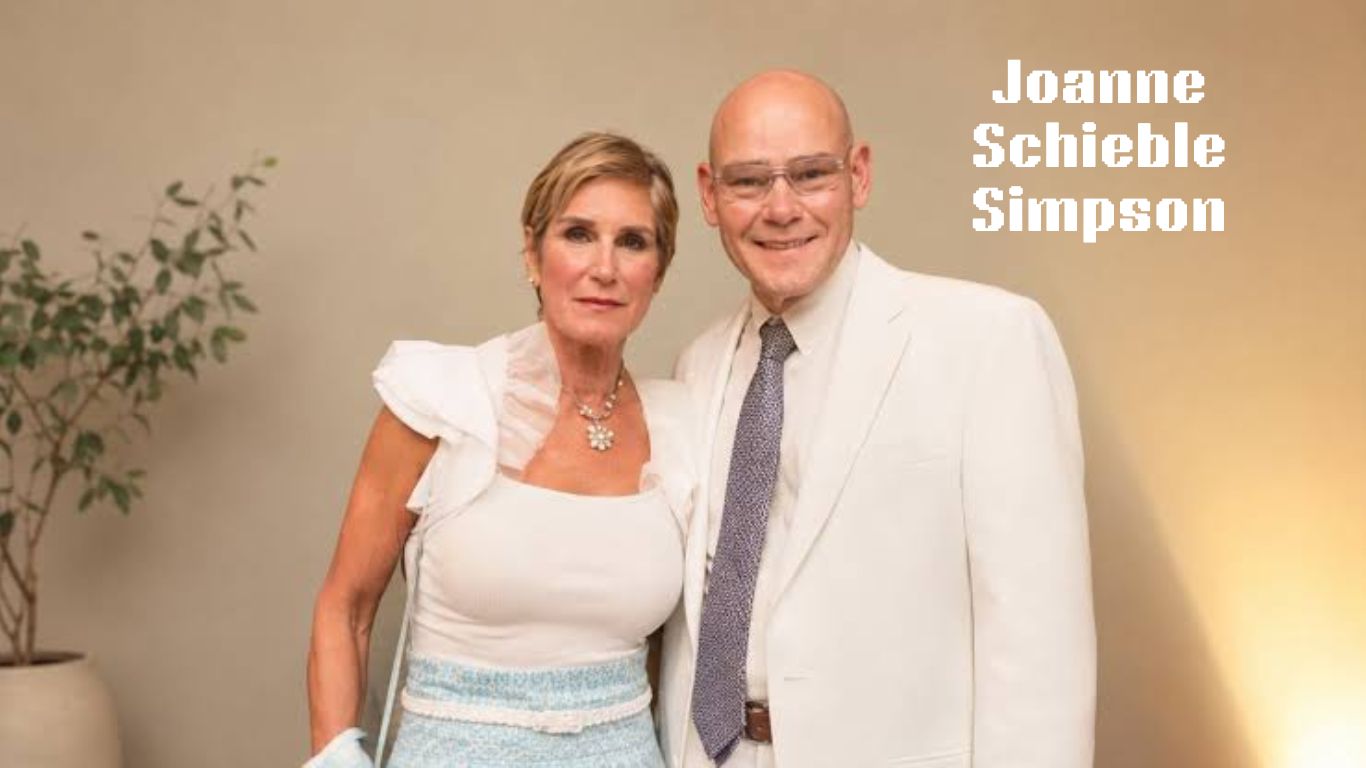
Before the wider world ever knew her name, Joanne Schieble Simpson was simply a young woman navigating love, expectation, and strict family rules. In 2026, most people recognize the story of Steve Jobs, but far fewer understand the emotional path of his biological mother and the difficult decision that shaped both their lives.
Her life was never about fame or recognition. It was shaped by love, pressure, uncertainty, and quiet resilience. One decision she made in the 1950s eventually influenced the future of modern technology in ways no one could have predicted. That choice changed her life first, and later, the world.
This article explores her early life, education, relationship, and the deeply personal circumstances that led to the adoption of Steve Jobs.
Who Was Joanne Schieble Simpson?
Joanne Carole Schieble Simpson was born in 1932 in Green Bay, Wisconsin, USA. She came from a traditional Catholic household that placed strong emphasis on discipline, reputation, and family expectations.
Most people recognize her as the biological mother of Steve Jobs, co-founder of Apple Inc. But her identity extended far beyond that connection. She was an educated, thoughtful woman who worked professionally as a speech-language pathologist, helping individuals improve communication abilities.
She was married twice in her lifetime, first to Abdulfattah “John” Jandali and later to George Simpson. She had three children: Steve Jobs, Mona Simpson, and John Simpson.
Despite being linked to one of the most influential figures in technology, she chose a life away from publicity, focusing instead on family and professional work. She passed away on January 19, 2018, at the age of 85.
Early Life
Joanne grew up in a middle-class German-Swiss Catholic family. Her parents held strong traditional values, and household expectations were strict, especially for daughters.
During the 1940s and early 1950s, societal norms placed heavy emphasis on reputation and early marriage for women. Higher education for women was still not widely encouraged in many families.
Even so, Joanne showed early signs of curiosity and academic interest. She valued learning and wanted more from life than what was traditionally expected. This created a quiet internal tension between personal ambition and family pressure.
Over time, she developed emotional strength and composure, qualities that would later define how she handled some of life’s most difficult decisions.
Education and Career
After high school, Joanne attended the University of Wisconsin–Madison, a significant step at a time when relatively few women pursued higher education.
She studied speech and language-related subjects and eventually trained as a speech-language pathologist. Her work involved helping children and adults overcome communication challenges.
Education remained central to her values. She believed strongly that learning shaped opportunity and long-term stability. This belief later influenced one of the most important decisions of her life: the conditions she set around her child’s adoption.
It was also during her university years that she met Abdulfattah Jandali.
Relationship with Abdulfattah Jandali
While studying, Joanne met Abdulfattah “John” Jandali, a graduate student originally from Syria pursuing advanced studies in political science.
Their connection developed despite cultural and religious differences. Joanne came from a Catholic background, while Jandali was Muslim. In that era, such differences often created serious family opposition.
Joanne’s father strongly disapproved of the relationship, creating emotional strain and conflict. She found herself caught between personal feelings and family expectations, a situation that would soon become even more complicated.
Steve Jobs and His Early Story
Steve Jobs became one of the most influential entrepreneurs of the modern era. Born on February 24, 1955, he was adopted shortly after birth and raised in California by Paul and Clara Jobs.
He later co-founded Apple Inc. in 1976 with Steve Wozniak. The company grew into a global leader in personal computing and consumer technology, producing products such as the iPhone, iPad, and Mac.
Jobs became known for his focus on design, simplicity, and user experience. His vision reshaped how people interact with technology in everyday life.
Pregnancy and a Difficult Decision
Joanne became pregnant while unmarried, a situation that carried significant social stigma during the 1950s. At the time, unwed mothers often faced judgment, isolation, and family rejection.
Her father refused to approve marriage before the birth, leaving her without support from her family. Facing pressure and uncertainty, she left Wisconsin and traveled to San Francisco.
There, she stayed in a home for unmarried mothers, a place where women could give birth privately but often under emotional distress.
Joanne ultimately made the decision to place her child for adoption. This choice was not made lightly or out of rejection, but from a belief that her child would have a more stable and secure future elsewhere.
Adoption of Steve Jobs
On February 24, 1955, Joanne gave birth to a baby boy in San Francisco.
Before the adoption, she requested that the adoptive parents be college educated, reflecting how strongly she valued education and opportunity.
The initial adoptive family withdrew, adding uncertainty to an already emotional situation. Eventually, Paul and Clara Jobs agreed to adopt the child. While they were not college educated, they promised to support the child’s education in the future.
Trusting that commitment, Joanne agreed to the adoption. The child was named Steve Jobs.
Life After Adoption
After returning to Wisconsin, Joanne resumed her studies and focused on rebuilding her life. She eventually married Abdulfattah Jandali, though the relationship did not last long due to unresolved emotional and personal challenges.
She did not attempt to reclaim custody of Steve Jobs, who was being raised in California by his adoptive parents. The separation remained part of her private emotional life.
Professionally, she continued working as a speech-language pathologist, dedicating herself to helping others communicate more effectively.
Marriage to George Simpson
Later in life, Joanne married psychologist George Simpson. This relationship brought more stability and emotional balance.
Together, they built a quiet family life centered around education and mutual respect. They had two children: Mona Simpson and John Simpson.
This period marked a more settled chapter in her life, one focused on family and personal peace.
Her Daughter Mona Simpson
Mona Simpson grew up to become an accomplished novelist and academic. Her works include Anywhere But Here and A Regular Guy.
She and Steve Jobs later met as adults and developed a meaningful sibling relationship. Their connection became an important emotional development in both their lives.
Joanne supported Mona’s intellectual and creative growth, reinforcing her lifelong belief in education and expression.
Net Worth and Lifestyle
Joanne lived a modest and private life. Her career as a speech-language pathologist provided stability but not wealth.
There is no public indication that she sought financial benefit from Steve Jobs’ success. She preferred privacy over public attention and lived without involvement in media or corporate wealth.
Her life remained grounded in simplicity, family, and professional service.
Death and Legacy
Joanne Schieble Simpson passed away on January 19, 2018, at the age of 85.
By then, Steve Jobs had already become a global figure in technology. Joanne remained largely out of the public eye throughout her life and chose not to participate in public discussions or interviews.
Her story later gained attention through biographies and historical accounts connected to Steve Jobs.
Today, she is remembered not for public recognition, but for the deeply personal and difficult choices she made under social pressure and limited options.
Final Thoughts
Joanne Schieble Simpson’s life reflects how personal decisions, made under pressure and uncertainty, can have long-reaching effects.
She lived during a time when women had fewer choices and faced stronger social constraints. Even within those limits, she made decisions she believed were best for her child’s future.
Her story is not one of fame, but of quiet strength, responsibility, and emotional endurance. It adds depth to the broader story of Steve Jobs, showing the human complexity behind historical success.
Sometimes the most influential lives are not the most visible ones, but the ones shaped by difficult choices made in silence.
(FAQs)
When Joanne Schieble Simpson passed away, what was her age?
Born in 1932, Joanne Schieble Simpson died on January 19, 2018. When she passed away, she was 85 years old.
When Joanne Schieble Simpson gave birth to Steve Jobs, what was her age?
On February 24, 1955, she gave birth to Steve Jobs. At the time, she was roughly 23 years old.
Did Joanne Schieble Simpson use social media?
Joanne Schieble Simpson did not use social media. She avoided the spotlight and led a very secluded life, particularly in her senior years.
Joanne Schieble Simpson was married to whom?
She had two marriages. She first wed Steve Jobs’ biological father, Abdulfattah “John” Jandali. She later wed psychologist George Simpson.
What was the number of children that Joanne Schieble Simpson had?
She had three kids. John Simpson, Mona Simpson, and Steve Jobs were her offspring.