

































Remote working has changed the way we think about our homes. The spare room, the kitchen table, the corner of a bedroom — spaces that were once purely personal have become professional too. And while a sprawling home office would be ideal, the reality for most of us is rather more modest.
The good news? A small space doesn’t have to mean a compromised one. With a few smart choices, you can turn even the tiniest corner of your home into somewhere you actually want to work.
Making the Most of What You Already Have
Before splashing out on anything new, take a proper look at what you’re already working with. A kitchen table or dining table can make a surprisingly effective desk — especially if you add a monitor riser, keep cables tidy, and commit to clearing it at the end of each day. That last part matters more than you’d think. When your workspace bleeds into your living space, it becomes harder to mentally switch off.
If the kitchen is your working base, lighting is worth thinking about carefully. Natural light is your best friend, so position yourself near a window where possible. If that’s not an option, a good desk lamp with a warm-white bulb can make a real difference to how alert you feel throughout the day.
The Right Chair Makes All the Difference
Here’s something that often gets overlooked: the chair. People will spend hours researching monitors or standing desks, then spend eight hours a day perched on a dining chair that offers zero support. It’s a false economy.
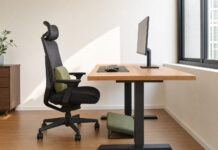
Investing in a proper ergonomic office chair is one of the most worthwhile things you can do for your home setup. A good ergonomic office chair supports the natural curve of your lower back, encourages better posture, and reduces the kind of shoulder and neck tension that builds up quietly over a long working day. If you’ve ever finished a day at your kitchen table feeling stiff and sore, this is likely why.
Office chairs come in a wide range, and you don’t need to spend a fortune to get something decent. Look for adjustable seat height, lumbar support, and armrests that can be positioned to keep your shoulders relaxed. Brands like ErgoChair, Branch, and IKEA’s Markus range all offer solid options at different price points.
Clever Storage for Compact Spaces
Clutter is productivity’s worst enemy — and in a smaller space, it accumulates fast. Wall-mounted shelves are a brilliant solution because they use vertical space that would otherwise go to waste. Add a few baskets or boxes in a consistent colour and your shelves go from chaotic to considered.
A compact desk with built-in drawers or a floating wall desk (which folds away when not in use) can also work wonders. The fold-away option is particularly useful if you’re working in a shared space, like a living room or bedroom, where the workspace needs to disappear come evening.
Turning a Small Room into a Dedicated Office
If you have a box room, a large landing, or even a generous alcove, it may be worth thinking about a small renovation to create a proper dedicated workspace. This doesn’t have to be a major project. A built-in desk fitted across a wall, some targeted lighting, and a good coat of paint in a calming, focused colour (think soft greens, muted blues, or a warm neutral) can completely transform a cramped room into a space that feels intentional.
Soundproofing is another consideration, especially if you’re on video calls regularly. Thick curtains, a rug on the floor, and even bookshelves filled with books all help to absorb sound and reduce echo — making you sound more professional on calls without any technical fuss.
Small Changes That Add Up
Sometimes it’s the smaller tweaks that shift how a space feels. A few worth considering:
- Cable management: A tangle of wires is distracting and stressful. Cable clips, velcro ties, or a simple cable box will sort this quickly.
- Plants: A small plant on your desk can boost mood and focus — there’s actual research behind this, not just interior design wishful thinking.
- A room divider or curtain: If you’re working in a shared room, a simple divider creates a psychological boundary between “work mode” and “home mode.”
- Noise-cancelling headphones: In a busy household, these can be transformative. They signal to others that you’re focused, and they genuinely help you concentrate.
Small Space, Big Productivity
You don’t need a dedicated office suite to work well from home. What you do need is a setup that’s comfortable, organised, and — crucially — one that you’ve put some genuine thought into.
Start with the basics: a decent surface, good lighting, and a proper ergonomic office chair. Build from there. Small changes made consistently will get you to a setup that supports how you work, rather than fighting against it.
Your home might be compact, but your productivity doesn’t have to be.