


































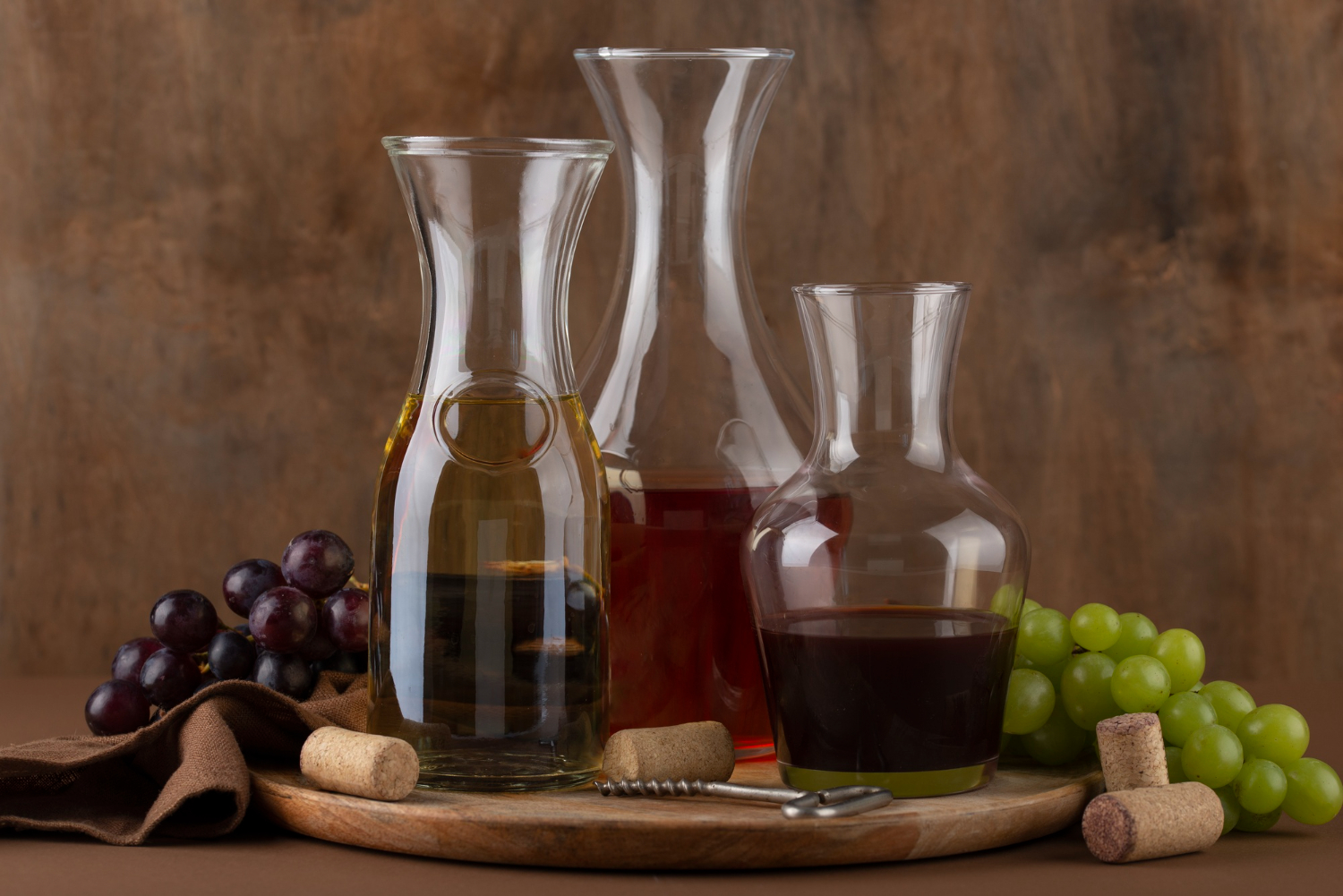
Balsamic vinegar of Modena is one of the iconic products of Italian gastronomy, appreciated worldwide for its aromatic complexity and its perfect balance between sweetness and acidity. Behind its unmistakable intensity lies a slow and meticulous production process, the result of artisanal knowledge handed down from generation to generation.
The production of balsamic vinegar requires time, patience, and a deep respect for the raw material: the grape. Every phase, from the harvest to the maturation, is an essential step that contributes to creating a product unique in its kind, an authentic expression of the Modenese territory and its long culinary tradition.
Origins and secrets of artisanal production
The artisanal production of traditional balsamic vinegar of Modena still follows ancient techniques, carefully preserved by families who have passed down their secrets for centuries. Everything begins with the selection of the best grapes, generally Trebbiano and Lambrusco, harvested by hand when the sugar level is optimal. The must obtained is then slowly cooked over direct heat until it is reduced by about half, concentrating both aromas and flavors.
The cooked must is then left to mature in barrels made from different woods – oak, cherry, chestnut, mulberry, or juniper – each imparting a unique characteristic. Over the years, the balsamic vinegar develops depth, density, and complexity, transforming into a condiment with an intense fragrance and a velvety flavor. The artisanal mastery lies in skillfully managing the transfers and top-ups, ensuring that every bottle contains the perfect harmony between sweetness, acidity, and structure.
Acetaia Leonardi: Modenese tradition and mastery
Among the acetaie that keep alive the artisanal production of true balsamic vinegar, Acetaia Leonardi holds a place of honor. Located in the countryside of Magreta di Formigine, the company is an authentic example of a short supply chain: every stage of production, from the cultivation of grapes to the maturation of the must, takes place within the family estate. This approach ensures total quality control and complete respect for tradition.
The barrels stored in the attics of the Corte dei Campi Macri tell the story of a family that, for generations, has devoted time and passion to a product that has become a symbol of Italian taste. Here, time is the true protagonist: every drop matures slowly, acquiring the amber color and intense aroma that distinguish Acetaia Leonardi’s balsamic vinegar. Visiting the acetaia means discovering authentic craftsmanship, where artisanal knowledge meets love for the land and commitment to quality.
The value of time and artisanal care
In the production of traditional balsamic vinegar of Modena, time is an ingredient as precious as it is invisible. Every year spent in the barrels contributes to defining the product’s character, enriching it with aromas and nuances that no modern technology can reproduce. It is a slow process, made up of transfers, checks, and tastings, where the experience of the master vinegar maker is essential to ensure the perfect balance between sweetness, acidity, and aromatic intensity.
This artisanal care concerns not only the quality of the final result but also the respect for tradition, which represents the soul of the Modenese territory itself. Every bottle contains the story of ancient knowledge, passed down with patience and passion, giving life to one of the most refined and representative products of Italian gastronomic culture.
The tasting experience: a journey through aromas and sensations
Tasting an artisanal balsamic vinegar means embarking on a sensory journey that engages sight, smell, and taste. Its dense, glossy texture, brown color with amber reflections, and complex aroma are only the prelude to a flavor that surprises with balance and depth. Every sip tells of years of patient maturation and the meticulous work of those who, through time-honored gestures, oversee each phase with care.
During tastings in the vinegars of the Modenese territory, visitors learn to recognize the differences between young and aged balsamic, to appreciate their aromatic nuances, and to pair them with various dishes. It is an experience that goes beyond simple tasting: a true encounter with Emilian gastronomic culture, where every drop becomes a symbol of art, tradition, and dedication to flavor.