

































What the Word “Bjudlunch” Means
The Swedish word “bjudlunch” literally means “invite-for-lunch.” It means more than what’s in the book. It has a warm social meaning: a casual meal with thought, where the focus is on connecting with others instead of making perfect food. I see it as a small party for normal life, with simple food, a giving mood, and no rush to talk.
This guide goes over how to plan and host a successful bjudlunch. It covers things like the types of people who will be coming, how to plan a meal, how to make sure you have enough time to prepare, how to save money, and how to follow cultural rules. You will find useful advice—and a bit of creative inspiration—on how to make your lunch chill and unforgettable, whether you are an experienced host or this is your first time asking coworkers or friends.
Why Have a Bjudlunch?
Build relationships: Sharing a meal is a nice way to build ties, ease stress at work, or welcome new neighbors.
Keep it within reach: Meetings at noon avoid the stress of fancy dinners but still feel unique.
Encourage balance: A lunch meeting can be aware of family or rest plans and leave the evening free.
Creating the Mood
Set the mood.
Do you want to make your space feel like a home, or do you want it to be bright and feel like a café? Make your decision early because your choice affects everything, from the way the table is set to the music, the lights, and even the way the food is served. I like to choose a two-word theme, like “fresh & friendly” or “rustic & cheerful,” to help me.
Pick a date and how long it will last.
Lunch usually lasts between one and two hours. Give people a clear start and end time for each workday (12:15–13:30, for example) so they can plan. Weekend bjudlunches can last a little longer, but let people know how fast it’s going.
Put together the guest list.
Three to six people keep the talk going without forming cliques.
Think about mix-and-match chemistry: put one or two of your close friends with a few people who are new to the group.
If you’re having lunch at work, make sure to carefully consider any food limits and how different roles affect the people who are eating.
Making Plans for the Menu
Add to the focus of your design.
Choose an easy-to-make main dish that doesn’t need to be cooked for a certain amount of time for your meal. Think
Roast chicken or salmon at room temperature
A quiche or spicy dish that changes with the seasons
A filling grain bowl base, like barley, farro, or quinoa
Give two sides that back it.
Balance the tastes and textures:
A bright dressing goes well with crisp salad.
a warm vegetable dish (braised greens and roasted carrots)
A basic starch, like new potatoes or good bread
Add a not-too-filling dessert.
Keep it simple and easy to make ahead:
Fruit sauce served with ice cream or yogurt
Berry pie, cardamom cookies, or lemon loaf
A plate of fresh fruit and chocolates
Think about what they need to eat.
Put labels on the veggie, vegan, gluten-free, and nut-free foods. If you can, make the meal modular (for example, give meats and dressings on the side) so that each person can put together their own plate.
A Timeline for Smart Prep
Before, two to three days
Confirm the number of people and any nutritional information.
Get drinks and foods that don’t need to be refrigerated.
Make sauces, salads, and marinades, and bake any dessert that tastes better the next day.
The day before
Wash the vegetables, chop them, and then put them in containers that won’t let air in.
Legumes or grains should be cooked beforehand.
Set the table and put the serving dishes out. Put a sticky note on each plate to assign the dishes.
The morning of
Either cook the main and side dishes or let them warm up to serve them cold.
To keep the leaves crisp, mix the salad right before you serve it.
Put water and a lemon herb garnish in glasses, and then chill the drinks.
The Process of Hosting
Welcome and get comfortable.
When friends arrive, greet them with water and a small snack, like spicy nuts, marinated olives, or crispbread with a spread. With this small detail, people who arrive late can get settled without a problem, and those who arrive early can socialize.
Family-style or buffet
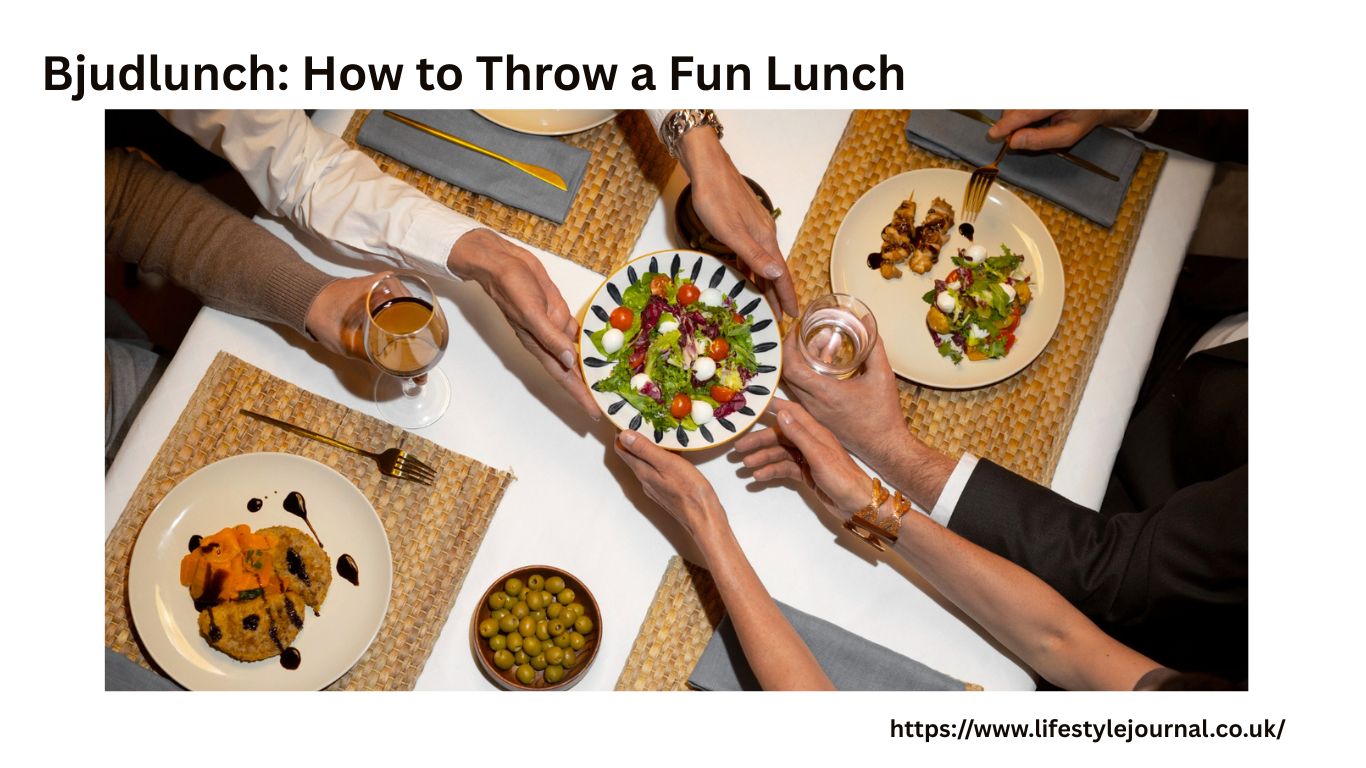
Family-style is my favorite for bjudlunch. It feels nice to pass around plates because it makes people want to try a little bit of everything. To escape traffic jams, use trivets and big serving spoons.
Hints for making small talk
Make a few open-ended questions, such as “What was something good that happened this week?” or “What dish that you can make during this season are you into right now?” Light themes keep the mood bright and open.
Beverages That Match Your Mood at Noon
Citrus slices in sparkling water
Cold brew or iced tea with syrup if you want it.
For get-togethers on the weekend, use light beer or wine (make sure to give appealing nonalcoholic drinks as well).
A simple nonalcoholic drink: tonic, cucumber ribbons, and lime juice
Tips That Save Money
Pick one fancy thing, like smoked fish or high-quality cheese, and keep the rest of the meal basic.
Make the meal based on seasonal fruits and vegetables because they are tasty and cheap.
Friends may have serveware you can borrow, or you can use a mix-and-match style—eclectic can be cute.
Creating a Mood and Setting a Table
Don’t make it complicated.
A neutral tablecloth and cloth towels with a low-profile centerpiece (like a bowl of fruit or small herb pots) set the mood without getting in the way of people’s lines of sight. A conversation-level background sound is enough.
Caring details
Place cards are useful in situations where not everyone is familiar with one another.
A small printed menu or a card written by hand explains the foods and allergens.
A warm blanket should be close by if you’re serving outside and the weather changes.
Cultural Etiquette
People in Scandinavia value on-time arrivals and may take off their shoes at the door. Make sure there is a clean space for coats and shoes. As the person holding the event, be clear about gifts: a message like “Just bring yourselves—no need for flowers or wine” can make the guests feel better.
If you’re the guest, say that you liked a dish, offer to help with the plates, and send a short thank-you message later. These little acts of kindness show how friendly the event is.
Seasonal Menu Ideas
Spring
Herb-roasted salmon with lemon (main dish)
The sides were new potato salad with dill and asparagus with mustard dressing.
Dessert: Vanilla yogurt and rhubarb sauce
Warm Season
The main foods are a tomato-basil tart or chicken wings that are cooked.
Watermelon and feta salad and grilled corn with chili-lime butter are the sides.
Berry pavlova or peach sorbet for dessert
Fall
Key: Gruyère and mushroom pie
It’s served with walnuts and roasted beets, as well as apple- and pecorino-cheese kale salad.
The dessert is either spiced pear cake or apple crisp.
Cold Season
The main course is either lentil-walnut loaf or pork shoulder that was roasted slowly.
Warm carrots with harissa honey and stewed red cabbage are sides.
The dessert is either chocolate pot de crème or lemon olive oil cake.
A Basic List for Hosting
Finish up nutritional information and the guest list.
Plan to make parts ahead of time.
The day before, set the table.
Make a snack that makes people feel at home.
Keep drinks cold and make sure they are labeled.
Use good serving tools to serve as a family.
Make sure you have something to store your leftovers in.
Last Things to Say
You don’t have to be a great cook to make a bjudlunch. It honors intention: a well-planned meal, a relaxed schedule, and a few friendly touches. People stay a little longer at a friendly lunch when the food is simple and the talk is easy.